Four venues anchor every serious search for Atlanta convention centers, and each earns its spot for a different reason. The Georgia World Congress Center wins on sheer scale, with over 1.5 million square feet of flexible exhibit space. The Georgia International Convention Center wins on airport access. The Atlanta Convention Center at AmericasMart wins on contiguous street-level exhibit value, and the Cobb Convention Center wins as a renovated, right-sized regional hub for mid-size meetings.
TL;DR:
Larger trade shows should prioritize GWCC due to its 1.5 million square feet and ample meeting rooms, accommodating extensive exhibitor setups.
GICC’s direct SkyTrain access and 32-foot ceiling rigs make it ideal for airport-connected conferences with suspended installations.
AmericasMart offers 100,000 contiguous square feet at street level, making it a budget-friendly choice for mid-to-large downtown events with straightforward logistics.
The Cobb Convention Center works best for regional mid-size meetings in the northwest suburbs, especially after its recent renovation and expansion.
Deadlines for venue coordination are strict, with 90 days needed for initial planning and load planning, and last-minute changes often incur high fees or reduce flexibility.
Table of Contents
-
What Do Atlanta’s Convention Centers Get Wrong About Décor Logistics?
-
Bring Luxury Décor Into Your Next Atlanta Convention Center Event
How Do Atlanta’s Convention Centers Compare?
Choosing among Atlanta convention centers usually comes down to three questions: how much space you need, how your attendees are arriving, and how flexible the room configurations have to be. The numbers below settle most of that debate before you ever schedule a site visit.
A few quick takeaways for planners scanning this table on a deadline:
-
Trade shows and expos belong at GWCC. Nothing else in the Southeast matches its footprint or its numerous meeting rooms for breakouts.
-
Airport-centric conferences should default to GICC. The SkyTrain link cuts ground transportation entirely out of the logistics plan.
-
Budget-conscious downtown events do well at the Atlanta Convention Center at AmericasMart, where 100,000 contiguous square feet keeps setup simple without GWCC scale pricing.
-
Mid-size regional meetings fit the Cobb Convention Center, especially for groups drawing from the northwest metro rather than downtown.
What Makes Each Atlanta Convention Center Different?
Each of these four venues solves a different planning problem. Here’s what actually matters once you get past the headline square footage.
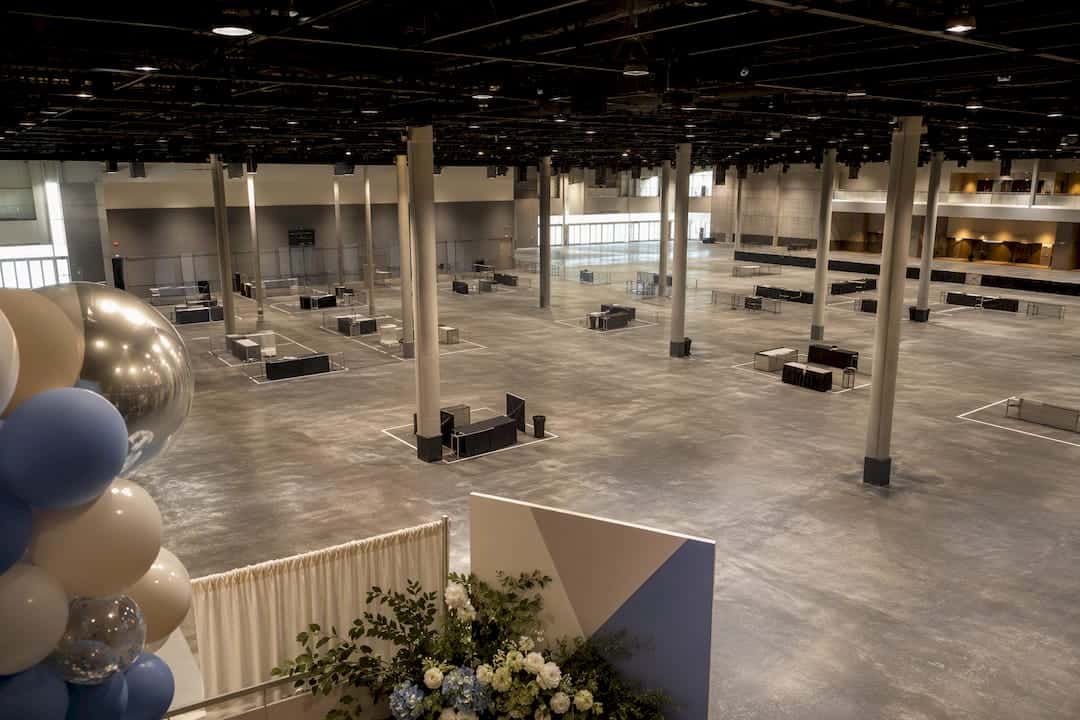
Georgia World Congress Center. GWCC’s exhibit halls run on floor boxes spaced at 30-foot centers, with columns set at 90-foot or 180-foot intervals, a detail that matters enormously once you’re mapping booth layouts or rigging points for large-scale décor. The complex also includes three landscaped outdoor plazas that planners can fold into a floor plan for receptions, sponsor lounges, or golden-hour photo activations. Loading dock access is extensive, built for the freight volume of major trade shows, and the downtown location puts attendees within walking distance of the Georgia Aquarium and World of Coca-Cola.
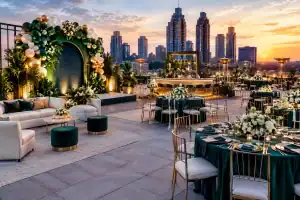
Pro Tip: If you’re staging an evening reception, book one of GWCC’s outdoor plazas early and lock in a rain contingency and power order through the venue’s vendor portal well before the 60-day mark. Outdoor activations often need temporary power and weatherproofing that can’t be added last minute.
Georgia International Convention Center. The GICC’s International Ballroom has 32-foot ceilings and a 10×10-foot rigging grid rated at 1,500 pounds per point, giving decor teams real headroom for suspended installations and marquee pieces. Its defining advantage is the direct ATL SkyTrain connection, which turns a same-day fly-in conference into a genuinely viable format. Parking is plentiful and self-contained, which simplifies vendor load-in compared to tighter downtown sites.
Atlanta Convention Center at AmericasMart. This venue’s biggest asset is its 100,000 square feet of contiguous street-level exhibit space, meaning no elevators, no split-floor logistics, and faster move-in for exhibitors. With several meeting rooms, it handles mid-to-large conferences without the overhead of a mega-venue, and its downtown position keeps it close to MARTA and hotel room blocks.
Cobb Convention Center. Following its renovation and expansion, this venue positions itself as a regional mid-size hub near the Cobb Energy Performing Arts Centre. For groups based in Marietta, Kennesaw, or the northwest suburbs, it removes the need to fight downtown traffic altogether, and it works well for corporate meetings that don’t need trade-show scale.
How Should You Choose the Right Venue?
Start with attendance numbers, then work backward through logistics. A few criteria decide most bookings:
-
Expected attendance and exhibit footprint — under 5,000 attendees often fits comfortably at AmericasMart or Cobb; trade shows above that scale usually need GWCC.
-
Load-in logistics — check loading dock counts and floor box spacing against your booth or décor plan before signing anything.
-
Hotel room block needs — GICC and AmericasMart sit closer to concentrated hotel inventory than some GWCC-adjacent options.
-
A/V and rigging requirements — confirm rigging grid capacity (like GICC’s 1,500-lb rated points) against your production plan.
-
Total budget, including service charges beyond the base rental fee.
Most Atlanta venues run on a predictable 90/60/30-day milestone model:
-
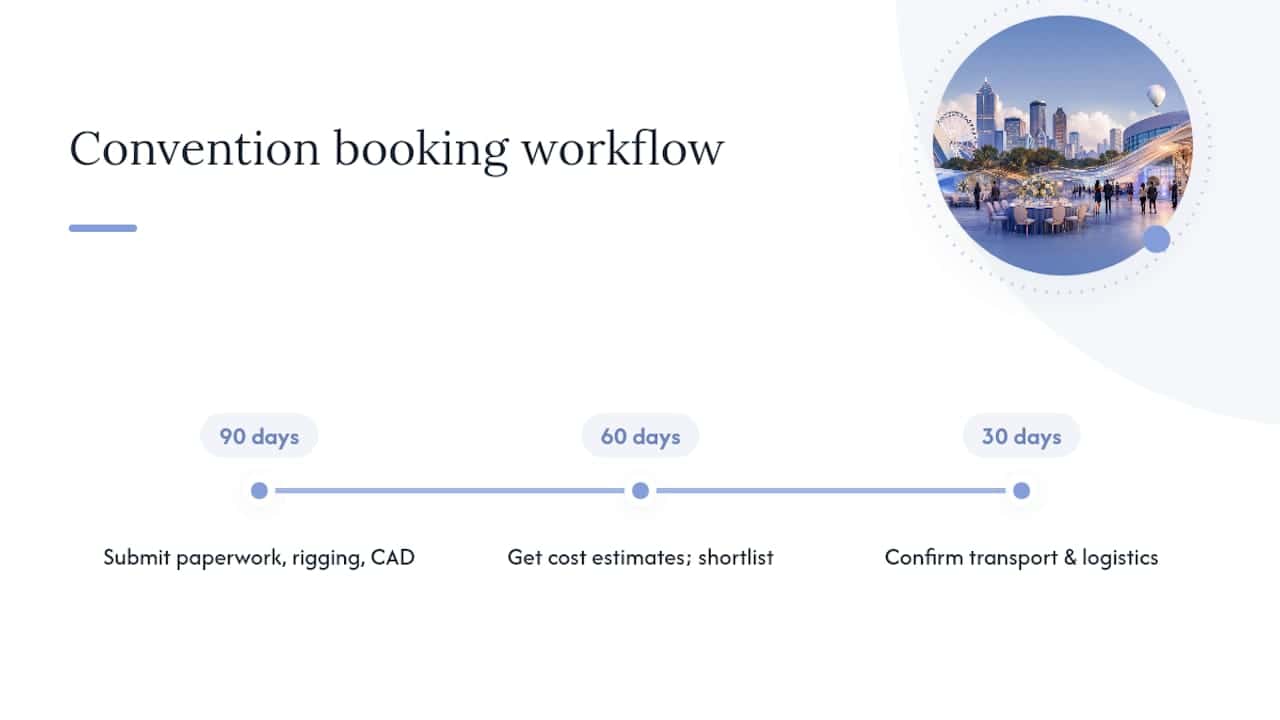
90 days out: submit attendance forecasts, high-level schedules, and floor plans, including any rigging or CAD overlays for décor installations.
-
60 days out: venues typically return cost estimates and confirm room assignments.
-
30 days out: final details lock in. Waiting past this point on catering counts, floor plans, or vendor certificates often means added fees or reduced flexibility.
During a site visit, ask directly about preferred contractor lists, insurance requirements for outside vendors, and whether outdoor plaza use requires a separate permit.
When Should You Lock In Your Booking Timeline?
The 90/60/30-day framework isn’t a suggestion; it’s how these venues actually staff and price events. GWCC’s own planning guide tells planners to loop in Building Services, Operations, and Catering by the 90-day mark, because waiting until the final month routinely means fewer floor plan options and higher change fees. That guidance holds across most large Atlanta venues, not just GWCC.
For anyone comparing Atlanta convention centers on a live shortlist, the practical move is to submit initial paperwork to two or three venues simultaneously at the 90-day checkpoint, then narrow down once cost estimates land around 60 days. That keeps a backup option alive without paying deposits twice. Groups planning outdoor plaza activations or large suspended balloon and floral installations should treat 90 days as the real deadline for rigging drawings and CAD overlays, since venues need lead time to review load points against ceiling grids and floor box locations.
Same-day fly-in groups booking GICC benefit from confirming SkyTrain logistics and airport shuttle windows early, since group arrival waves can bottleneck the connection during peak conference season. Waiting until 30 days out to sort transportation for 500 attendees is a real scramble that’s easy to avoid.
Are Atlanta’s Convention Centers ADA Accessible?
Every major Atlanta convention center is required to meet Americans with Disabilities Act standards for public assembly facilities, covering accessible entrances, restrooms, elevators, and clear egress paths. What varies is how each venue applies those baseline requirements across a much larger, more complex floor plan.
GWCC’s scale means accessible routes span multiple connected halls, so planners hosting attendees with mobility needs should request the venue’s accessibility map rather than assume a single entrance covers the whole footprint. GICC’s SkyTrain connection is itself an accessibility asset, cutting out the need for ground transportation transfers that can be difficult for attendees using mobility devices. AmericasMart’s single-level contiguous exhibit floor is genuinely easier to navigate than a split-level venue, a detail that matters for both ADA compliance and general attendee comfort. Cobb Convention Center, as a renovated facility, incorporates current accessibility standards throughout its updated spaces.
Ask every venue directly for its ADA compliance documentation and accessible seating plan during the site visit, and build any special accommodation requests into your 90-day submission rather than requesting them at the last minute.
What Do Atlanta’s Convention Centers Get Wrong About Décor Logistics?
Most venue guides talk about square footage and forget that the number on the fact sheet isn’t the number a decor team can actually use. A 1.5-million-square-foot exhibit hall sounds limitless until you’re trying to rig a 20-foot balloon installation and discover the load points sit on a 90-foot column grid that doesn’t line up with your stage plan.
What planners underestimate is how much the 90-day milestone actually protects them. It’s not bureaucratic paperwork. It’s the only window where a venue’s operations team can move a floor box, approve a rigging point, or reroute a loading dock schedule without charging a change fee. Submit your décor plans early enough, tied to the venue coordination process rather than the exhibit layout alone, and you get real flexibility. Submit them at day 30, and you’re negotiating around whatever’s already locked.
The other overlooked detail is outdoor space. GWCC’s plazas and GICC’s prefunction areas get treated as afterthoughts in most comparisons, but they’re often the most memorable part of an event, provided someone orders temporary power and a weather contingency before the vendor portal deadline closes.
— Kay
Bring Luxury Décor Into Your Next Atlanta Convention Center Event
A professional balloon and event design team can provide planners expertise in working with convention-center rigging grids, floor box spacing, and milestone scheduling to streamline event décor coordination.

Our team specializes in organic balloon arches, garlands, marquee letters, luxury tablescapes, and full installation coordination sized for exhibit halls, ballrooms, and outdoor plazas alike. We work with venue operations teams directly, submitting CAD overlays and rigging documentation within the same timeline the venue expects, so your décor never becomes the reason a floor plan gets flagged. Whether you’re staging a Fortune 500 conference reception at GWCC or a milestone celebration inside a downtown ballroom, we handle vendor coordination the way convention centers actually require it. Serving Atlanta and surrounding communities, including nearby cities and counties, we are ready to design your next event at the venue that best suits your needs. Request a planning consultation and let’s map your décor to the venue’s own milestone schedule.
FAQ
What is the largest convention center in Atlanta?
The Georgia World Congress Center is the largest, offering over 1.5 million square feet of flexible exhibit space and numerous meeting rooms.
Why can’t you say “Hotlanta”?
“Hotlanta” is a decades-old informal nickname some locals consider outdated or overused; most Atlanta residents and business communications now simply use “Atlanta.”
What are some upcoming expos in Georgia?
Georgia’s major venues, particularly GWCC and AmericasMart, host trade shows and expos across trade categories like fashion, technology, and consumer goods throughout the year; check each venue’s public events calendar for current dates.
What are some event centers in Atlanta?
Beyond the four major convention centers covered here, Atlanta also has hotel ballrooms, the Cobb Energy Performing Arts Centre, and various private event venues suited to corporate meetings and celebrations.
How far in advance should you book an Atlanta convention center?
Most planners should begin the process at least 90 days ahead, submitting floor plans, attendance forecasts, and any rigging or décor documentation to avoid late change fees.