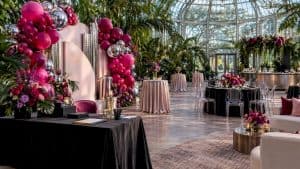
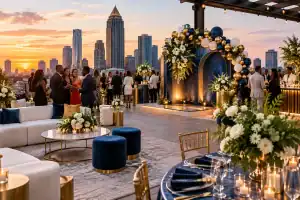
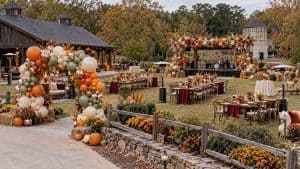
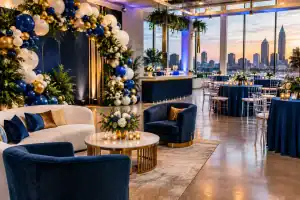
The right foundation for any event is a layered lighting system: ambient light to set the base glow, accent light to sculpt and highlight, and decorative light to add character. Dial the whole plan to a warm 2700K to 3000K for that romantic, camera-ready look, and specify fixtures rated CRI 90 or higher so colors read true in photos. For anything with cues, timing, or a stage moment, bring in a designer or operator rather than winging it.
TL;DR:
- Warm color temperatures between 2700K and 3000K are essential for creating a romantic, camera-friendly ambiance for balloon decor, with CRI 90+ for true color rendering.
- Proper layering involves ambient lighting for general glow, accent lighting to highlight features, and decorative lighting to add personality and practicality.
- Uplights, pin spots, and gobo projectors are key fixtures to make balloon installations look vibrant and dimensional, especially when placed behind or beside the décor.
- Confirm power sources, rigging points, and outdoor weather ratings early to prevent technical issues that could derail the lighting plan.
- Coordinating with a single vendor like Atlanta Balloon Designer simplifies color matching, fixture planning, and on-site support, ensuring consistent visual effects across all décor elements.
Table of Contents
- What Are the Three Layers of Event Lighting Basics?
- What Color Temperature Works Best for Balloon Décor?
- Which Fixtures Actually Make Balloon Installations Shine?
- What Logistics Should You Confirm Before the Event?
- How Do You Brief a Lighting Vendor Correctly?
- Lighting Mistakes I See Most Often on Atlanta Sites
- Let Atlanta Balloon Designer Handle the Lighting Coordination Too
- Sources
- FAQ
What Are the Three Layers of Event Lighting Basics?
Every well-lit event, from an intimate baby shower in Smyrna to a Fortune 500 gala downtown, works because three distinct layers stack on top of each other. Skip one, and the room falls flat no matter how stunning the balloon installation is.
Ambient lighting is the overall wash. String lights, chandeliers, and warm uplighting washes fill the room with a base glow that sets the mood before a single balloon column comes into view. This is the layer that keeps a ballroom from feeling like an office after dark.
Accent lighting does the sculpting. Pin spots and uplights aimed at balloon arches, garlands, and sculptural centerpieces bring out the sheen and dimension that flat overhead light flattens into a blur. This is the layer that turns a beautiful installation into a showstopper.
Decorative and functional lighting rounds it out with personality and practicality. Think lanterns, pathway lighting, and cascading string lights that guide guests while adding texture of their own.
- A wedding reception might combine warm ambient washes with pin spots on the balloon arch and lanterns lining the aisle.
- A corporate gala often leans on cooler ambient tones with crisp accent beams on branded backdrops.
- A milestone birthday or baby shower usually thrives on warm ambient glow, playful accent color on the balloon wall, and string lights strung overhead for that candid-photo sparkle.
Layered lighting isn’t a designer flourish. It’s the single strategy that most reliably makes décor read as cinematic rather than staged.
What Color Temperature Works Best for Balloon Décor?

Warm amber light in the 2700K to 3000K range is the standard for social events, and for good reason. It flatters skin tones, gives balloon surfaces a soft glow instead of a clinical sheen, and matches the romantic, cinematic look that dominates modern event photography.
Cooler light, 4000K and above, has a place. It reads crisp and modern, which works for tech launches or minimalist corporate stages, but use it sparingly and never mix it uncontrolled with warm sources in the same sight line. Guests notice when one wall glows amber and the next glows blue white, and cameras notice even more.
Statistic Callout: The two specs that most decisively affect how a room photographs are consistent color temperature and CRI. Fixtures should be specified at CRI 90 or higher to render true color, whether that’s skin tone, food, or the exact blush of a balloon garland.
Metallics and chrome accents pop under warm light without looking gaudy. Pastels stay soft and never wash out. Jewel tones, sapphire, emerald, amethyst, gain depth and saturation instead of turning muddy, which matters when a balloon installation is built around a specific palette.
Which Fixtures Actually Make Balloon Installations Shine?
The fixture list for a balloon-forward event is shorter than most people expect, but each piece has a specific job.
- Wireless LED uplights are the workhorses. Battery-powered units skip cable runs and work anywhere, while wired units offer steadier output for longer events; space them 3 to 4 feet apart behind or beside installations for even coverage.
- Pin spots carry the real magic for centerpieces and sculptural pieces. A tight beam angle, usually 10 to 25 degrees, keeps the light focused on the balloon cluster instead of bleeding onto the tablecloth.
- Gobo projection throws a monogram or pattern onto a dance floor or backdrop wall, a favorite for weddings and milestone celebrations that want a personalized photo moment.
- LED bars, strips, and pixel tape create underset glow beneath balloon columns or tucked into garland bases, adding a dimensional pop without an extra fixture footprint.
- Intelligent fixtures, the moving, color-changing kind, earn their keep at large galas with programmed cues, but for a 60-guest dinner they’re often more distraction than payoff.
Uplighting remains the most cost-effective way to transform a room, and it does its best work directly behind a balloon arch or backdrop, where it creates the depth that makes an installation feel immersive rather than pasted onto a wall.
Pro Tip: Bring swatches of your actual balloon colors to the lighting walkthrough. A pin spot that looks perfect on a white sample card can shift a blush garland toward orange under the wrong Kelvin setting.
What Logistics Should You Confirm Before the Event?
Lighting plans fail for boring reasons: not enough power, no rigging point, or a fixture that can’t handle rain. Clear these before finalizing anything.
- Power and rigging. Confirm the venue’s electrical service, available breakers, and any approved rigging points for trussing or pipe and drape before locking the lighting plot.
- Outdoor safety. For patios, tents, or garden events, specify IP65-rated fixtures for anything exposed to weather, and swap real candles for LED flameless versions on tables where wind or venue rules make open flame impractical.
- Lead time. Simple uplight-and-wash packages can usually be booked and delivered in 1 to 2 weeks. Custom builds with flown fixtures or full programming typically need 3 to 6 weeks or more.
- Budget drivers. Fixtures are rarely the biggest line item. Rigging, power distribution, and crew time for hanging, focusing, programming, operating, and striking the rig usually cost more than the lights themselves.
Locking a design the venue can’t physically support is the single most common schedule breaker in event production, so confirm power and rigging before you fall in love with a plot.
How Do You Brief a Lighting Vendor Correctly?
A good brief saves everyone from surprises on event day. Ask your vendor to provide a lighting plot, a circuit and cable plan, a cue list if there are programmed moments, a confirmed operator call time, and a fixture inventory.
In return, hand them a scaled floor plan, reference photos of the planned balloon installation, physical color swatches, and a run of show with key timing moments like entrances or toasts.
- Ask directly about CRI and Kelvin targets, not just “warm or cool.”
- Ask whether uplights are battery or wired, since that changes placement flexibility.
- Ask about IP ratings if any part of the event is outdoors.
- Ask how much time is reserved for focus and programming.
Reserve a 60 to 90 minute window after rigging for the crew to aim and program fixtures in the dark, since this step happens after the room goes quiet and often gets squeezed by a tight timeline.
Lighting Mistakes I See Most Often on Atlanta Sites

Overhead harshness is the number one problem I run into on site. Venues love their built-in can lights, and those lights flatten every balloon texture we build. The fix is simple: dim the house lights and let ambient and accent layers carry the room instead.
Mixed Kelvin is the second. One string of warm bulbs next to a cool white uplight ages a balloon installation instantly. After styling installations for Fortune 500 activations and fashion showcases like BLOOM around metro Atlanta, I’ve learned that consistency beats intensity every time. Coordinate lighting with your décor team early, before the floor plan is locked, and the room will do half the work for you.
— Kay
Let Atlanta Balloon Designer Handle the Lighting Coordination Too
Atlanta Balloon Designer is the alternative to juggling separate décor and lighting vendors for your event in Austell, Marietta, Smyrna, or anywhere across the greater Atlanta metro. Instead of coordinating handoffs between two teams and hoping the Kelvin matches, you get one studio managing color-matched lighting packages alongside the balloon installation itself.
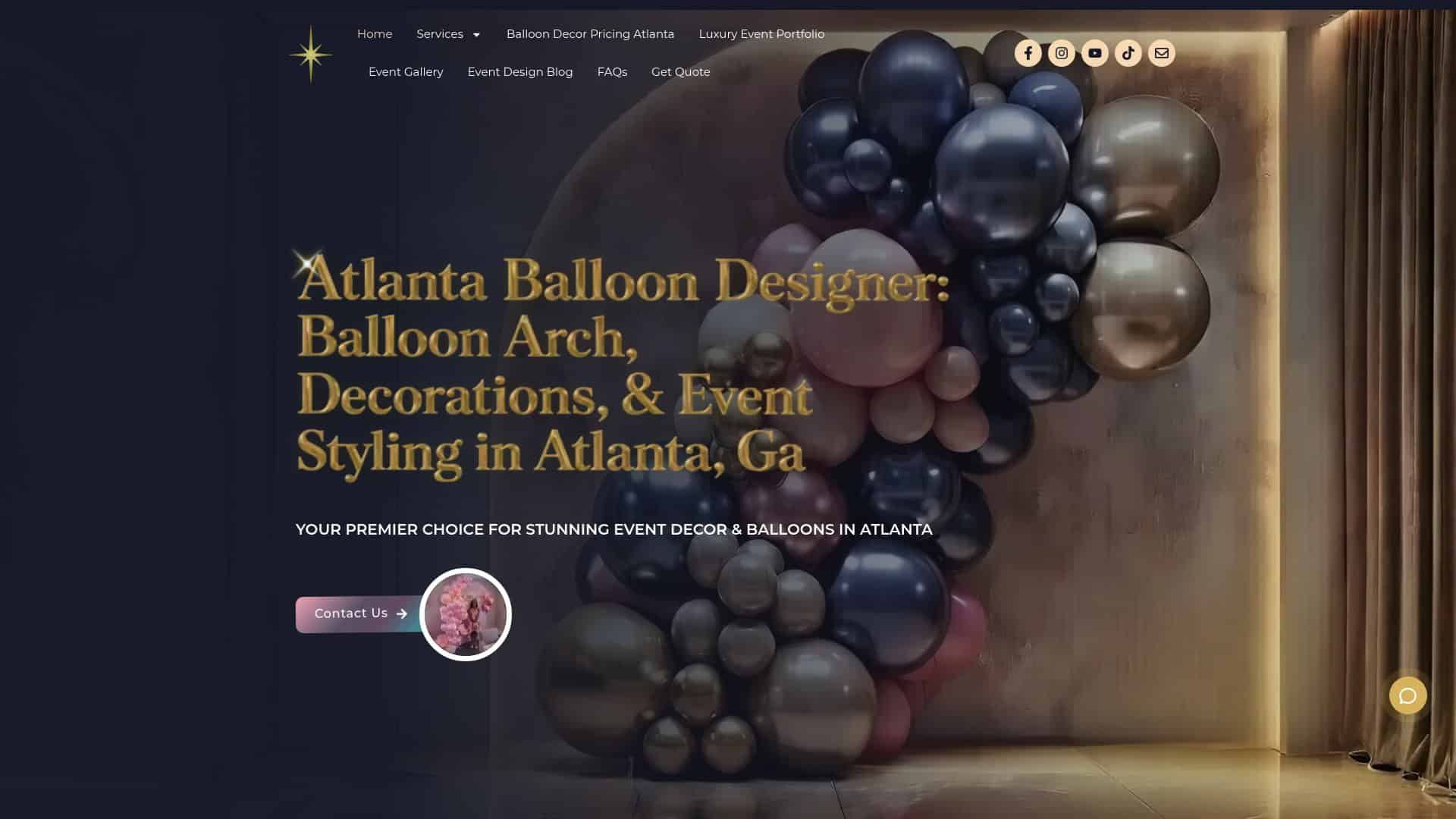
Our full-service styling includes vendor coordination, on-site focus and programming support, and a design team that already knows how amber uplighting reads against metallics, jewel tones, and pastel balloon palettes. If simplicity and consistent visual control across your whole room matter more than managing multiple contracts, this is the stronger route. Browse creative decoration ideas for 2026 for a sense of what’s possible, then request a custom proposal so we can pair the right lighting plan with your luxury balloon décor from the start.
Sources
For deeper technical detail on Kelvin ranges, CRI, and staffing timelines, the Producer’s Guide to Custom Event Lighting Design and the Event Lighting Design Guide cover fixture roles in detail. For trend context and warm-tone rationale, see Event Lighting Trends 2026. Planners coordinating catering alongside lighting and décor may also find this festive meal offerings list useful for timing service around key lighting moments.
- Event Lighting Trends 2026: What’s Actually Worth It
- The Producer’s Guide to Custom Event Lighting Design
- Event Lighting Design Guide | EventFab
FAQ
What Kelvin Range Should I Request for a Balloon Installation?
Ask for 2700K to 3000K for most social events. It flatters skin tones and gives balloon surfaces a warm, cinematic glow rather than a flat or clinical look.
Do I Need a Lighting Operator for a Small Event?
Simple uplight packages with no cues can often run unattended, but any event with programmed moments, color changes, or a stage cue needs an operator present.
What CRI Should I Specify for Camera-Friendly Lighting?
Specify CRI 90 or higher. This ensures skin tones, food, and balloon colors render accurately in photos and video instead of shifting toward the wrong hue.
Is It Safe to Use Real Candles Outdoors?
LED flameless candles are the safer choice for outdoor tables, especially in wind, and IP65-rated fixtures should cover anything else exposed to weather.
How Far in Advance Should I Book Event Lighting?
Book simple uplighting packages 1 to 2 weeks out. Custom, flown, or fully programmed lighting builds need 3 to 6 weeks or more, so lock those early alongside your balloon décor plan.