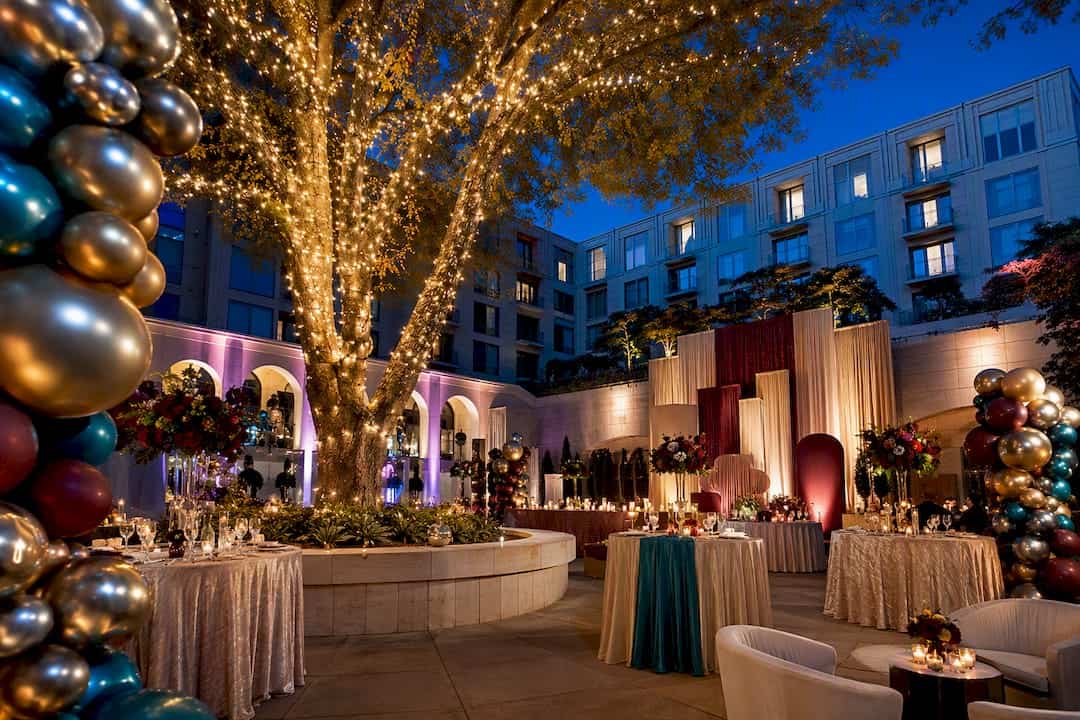
A memorable tree lighting comes down to one thing: a single, well-timed lighting cue backed by permits, qualified installers, and a theme people will photograph. Success looks like a countdown that lands on schedule, zero safety incidents, and a crowd that lingers for photos afterward. This guide walks through both the creative concepts and the permitting, staffing, and technical details that make the moment actually happen.
TL;DR:
- A well-timed lighting cue backed by proper permits and qualified installers is crucial for a successful tree lighting event, with timing and rehearsals ensuring synchronization.
- Site selection must prioritize visibility, reliable power access, accessibility, and traffic management, with permits secured at least 60 days in advance to avoid delays.
- For artificial trees, securing a weatherproof weighted base or ground anchors is essential, and lighting installations should follow safety guidelines like using outdoor-rated LED lights and GFCI protection.
- Creative themes like coordinated balloon arches, marquee letters, and photo backdrops significantly enhance visual appeal and social media sharing potential.
- Proper staffing with designated roles, effective crowd control, and early promotion are key to safety, smooth operation, and maximizing event exposure.
Table of Contents
- Tree Lighting Event Ideas for Every Budget and Scale
- Where to Hold It: Location Selection and Permit Logistics
- Choosing the Right Tree and Anchoring It Properly
- Lighting Installation Methods and Electrical Safety
- Decoration Themes That Photograph Beautifully
- Designing the Run-of-Show Around One Lighting Cue
- Staffing, Crowd Control, and Contractor Coordination
- Promoting the Event and Building Sponsor Support
- Guest Comfort, Accessibility, and Weather Readiness
- Takedown, Recycling, and Post-Event Follow-Through
- A Luxury Tree Lighting Concept from Kay at Atlanta Balloon Designer
- A Stylist’s Take on Spectacle Without Shortcuts
- Bring the Spectacle Without the Guesswork
- Where to Check the Rules Before You Commit
- Sources
- FAQ
Tree Lighting Event Ideas for Every Budget and Scale
Every great celebration starts with the right concept for your audience and your wallet. Here’s how the best community tree lighting ideas break down by scale.
Community scale:
- Pair the lighting with a short parade route ending at the tree. A fifteen-minute walk builds anticipation better than a static gathering.
- Launch a neighborhood ornament drive weeks ahead, then hang contributions the night of the event for instant crowd buy-in.
Volunteer-friendly and low-cost:
- Host a community decorate night two or three days before the ceremony, using hot cocoa and music to keep volunteers engaged.
- Run a ticketed ornament workshop that doubles as fundraising and pre-event promotion.
Upscale and venue-driven:
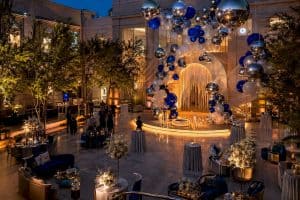
- Layer in synchronized “sparkular” effects timed to music for a jaw-dropping finale moment.
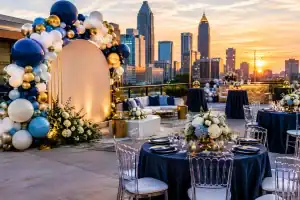
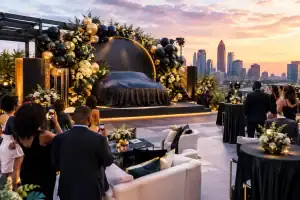
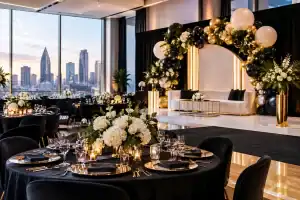
- Frame the tree with a balloon-integrated photo op, using an organic arch or marquee letters as a backdrop guests will actually want to stand in front of.
- Commission illuminated art installations near the tree to extend the visual story beyond the trunk itself.
Hybrid engagement:
- Build an interactive countdown with a giant on-stage clock or app-based sync.
- Invite a school choir or local youth group to perform, and tie in a charity donation drive tied to attendance.
Where to Hold It: Location Selection and Permit Logistics
Site selection makes or breaks everything that follows. Before you commit to a location, walk it with this checklist:
- Sightlines — can most of your expected crowd see the tree from where they’ll stand?
- Power access — is there a reliable electrical source within safe cable-run distance, or will you need a generator?
- Stage footprint — does the space fit a small stage, sound equipment, and a buffer zone for performers?
- Accessibility — are there paved, ramped paths to the viewing area?
- Parking and traffic impact — will street closures or temporary no-parking zones be needed nearby?
Permitting is where timelines get tight. Organizers should submit special-event permit applications at least 60 days before the event to secure approval for public space use, road closures, and fire or electrical safety compliance. That 60-day window isn’t a suggestion. Cities process public-space requests on their own schedule, and electrical inspections often require a separate sign-off.
Insurance matters just as much. Municipal seasonal-lighting guidance often requires permits, inspection deposits, and arborist reviews, and some cities mandate a post-removal inspection to confirm the tree wasn’t damaged during install or takedown. Ask your city’s arborist office what they require before you finalize your site.
Choosing the Right Tree and Anchoring It Properly
A living, planted tree offers year-round civic presence and doesn’t need storage, but it also comes with root protection rules your city arborist will enforce. A commercial artificial tree gives you total control over height, shape, and light placement, and you can reuse it for years, which often makes it the more practical choice for events with a strike-down deadline.
Whichever you choose, anchoring matters more than most planners expect:
- Artificial trees need a weighted base rated for local wind conditions, not just the manufacturer’s minimum stand.
- Guy-wires or ground anchors should be inspected the morning of the event, not just at install.
- Ornaments and lights need weatherproof, shatter-resistant materials. Glass and paper decorations rarely survive a windy December evening.
- Once wind-load calculations or structural anchoring are involved, bring in a professional installer. Volunteer crews are excellent for hanging ornaments, not for engineering a base that holds through a storm.
Lighting Installation Methods and Electrical Safety
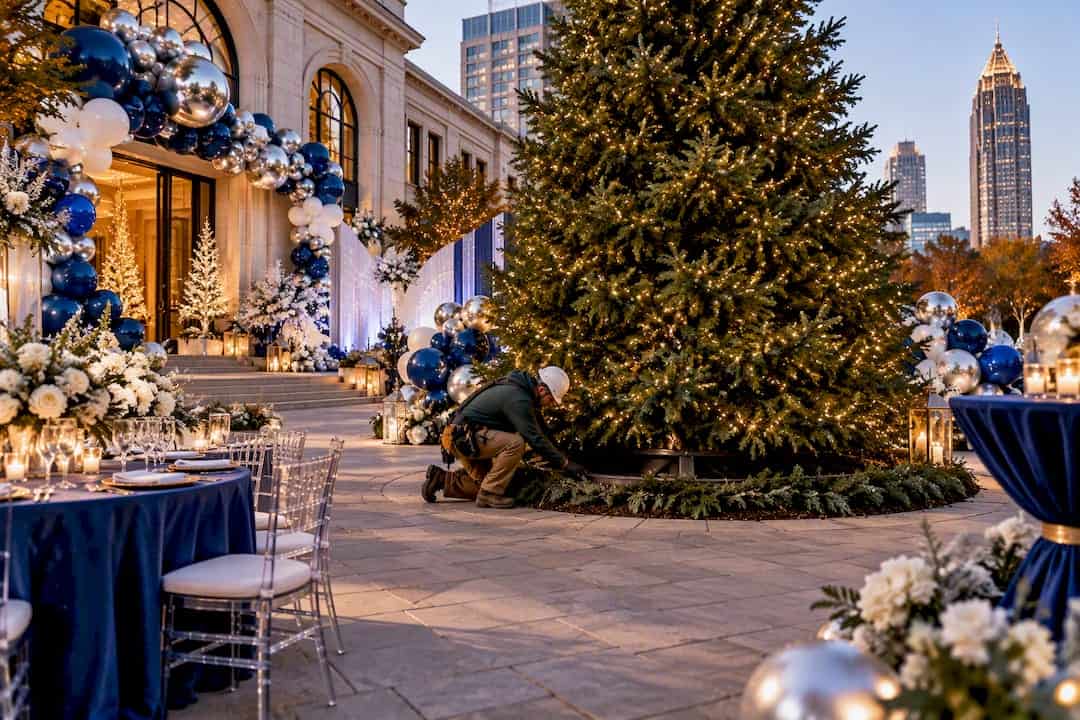
Three installation methods dominate tree lighting: tracing (running strands along branches), draping (letting strands hang loosely for depth), and wrapping (tightly coiling around trunk or limbs). Municipal guidance commonly favors tracing and draping for tree health, reserving tight wrapping for short-term displays only, since constricting wraps can damage bark and limit growth over multi-season installs.
Electrical safety is non-negotiable once you’re outdoors:
- Use outdoor-rated LED strands exclusively. Standard indoor lights aren’t built for moisture or temperature swings.
- Run every circuit through GFCI or RCD protection to prevent shock hazards near wet grass or puddled walkways.
- Secure all connectors above ground level where possible, and tape or bury cable runs across pedestrian paths.
- Confirm weatherproof covers on every outdoor outlet and splice.
Height changes everything. Festive lighting installations often require MEWPs and careful risk planning for night work, pedestrian zones, and overhead hazards, and IPAF guidance is the standard reference for safe aerial-lift operation. Anything above ladder height, or any install happening over an active pedestrian area, should go to a certified MEWP operator, not a volunteer with a borrowed lift. For a deeper look at fixture choices and color temperature, our event lighting basics guide breaks down what actually reads well on camera.
Pro Tip: Test every string of lights on the ground before installation. Finding a dead bulb forty feet up in the dark is a problem you don’t want.
Decoration Themes That Photograph Beautifully
Your theme sets the emotional tone before a single light turns on. A classic red-and-gold palette reads timeless in every photo. A nostalgic neighborhood theme leans on vintage bulbs and simple garlands for warmth. Cultural holiday mashups, blending Hanukkah, Kwanzaa, and Christmas motifs, signal genuine community inclusion when done thoughtfully. Illuminated-art themes push further, treating the tree as one element in a larger walk-through light experience.
Photo-worthy backdrops extend the moment well past the countdown:
- A balloon arch in metallic gold and deep emerald frames the tree without competing with it.
- Lit garlands strung between the tree and a nearby structure create a canopy effect guests notice immediately.
- Custom marquee letters spelling out the event name or year give attendees an instant, shareable photo spot.
Everything outdoors needs to survive weather and hours of handling. Balloon installations should use professional-grade latex rated for outdoor conditions, and any luxury install benefits from coordinating vendor delivery windows with your lighting contractor so nothing blocks access during setup. Browse our gallery for examples of how balloon color palettes pair with string-light backdrops.
Pro Tip: Choose a color palette that complements your lighting temperature, not just the season. Warm white light washes out pastel tones but makes jewel tones and metallics glow.
Designing the Run-of-Show Around One Lighting Cue
Every successful ceremony works backward from a single, fixed lighting moment, commonly 7:00 PM. Build your schedule around that anchor:
- Set the exact lighting cue time first, then schedule everything else against it.
- Slot performers, speeches, and the countdown in the 20 to 30 minutes before the cue, leaving buffer time for delays.
- Assign one person to call cues via radio so the countdown, music, and lights fire in sync, not close enough.
- Schedule a tech rehearsal the day before to test lighting triggers under actual evening light conditions.
- Build in a genuine surprise, like synchronized effects or a choir stepping out unannounced, since professional producers find that one unexpected “wow” moment creates stronger social sharing than several smaller effects layered together.
Treat the whole evening as a narrative arc leading to that flip of the switch, not just a scheduled task.
Staffing, Crowd Control, and Contractor Coordination
Public events need clear roles assigned well before doors open. At minimum, staff these positions:
- A safety marshal to monitor crowd density near the stage and tree.
- A dedicated stage tech running sound and lighting cues.
- A volunteer lead coordinating check-ins, ornament hangs, and last-minute questions.
- A sanitation and cleanup crew stationed near refreshment areas.
Barricades should define a clear buffer around any MEWP or electrical work, and your contractor briefing should spell out exclusion zones explicitly. MEWP safe practice includes ground-bearing pads on soft terrain and firm exclusion zones to keep bystanders clear of falling objects or shifting equipment. No-ladder policies on public property protect both volunteers and the city from liability, so route any height work through your licensed contractor.
Promoting the Event and Building Sponsor Support
Word-of-mouth still wins locally, but stack it with structure. Post on community social pages, submit the date to local press calendars, and cross-promote with nearby businesses weeks ahead. Local event promotion strategies that combine early listings with partner tagging tend to outperform single-channel pushes.
Sponsorship doesn’t need to be complicated:
- Offer a basic tier with logo placement on printed programs.
- Give mid-tier sponsors a speaking slot during the ceremony.
- Reserve a branded ornament or banner spot for top-tier community sponsors.
- Add a raffle or ticketed ornament workshop as a light fundraising layer that also builds pre-event buzz.
Guest Comfort, Accessibility, and Weather Readiness
Comfort details separate a good event from a forgettable one. Reserve a clearly marked, ramped viewing zone near the front for guests using mobility devices, and post ADA-accessible restroom locations on your event map.
- Place hot beverage stations away from cable runs and stage equipment, with enough outlets for warmers.
- Add pathway lighting between parking and the main viewing area for safety after dark.
- Set out folding chairs or benches for elderly attendees, and have a rain or extreme-cold contingency plan ready to announce.
Takedown, Recycling, and Post-Event Follow-Through
Wrap-up deserves the same planning as setup:
- Schedule vendor strike-down within your permit window, and confirm the arborist post-inspection if your city requires one for tree health.
- Set up a recycling station for cups, programs, and packaging, and arrange donation or repurposing plans for reusable decorations rather than sending them to landfill.
- Send a short community follow-up, thanking attendees and noting the takedown schedule so neighbors aren’t surprised when crews return.
A Luxury Tree Lighting Concept from Kay at Atlanta Balloon Designer
As an event stylist with Atlanta Balloon Designer, an award-winning luxury balloon and event design company, Kay has built full-service installations that pair custom balloon work with lighting design for high-end clients across the Atlanta metro.
Here’s a concept built for a corporate or HOA-sponsored tree lighting: a deep emerald and warm gold color palette, an organic balloon arch framing the entrance to the viewing area, and marquee letters spelling out the event year positioned for the photo line. Vendor coordination covers the balloon install team, the lighting contractor, and a photographer briefed on the exact countdown time.
Three lessons apply to any planner attempting something similar:
- Lock in lead time. Premium balloon installs need days of prep, not hours.
- Confirm site access before install day. A blocked loading zone can derail a tight setup window.
- Brief the photographer on your exact lighting cue time so they’re positioned before the countdown, not scrambling during it.
A Stylist’s Take on Spectacle Without Shortcuts
The best tree lightings aren’t the ones with the most effects. They’re the ones where nobody notices the planning because nothing went wrong. Three things are non-negotiable in every event Kay has helped design: permits filed early, qualified contractors for anything involving height or electricity, and one single, rehearsed lighting cue everyone builds toward. Spectacle and safety aren’t opposing goals. They’re the same job.
— Kay
Bring the Spectacle Without the Guesswork
Our service provides a single team that handles design, mockups, installation, and strike for tree lighting décor, so your committee doesn’t have to manage multiple contractors on the same night. Services are offered in Atlanta and surrounding communities within approximately a 60 mile radius.

The team creates organic balloon arches, marquee letters, and photo backdrops designed for durability in outdoor conditions. Pricing starts at $700 for an Organic Balloon Arch and $50 per letter for custom marquee displays, with digital mockups available so your committee can approve the look before installation day. If your event needs full production support, our services page covers corporate and grand-opening balloon décor built for the same level of coordination a tree lighting demands. Reach out to book a consult or review our portfolio before you lock in your ceremony date.
Where to Check the Rules Before You Commit
Three resources are worth bookmarking before you plan further. The City of Tulsa’s Special Events Office guidance outlines permit timelines applicable to most municipalities. Seattle’s seasonal lighting and street use requirements show what arborist and inspection rules can look like. And IPAF’s MEWP safety guidance is essential reading before hiring anyone for aerial lighting work.
Sources
- Special Events Office guidance — City of Tulsa
- Seasonal lighting and street use requirements — Seattle CAM 2301
- How to safely use MEWPs to install & remove festive lights in public areas — IPAF
- Mobile elevated work platform safety — NC State EHS
FAQ
What is the Christmas tree trend for 2026?
Warm metallics, jewel-tone accents, and cultural mashup themes are trending, alongside illuminated-art displays that extend the visual story beyond the tree itself. Balloon-integrated photo backdrops in gold and emerald palettes are also gaining traction at upscale community events.
How many lights should you put on a 7ft tree?
Lighting guides suggest using enough lights to create a full, even glow, with density preferences varying by desired brightness. Outdoor-rated LED strands with GFCI protection are essential for any tree lit for public display.
What are some creative ideas for Christmas light displays?
Layering tracing and draping techniques creates depth better than a single wrapping method, and adding one synchronized “wow” effect, like timed sparkulars, tends to generate stronger social sharing than several smaller effects combined. Pairing lights with a balloon arch or marquee letters near the display gives guests a dedicated photo spot.
What are some creative ideas for outdoor Christmas lights?
Combine warm white string lights with illuminated pathway markers to guide guests safely after dark, and consider a balloon-integrated backdrop near the main display for photos. Atlanta Balloon Designer builds custom outdoor installations, including organic arches and marquee letters, designed to hold up through cold Atlanta evenings.
How much lead time do I need to plan a community tree lighting?
Plan for at least 60 days before the event to file special-event permits and secure any required inspections. Vendor bookings for balloon décor, lighting contractors, and performers should ideally be locked in even earlier, especially during the busy holiday season.