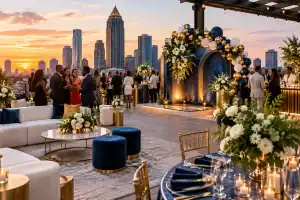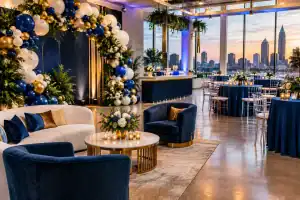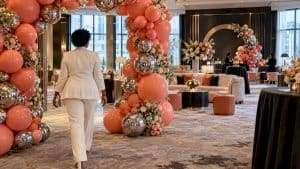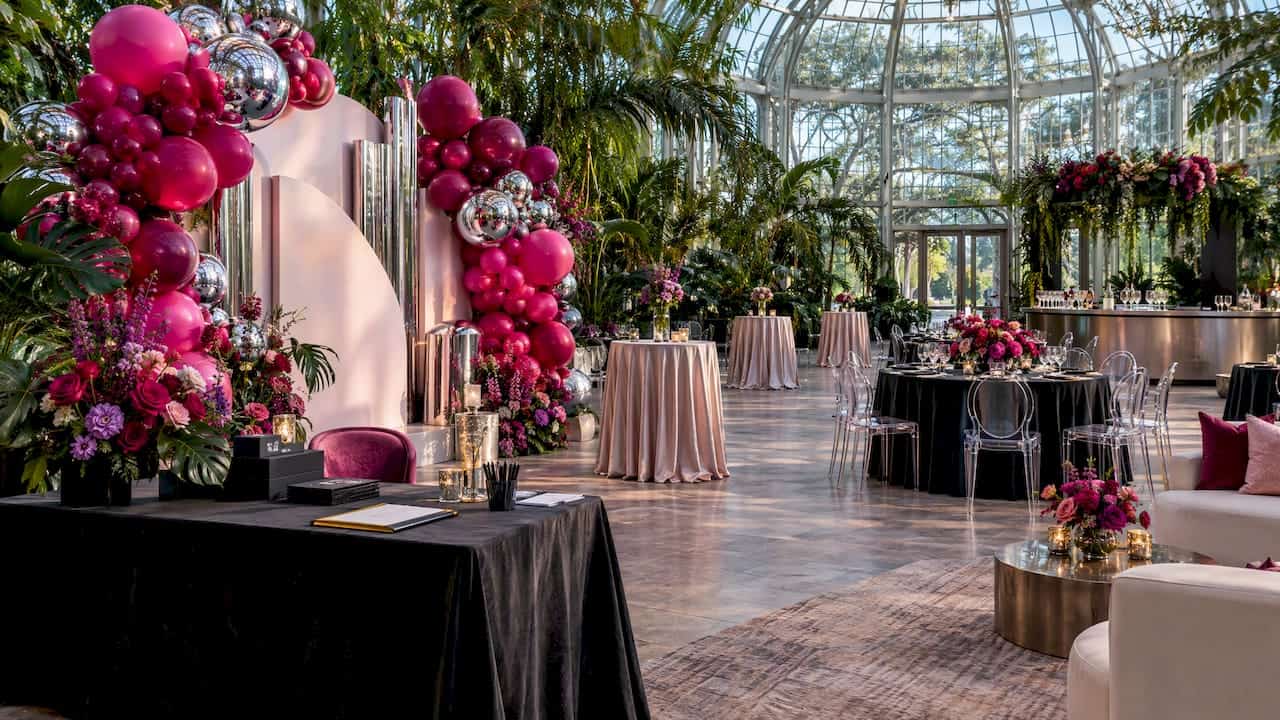
An event design brief is a short written document that tells everyone building your event what it should look like, who it is for, what it can cost and when each piece is due. Write it before you talk to decor vendors and you get comparable quotes, fewer revisions and a room that looks like the picture in your head. This guide walks through what to include, how to write it in an afternoon, and how we use briefs at Atlanta Balloon Designer to turn a vision into a finished installation.
TL;DR
- A design brief states the purpose, audience, look and feel, budget, timeline and venue facts in one document, so every vendor quotes against the same scope.
- Start with one sentence of purpose and a measurable goal, then add guest count, palette, budget with a contingency, and a dated timeline.
- Itemize what you want (sizes, quantities, placements) and describe the result you need rather than dictating how the designer gets there.
- Mark unknowns as TBD, attach venue photos and a floor plan, and get sign-off from stakeholders before vendors start.
- Sending us your brief in Atlanta? We can turn it into a digital mockup and a quote for balloon decor and full event styling.
Table of Contents
- What an Event Design Brief Is (and What It Is Not)
- Why Decor Vendors Ask for One
- The Sections Every Event Design Brief Needs
- Venue and Logistics: The Part Most Briefs Skip
- How to Write Your Brief in Seven Steps
- Describe the Outcome, Not the Solution
- A Sample Brief: Corporate Grand Opening in Atlanta
- Adapting the Brief for Other Events
- What Happens After You Send the Brief
- Perspective: What We See in Briefs That Work
- Send Us Your Brief
- FAQ
- Sources
What an Event Design Brief Is (and What It Is Not)
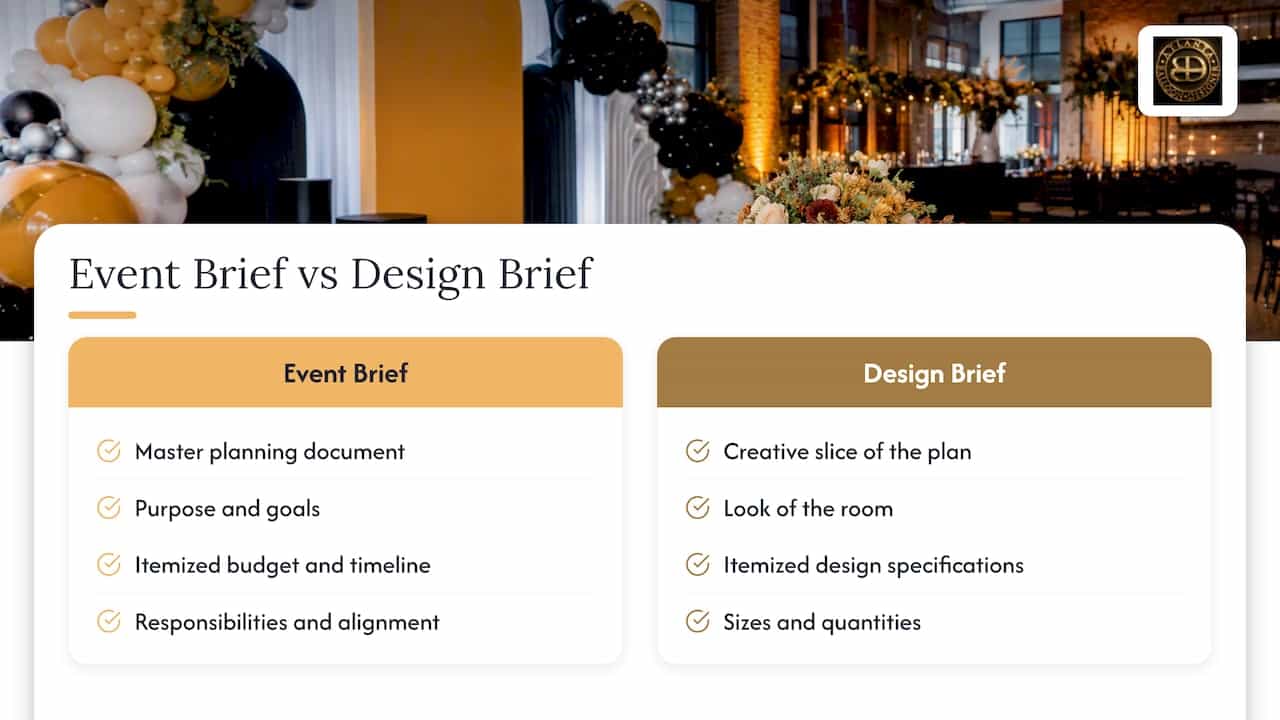
Two documents get confused here. An event brief is the master planning document. Eventbrite describes it as covering an event’s key elements, from purpose and goals to an itemized budget and proposed timeline, and as a single source of truth that keeps everyone aligned on goals and responsibilities. Cvent frames it the same way: a foundational document that shares goals, audience, logistics and desired outcomes among everyone involved.
An event design brief is the creative slice of that document, aimed at the people who make the room look the way it does: decorators, florists, rental companies, lighting and signage teams. Eventscape defines it as a written, itemized specification of an event’s look, covering things like florals, linens, candles and furniture, with quantities and sizes tied to guest count and table layout.
The design world has long used the same idea. AIGA’s client guide describes a design brief as a written explanation handed to a designer at the start of a project, stating objectives, expectations and scope, and giving both sides a benchmark for judging concepts and execution later.
What a design brief is not: a Pinterest board with no explanation, a text thread of ideas, or a request for a number. Inspiration images are welcome, but they work best as evidence for a decision written in words.
Why Decor Vendors Ask for One
A photograph of a stunning installation tells a designer the mood. It does not tell them whether you want 8 feet or 24 feet, whether the wall behind it is brick or drape, or whether 80 guests or 800 will pass it. Without that, every vendor guesses differently and the quotes cannot be compared.
Eventscape makes this point directly: a brief lets florists, rental companies and venue coordinators quote against a fixed scope rather than guessing from photographs, and itemized quantities and dimensions keep suppliers from reading the same aesthetic in different ways.
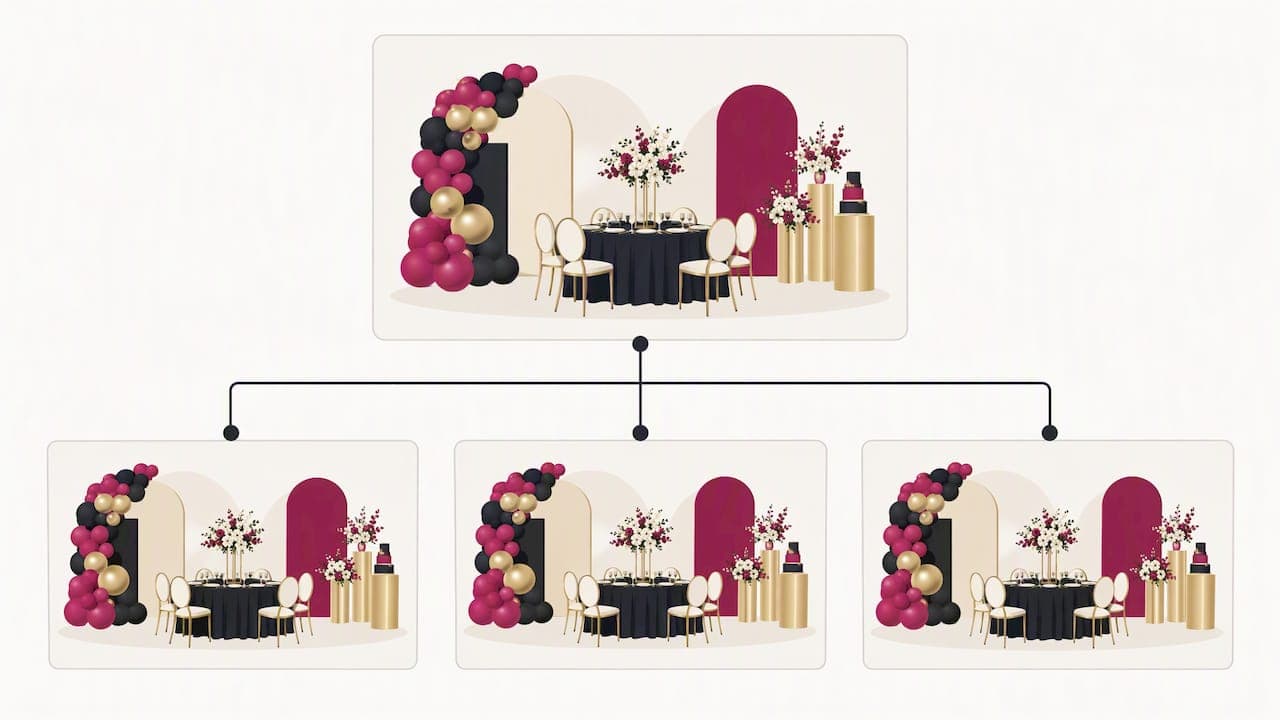
For a corporate planner, the brief also does political work. When a marketing director, an HR lead and an executive assistant all have opinions about the gala backdrop, a signed brief is the place where those opinions become one decision. The Meeting Professionals International Event Canvas was built on a similar idea: bring stakeholders into a shared, visual view of goals, needs, experience, costs and expected return.
The Sections Every Event Design Brief Needs
Templates differ, but they agree on the core. Eventbrite’s template identifies eight sections: overview and key details, purpose and goals, target audience, theme and concept, roles and logistics, marketing, budget and timeline. Zoho Backstage’s guide adds technical requirements and vendor details. For a decor-focused brief, these are the sections that earn their space.
| Section | What to write | Why a designer needs it |
|---|---|---|
| Event fundamentals | Name, date, start and end time, venue address, room names, format | Sets load-in windows and the size of the space |
| Purpose and goals | One sentence plus 1 to 3 measurable outcomes | Tells the designer what the decor must help achieve |
| Audience | Who attends, expected guest range, VIP presence | Drives scale, flow and photo moments |
| Look and feel | Palette, mood words, materials, references, “avoid” list | Narrows the creative direction |
| Itemized decor list | Each element with size, quantity and placement | Makes quotes comparable |
| Budget | Total, split by category, 5 to 10% contingency | Keeps proposals realistic |
| Timeline | Design approval, deposit, final headcount, install, strike | Prevents last-minute rushes |
| Venue and logistics | Floor plan, access, power, rigging rules, loading dock | Avoids day-of surprises |
| Approvals | Who signs off and by when | Stops design by committee |
Purpose and measurable goals
Start with one sentence: “This is a product launch for 300 customers and partners, and the decor should make the entrance the most photographed spot of the evening.” Then add a number where you can. The University of Florida’s special-events guide recommends measurable objectives, such as raising a set dollar amount, so you can judge afterward whether the event worked.
Decor goals are often softer than fundraising goals, but they can still be concrete: a branded photo wall that guests tag on social media, an entrance that reads as the brand’s colors from across the lobby, a stage that looks right on camera for the livestream.
The International Training Centre of the ILO advises that an event’s purpose should align with organizational strategy, and that a brief should clarify expectations about outcomes, experience, budget, timing and context so design choices can be justified. That is a useful test for any decor line: can you explain why it is there?
Audience and attendance
Write who is coming, not just how many. A first-birthday party with 40 family members calls for a different scale and height than a convention-center reception with 600 guests moving past a sponsor wall. Give a range if the number is not final, and say which guests matter most: the CEO, a keynote speaker, the guest of honor, the press.
Look and feel
This is where the brief becomes a design document. Include:
- Palette: name the colors in words and attach swatches. “Soft neutral tones with pops of gold” beats “something elegant.”
- Mood words: three to five, such as warm, editorial, festive, understated.
- Materials and finishes: matte latex, chrome, florals, fabric, LED, candlelight.
- References: two to five images, each with a note on what you like about it.
- Brand rules: logo placement, official brand colors, any approved fonts for signage or marquee letters.
- An avoid list: colors, themes or clichés that are off the table.
The itemized decor list
This is the section that makes a brief a brief. List every element you want with its size, count and position. For example:
- Entrance arch, organic style, approximately 12 feet wide, framing the registration desk.
- Photo backdrop, 8 feet by 8 feet, with company name in marquee letters.
- Twelve centerpieces for 10-seat rounds, low enough to talk across.
- Stage-side garland, 20 feet, brand colors only.
Eventscape suggests grouping lines by category such as florals, tableware, linens, furniture, lighting and extras, and including event type and date, guest count, table count, seats per table and the setting. If you do not know a size, say “TBD” and ask the designer to propose one.
Budget and contingency
Give an honest total and a split. Vendors can design to a number; they cannot design to silence. Eventbrite’s example recommends holding back 5 to 10% of the budget as a contingency for unexpected costs, which is wise for decor, where a venue rule or a headcount change can add an item late.
If you want a feel for decor pricing, we publish starting points on our balloon decor pricing page. As of our 2026 price list, a Spiral Balloon Arch and a 24 ft Stacked Arch each start from $600, an Organic Balloon Arch from $700 and a Luxury Organic Balloon Arch from $1,000. Big Letters start from $50 per letter, Grab and Go Balloons from $25 per foot, and delivery, setup and strike down from $125. Final pricing depends on size, color complexity and venue, which is exactly what your brief clarifies.
Timeline
Work backward from the event date. Put in the dates that decide decor outcomes: when the design is approved, when the deposit is due, when the final headcount locks, when the venue allows load-in, when guests arrive and when strike must be complete. Popular Atlanta weekends in spring, fall and the holiday season fill early, so a brief that arrives with a timeline already drawn gets a faster yes.
Venue and Logistics: The Part Most Briefs Skip
A beautiful design that cannot get through a loading dock is a problem. Put these venue facts in the brief:
- Venue name, address and the contact who handles vendor access.
- Room names, ceiling heights, floor plan and the placement of stage, bar, registration and exits.
- Load-in and strike windows, elevator or dock rules, and parking for the install crew.
- Rules on rigging, hanging, open flame, helium, adhesives or confetti.
- Power availability for LED signs and lighting.
- Table count, seats per table and head table position.
Gathering seating, table and headcount details is a coordination job in its own right. The group booking workflow guide is a good example of how planners collect and organize group details before they reach the design stage. For decor in particular, we go deeper in our planner’s guide to balloon decor venue coordination.
When the floor plan is uncertain, a site visit settles it. Ours is $250 and gives us measurements, sightlines and access details before we finalize a design.
How to Write Your Brief in Seven Steps
Zoho’s guidance is practical here: front-load the essentials, use tables rather than dense paragraphs, mark unresolved details as TBD so gaps stay visible, and circulate the draft for sign-off. RingCentral recommends starting with the basics: title, dates, times, duration, format, location and registration information. Put those together and the process looks like this.
- Write the one-sentence purpose. If you cannot say it in a sentence, stakeholders are not aligned yet.
- Set one to three goals you can check afterward. Photos shared, guests through the entrance, sponsor impressions, funds raised.
- Fill in the facts. Date, time, venue, guest range, table count.
- Describe the look in words and pictures. Palette, mood, materials, brand rules and the avoid list.
- List the elements. Sizes, quantities, placement. Mark unknowns TBD.
- Add budget and timeline. Include contingency, approval dates and the install window.
- Circulate and sign off. One owner, one version, one date after which changes are treated as change requests.
Keep the final document to two or three pages. A designer will read three pages carefully and ten pages skimmingly.
Describe the Outcome, Not the Solution
AIGA’s guidance makes a point that trips up many first-time clients: a brief should state the results you want rather than prescribe the designer’s solution. You define objectives, audience, budget, timing and approval requirements; the designer develops the response.
In practice, this means writing “a welcoming entrance that photographs well from the lobby, in navy and gold, 10 to 14 feet wide” instead of “two spiral columns with a gold ring.” The first gives a specialist room to propose something better; the second locks in your guess. If you have a specific idea you love, say so, and mark it as a preference rather than a requirement.
A Sample Brief: Corporate Grand Opening in Atlanta
Here is a condensed example, with fictional details, showing the level of detail that works.
Event: Grand opening of a regional office, Midtown Atlanta, Thursday evening, 5:30 to 8:30 p.m.
Purpose: Welcome 250 clients and community partners and give the brand a visible, photogenic arrival moment.
Goals: Entrance becomes the main photo location; brand colors recognizable from the street; setup complete 90 minutes before doors.
Audience: Clients, local officials, employees. Two VIP speakers.
Look and feel: Navy, white and brushed gold. Modern, warm, not childish. Matte and chrome latex finishes, LED marquee letters, candlelit cocktail tables. Avoid red.
Elements:
| Item | Size | Quantity | Placement |
|---|---|---|---|
| Organic arch | About 14 ft wide | 1 | Main entrance |
| Photo backdrop with logo | 8 ft x 8 ft | 1 | Lobby left wall |
| Marquee letters spelling the office name | TBD | 1 set | Reception desk |
| Cocktail table accents | Small | 15 | Main floor |
Budget: Total decor budget TBD by Friday; contingency 10%.
Timeline: Concept approved three weeks out; final headcount two weeks out; load-in 3:00 p.m.; strike 9:00 p.m.
Approvals: Marketing director signs concept; facilities signs access and rigging.
With that on one page, a designer can return a mockup and a quote without a single clarifying call. For more on how we approach this kind of event, see our guide to corporate event balloon decor in Atlanta and why balloon decor works for corporate events.
Adapting the Brief for Other Events
The skeleton stays the same; the emphasis shifts.
- Luxury baby showers and first birthdays: Lead with the guest of honor, the theme, the palette and the photo moment. Guest counts are smaller, so spend your detail on the backdrop, the dessert table and the entrance. Note any allergies or venue rules for helium and candles.
- Weddings and bridal showers: Add the ceremony and reception flow, the head table and the sweetheart table, and the colors in the bridal party. Our wedding reception balloon decor style guide can help you pick a direction.
- Trade shows and brand activations: Add booth dimensions, show-floor rules, shipping and drayage windows, brand guidelines and sightlines from the aisle. Durability for multi-day events matters.
- Schools, nonprofits and galas: Add sponsor recognition, stage and screen needs, and the donor moments the decor should support.
What Happens After You Send the Brief
A good designer replies with questions, not with a price alone. Expect to be asked about the venue, the floor, the budget range and the moments that matter most. Then you should see a concept, ideally visual, and a written proposal that mirrors your itemized list line by line.
Compare proposals against your brief, not against each other’s marketing. Check that each one covers delivery, installation and strike, what is included in the quoted size, and what happens if headcount or room layout changes. Our guide to choosing a balloon decor package shows how to read those differences.
If a visual is what your stakeholders need, ask for a mockup before you approve. It turns a written brief into something an executive or a parent can react to in seconds.
Perspective: What We See in Briefs That Work
After years of styling events across Atlanta, from Austell to Buckhead, Roswell, Marietta and Brookhaven, we have noticed the same pattern: the clients who are happiest at the reveal are rarely the ones with the biggest budget. They are the ones who told us three things clearly: what the event has to accomplish, who walks through the room, and what they refuse to see. Everything else, we can design.
We also believe a brief should leave space for craft. Tell us the feeling you want, a warm, glowing, camera-ready welcome, and let us decide whether it is an organic arch in matte neutrals with metallic accents, a sculptural column pair, or a wall of LED marquee letters with candlelight on the tables. We have seen the best results when the brief sets the guardrails and the designer paints inside them.
One last practice: send the venue floor plan and photos early. Nothing saves more time, and nothing protects your timeline better.
— Kay
Send Us Your Brief
We are a luxury balloon decor and event styling company in Austell, Georgia, serving the Atlanta metro area and communities within about 60 miles. Whether you have a polished brief or only a date and a feeling, we can help you shape it. Our Digital Mockup Services are $75 per mockup, so you can see the design before you approve it. Planning something larger? Explore our corporate and grand opening services or call us at 678.203.0200 to book your consultation.
FAQ
What is the difference between an event brief and an event design brief?
An event brief covers the whole event: goals, audience, logistics, budget and timeline. An event design brief focuses on the look of the event and itemizes decor, sizes, quantities and placement for the vendors who build it. Many planners keep one master brief and add a design section for decor teams.
How long should an event design brief be?
Two to three pages is enough for most events. Front-load the essentials, use tables for the itemized list and timeline, and mark open questions as TBD. Longer documents tend to be skimmed, and details get missed.
What are the main parts of a design brief?
Most include objectives, audience, scope, budget and timeline, plus approval requirements. For events, add the venue facts and the look and feel. Describe the results you want and let the designer propose the solution.
When should I send a brief to decor vendors?
Send it once the date, venue and rough guest count are set, and before you commit your budget elsewhere. For popular dates in Atlanta, that usually means well ahead of the event. Contact the vendor for current availability and lead times.
Sources
- Create an Event Brief with This Template and Examples (Eventbrite)
- Blueprint for Success: A Comprehensive Event Briefing Template (Cvent)
- Event design brief: what it is and how to write one (Eventscape)
- A Client’s Guide to Design (AIGA)
- A New Event Canvas Template Makes The Event Design More Accessible (MPI)
- AEC484/WC147: Planning Special Events (University of Florida)
- Technical Advice on the Quality Assurance and Quality Improvement of Events (ITCILO)
- The complete guide to event briefs for event planners (Zoho Backstage)
- How to craft the perfect event brief step-by-step (RingCentral)
- Group Booking Workflow: A 2026 Guide For Planners