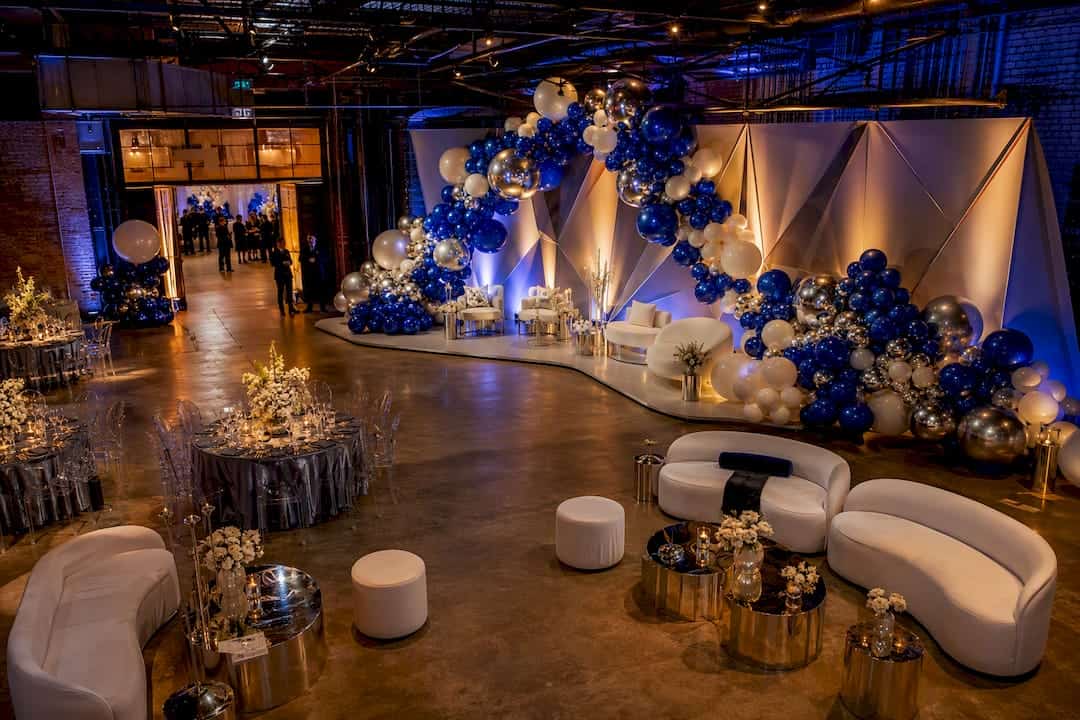
Most balloon installations take between 30 minutes and 3 hours to set up on site, with quick single arches on the shorter end and multi-zone displays or 40-plus-foot builds running 4 or more hours. Book your designer 6 to 8 weeks ahead during peak seasons, since availability tightens fast around graduations and holidays. Before anything else, confirm your venue’s access window, rigging rules, and any inspection requirements, because those three details shape everything that follows.
TL;DR:
- Most balloon installations under 3 hours if the design is simple and pre-fabrication is maximized, but outdoor setups face weather-related timing challenges.
- Booking your designer 6 to 8 weeks ahead ensures availability during peak seasons and allows time for permits or inspections that can take multiple weeks.
- Site visits and digital mockups help identify access points and rigging constraints early, reducing delays caused by last-minute adjustments or unforeseen venue restrictions.
- Large or multi-element designs, especially those requiring suspended features or multiple zones, can extend setup time beyond four hours and need careful planning of crew size and equipment.
- Permits, safety inspections, and venue-specific rules, such as helium restrictions or mandatory fire marshal approvals, significantly impact the start and duration of balloon installations.
Table of Contents
- What actually drives how long a balloon install takes
- Realistic sample timelines by event type and install size
- Preparation before installation day to minimize on-site hours
- On-site installation sequence: who arrives when and per-step durations
- Permits, venue rules, and safety inspections that change timelines
- Breakdown and teardown rules, timing, and likely extra fees
- Planner-ready checklist and timeline templates to copy into a BEO
- Why timing knowledge separates smooth events from stressful ones
- How Atlanta Balloon Designer keeps your installation on schedule
- Where to verify permit rules and load-in standards
- Sources
- FAQ
What actually drives how long a balloon install takes
Design complexity sets the baseline. A single spiral arch is a different animal than a suspended chandelier installation or a wall of garlands stretching across a ballroom. Ceiling height, available anchor points, loading dock access, and whether your crew is hauling gear up a service elevator or three flights of stairs all add or subtract time. Extra features like LED lighting, floral accents, or custom signage extend the build, while a well-prefabricated piece cuts on-site hours dramatically. Outdoor events face their own clock: wind, heat, and rain can shrink your install window to almost nothing.
- Bigger, taller, or multi-element designs take longer than a single arch or garland swag.
- Limited elevator access or narrow hallways slow down every trip crews make hauling materials.
- More crew members on site generally means faster assembly, but only when the space allows them to work without tripping over each other.
Pro Tip: Ask your designer how much of the piece will arrive prefabricated versus built from scratch onsite. It’s often the single biggest factor in your final timeline.
Realistic sample timelines by event type and install size
A small social gathering, think a single organic arch and a few tabletop clusters, usually wraps in under an hour once the crew arrives, especially if garlands were shaped off-site the day before. Weddings run longer because there are more elements in play: an arch, a photo backdrop, table centerpieces, and often a second ceremony-to-reception transition. Corporate installs and trade show builds are the heavyweights, with hanging rigs, branded walls, and multi-zone displays that may require a fire marshal walkthrough before the room opens.
- Small party: crew arrives 2 hours before guests, complete by go-time, no buffer needed beyond basic troubleshooting.
- Wedding reception: crew arrives 4 to 5 hours before the ceremony, arch and backdrop first, table accents last, with a buffer for photography walk-throughs.
- Corporate luncheon or trade show: crew arrives the evening before or early that morning, rigging and hanging elements go up first, followed by inspection, then finishing touches.
Outdoor festivals deserve a special note. Latex balloons left outdoors can deflate or pop within 8 to 24 hours depending on heat and sun exposure, so timing your install as close to guest arrival as the schedule allows protects your investment.
Preparation before installation day to minimize on-site hours
Most of the time savings on installation day happen before your crew ever touches a balloon. A digital mockup lets you approve colors, finishes, and proportions on screen, so there’s no debate or rework once the piece is hanging in front of guests. Garlands and clusters get shaped and packed into staged kits offsite, which means crews are assembling and hanging rather than building from raw materials. A site visit ahead of the event lets your designer mark exact anchor points on a floor plan and agree on a rigging plan with the venue, removing guesswork on the day.
- Approve a digital mockup before booking day-of labor to avoid on-site color or scale surprises.
- Ask your designer to prefabricate garlands and clusters so on-site work is assembly, not construction.
- Request a floor plan with marked anchor points after a site visit so rigging decisions are made in advance, not on the fly.
- Lock in a written delivery window and itemized install plan as part of your contract.
On-site installation sequence: who arrives when and per-step durations
Vendor order matters more than most planners expect. AV and staging crews typically go in first because balloon installs often hang from or drape around structures those teams are still building. A typical load-in sequence for a one-day event staggers AV, then linens and florals, then balloon décor closer to guest arrival so nothing gets damaged by later foot traffic.
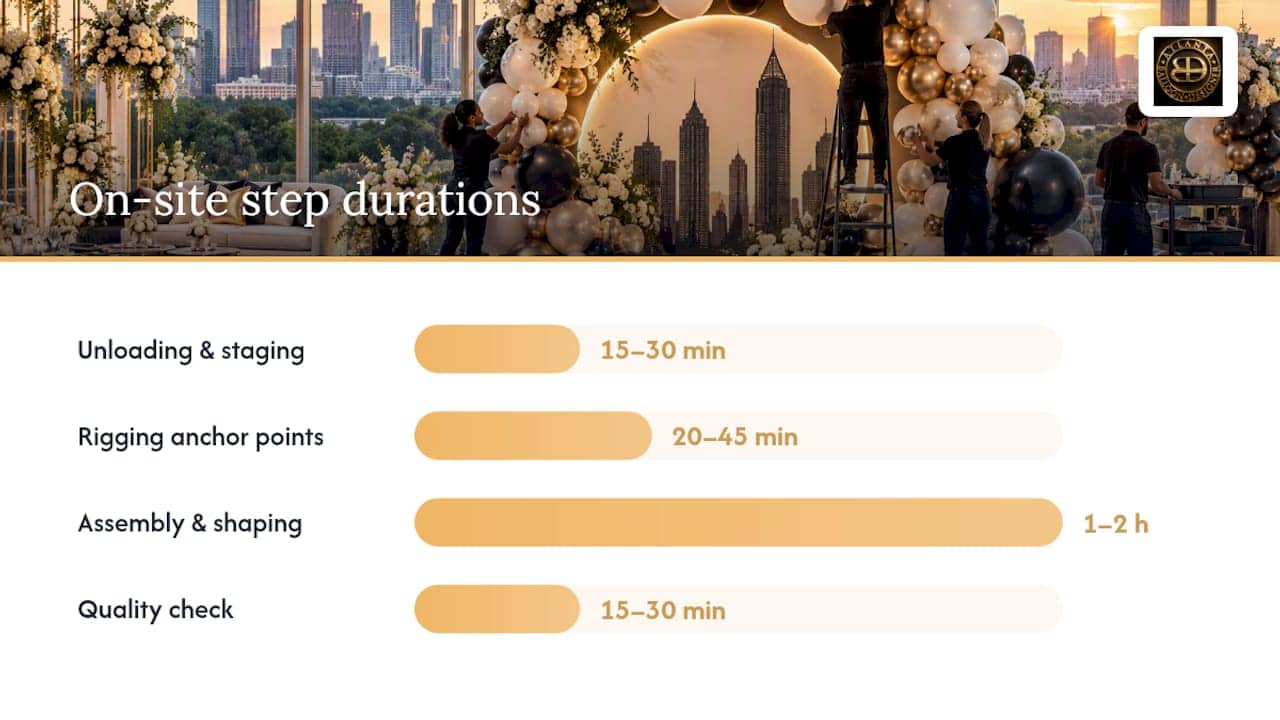
- Unloading and staging (15 to 30 minutes): materials come off the truck and get sorted by installation zone.
- Rigging anchor points (20 to 45 minutes): hardware goes up first, especially for suspended or wall-mounted pieces.
- Assembly and shaping (1 to 2 hours): the bulk of the visible work happens here, arch by arch or garland by garland.
- Quality check and photo-ready pass (15 to 30 minutes): the crew walks the space checking sightlines, symmetry, and any spots that shifted during transport.
Build in extra time for venue walkthroughs and last-minute coordination between vendors, since loading dock competition on a busy event day can push your start time later than planned. Assign one on-site contact from your team to field questions from every vendor at once.
Pro Tip: Give your balloon crew a single point of contact on event day. It cuts down on repeated questions and keeps every vendor’s schedule on track.
Permits, venue rules, and safety inspections that change timelines
Some venues, especially fairgrounds and convention centers, have rules that directly affect your install clock. A few facilities require permit applications 30 days or more before setup, and inspections during the later stages of load-in can take an hour or two on their own. Other venues go further: some convention facilities prohibit helium-filled balloons outright or require Fire Marshal approval before anything goes up.
- Ask the venue directly for its rigging policy and any material restrictions before you finalize a design.
- Get the Fire Marshal or safety contact’s name and confirm whether an inspection is required.
- Find out the venue’s permit submission deadline early, not the week of the event.
Permits at some fairgrounds must be submitted at least 30 days before setup begins, and inspections during load-in can run 1 to 2 hours, which means that window needs its own slot on your schedule, not an afterthought squeezed between other vendors.
Breakdown and teardown rules, timing, and likely extra fees
Teardown is often faster than install, but it still needs a slot on the schedule. Small designs come down in well under an hour, while large walls or rigged installations can take longer to disassemble safely. Contracts should spell out exactly who is responsible for teardown, since venues frequently charge for late strike or extended holds on the room.
- Confirm whether teardown is included in your quote or billed separately.
- Ask about long-carry or after-hours fees before the event, not after.
- Put a specific teardown window on your BEO and confirm loading access for that time slot.
Planner-ready checklist and timeline templates to copy into a BEO
Booking early is the single best way to protect your timeline. During peak months, reserving your designer 6 to 8 weeks out gives you first pick of dates and avoids the scramble that comes with last-minute requests. In the final week, confirm your guest count, verify access windows with the venue, and have a weather backup plan ready if any part of your display is going outdoors.
- Small party template: crew arrives 2 hours before doors, complete before guest arrival, teardown same night.
- Wedding reception template: crew arrives 4 to 5 hours ahead, ceremony pieces first, reception accents last, teardown next morning if the venue allows.
- Corporate luncheon template: crew arrives the evening before or early morning, rigging and inspection first, finishing touches an hour before doors open.
| Contract item | What to specify |
|---|---|
| Delivery window | Exact arrival time range agreed with the venue |
| Setup completion | Time the install must be photo-ready |
| Teardown window | Time slot and loading access for strike |
| Itemized fees | Delivery, setup, and strike costs listed separately |
Why timing knowledge separates smooth events from stressful ones
Most planners underestimate how much of a balloon installation’s success comes down to logistics rather than design. A gorgeous arch means nothing if it goes up during the cocktail hour it was supposed to frame, and a rushed crew working against a tight loading dock window is far more likely to make mistakes than one given a realistic runway.
The industry habit of quoting a single install time, “your arch will take 2 hours”, does a disservice to planners. The real answer always depends on venue access, rigging complexity, and how much prep happened before the crew ever walked in. Planners who ask pointed questions about access windows and prefab levels get far more reliable timelines than those who accept a generic estimate.
— Kay
How Atlanta Balloon Designer keeps your installation on schedule
Atlanta Balloon Designer builds every project around the timeline, not just the design. Our site visits map out anchor points and access routes before install day, and our digital mockup service locks in your colors and proportions so there’s no guesswork once we arrive. Prefabricated garlands and staged kits mean our crews spend their on-site hours assembling, not building from scratch.

When you request a quote, tell us your venue’s access window, your desired photo-ready time, and your teardown window so we can build a schedule around your actual event, not a generic template.
- Full-service install and teardown with an itemized, contract-ready schedule.
- Prefab and digital mockup options that shrink your on-site hours.
- Site visits that catch access or rigging issues before they become delays.
We serve Atlanta and surrounding communities within a 60-mile radius, including Marietta, Roswell, Buckhead, and the greater metro area. Check pricing and book your balloon décor service today to get a timeline built around your event, not someone else’s.
Where to verify permit rules and load-in standards
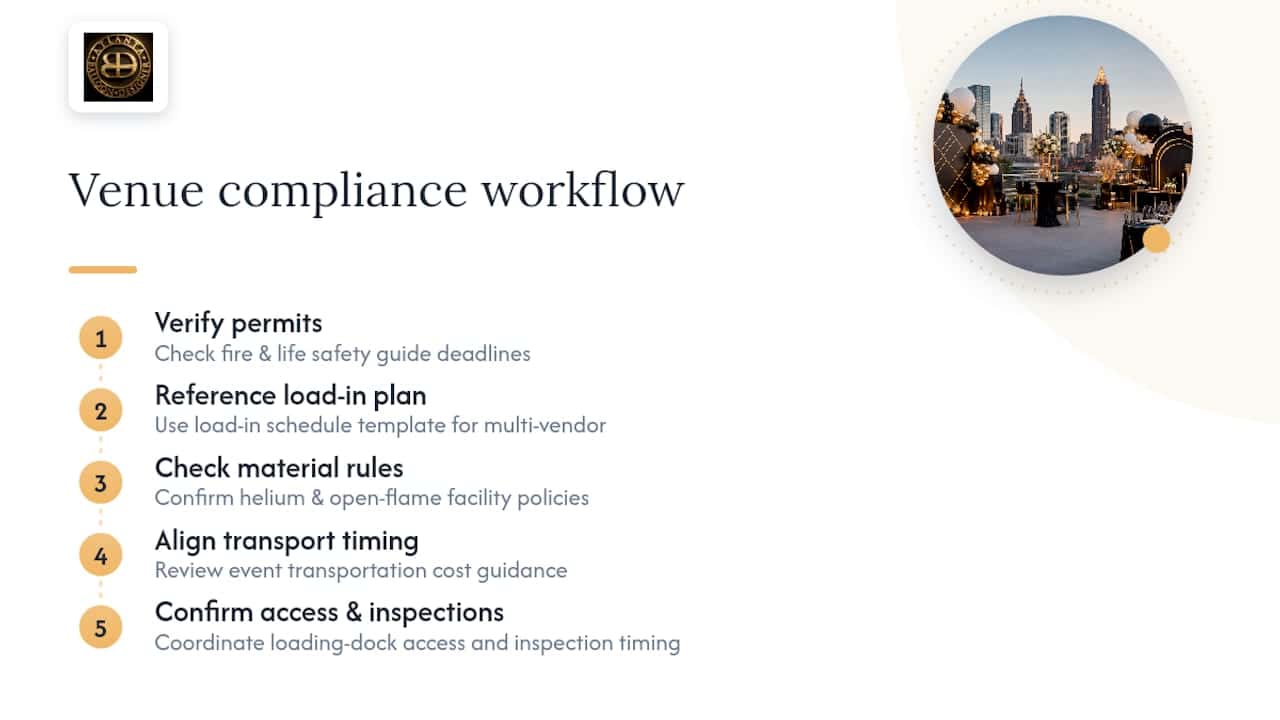
For fairground or convention-center events, review the fire and life safety requirements guide for permit deadlines and inspection timing. Corporate planners coordinating multi-vendor load-ins can reference this load-in schedule template, and events with material restrictions should check facility-specific rules like helium and open-flame policies directly with the venue. Planners coordinating multi-vendor logistics may also find value in reviewing event transportation cost guidance when scheduling vendor arrivals around loading dock access.
Sources
- Fire and Life Safety Requirements Guide for Fairgrounds (Kitsap County)
- Balloon decoration pricing & safety (Eventory Agency)
- Corporateevents
- San Antonio Fire Prevention Division guidance (GES ordering document)
FAQ
Can balloon arches be put up the day before my event?
It depends on the material and the venue. Mylar or foil elements can often go up a day ahead since they hold their shape for several days indoors, but latex arches are safer installed closer to your event start time, especially outdoors.
Will a balloon arch stay up for 2 days?
Indoors, a well-built latex arch can often last that long if the space stays cool and out of direct sun. Outdoors, latex balloons may deflate or pop within 8 to 24 hours depending on heat, so a 2-day outdoor display is a real risk.
How far in advance should I set up a balloon arch?
For most events, the day-of or the evening before works well for latex designs, timed close to guest arrival. During peak seasons, book your designer 6 to 8 weeks ahead to secure your preferred install date and avoid vendor blackout conflicts.
How long does a balloon arch take to assemble?
A single arch typically takes between 30 minutes and a couple of hours on site, depending on size and how much of it was prefabricated beforehand. Larger or more elaborate arches with floral accents or lighting can run longer, so ask your designer for a specific estimate based on your design.
What should I ask a venue before booking a balloon installation?
Ask about the access window for load-in, any rigging or helium restrictions, and whether an inspection is required before the room opens to guests. Some venues require permit submissions 30 days or more in advance, so getting these answers early protects your entire timeline.