A grand opening can have an impeccable guest list, a polished run of show, and a caterer ready to serve – yet still feel flat the moment guests walk through the door. That is where the event planner vs decorator conversation matters. These roles can work beautifully together, but they solve very different problems. Knowing the difference protects your budget, sharpens your brief, and helps your event make the right first impression.
For corporate celebrations, branded activations, conferences, ribbon cuttings, and VIP experiences, the goal is rarely just to fill a room. You are creating an environment that communicates something before anyone says a word. Sometimes that requires a planner. Sometimes it requires a decorator. Often, the strongest events need both.
Event Planner vs Decorator: The Core Difference
An event planner manages the event itself. They are responsible for the moving parts that get people, vendors, programming, and logistics to the right place at the right time. Their work is operational, strategic, and often largely invisible when it is done well.
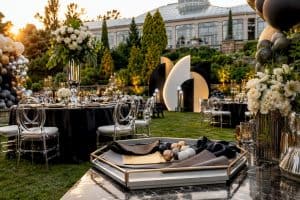
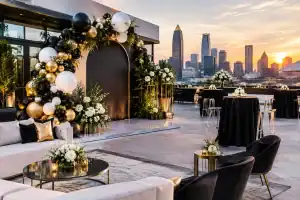
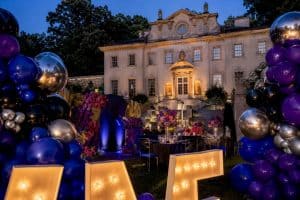
A decorator creates the visual environment. They take an empty ballroom, office lobby, storefront, trade show footprint, or outdoor venue and turn it into a branded, celebratory, camera-ready experience. Their work is highly visible – the statement entrance, the balloon installation, the custom backdrop, the table styling, the color story, and the photo moment guests immediately want to share.
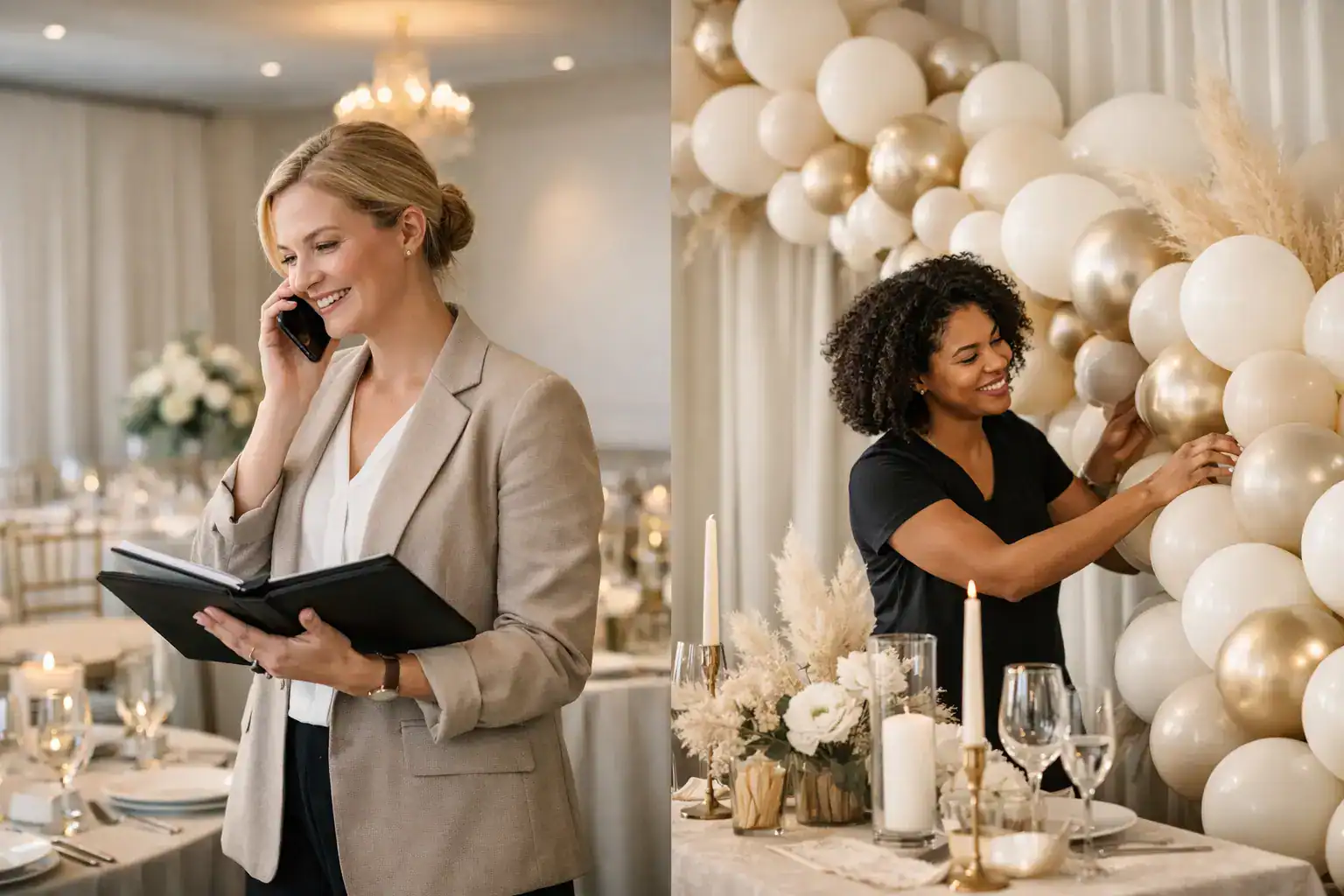
Think of the planner as the producer of the experience and the decorator as the creative force shaping what guests see and feel. One role is not more valuable than the other. They simply own different outcomes.
What an Event Planner Typically Handles
An event planner starts with the purpose of the event. Is the goal employee recognition? A product launch? A customer appreciation night? A media-facing grand opening? From there, they build the plan that turns the objective into a functioning event.
Their scope may include venue sourcing, contract coordination, guest registration, vendor scheduling, catering, transportation, staffing, permits, floor plans, timelines, speaker management, and contingency planning. For a conference or large corporate gala, a planner may also oversee breakout sessions, audiovisual requirements, sponsor needs, and attendee flow.
The planner is usually the person asking practical questions early: How many guests are expected? When can vendors load in? Where will guests check in? Who is approving expenses? What happens if the keynote speaker arrives late? Those details are not glamorous, but they are the framework that lets everything else shine.
Planning support is especially valuable when your event has multiple vendors, a complex schedule, a high guest count, or serious business stakes. If you are hosting a multi-day meeting, an executive dinner with VIPs, or a public-facing brand launch, one person needs to be accountable for the master plan.
What an Event Decorator Brings to the Experience
An event decorator begins with the visual story. They look at your brand, audience, venue, purpose, and desired energy, then develop an environment that makes the occasion feel intentional. For an experiential activation, decor is not an afterthought. It is the part guests photograph, post, remember, and associate with your company.
A decorator’s scope can include balloon garlands and organic installations, arches and columns, custom photo backdrops, branded color palettes, marquee letters, lounge moments, table decor, floral accents, draping, prop rentals, and interactive photo opportunities. A luxury decorator also considers scale, sightlines, lighting, materials, and the guest journey from entry to exit.
For example, a company anniversary in a hotel ballroom may need a dramatic stage backdrop, elevated centerpieces, a branded photo wall, and a statement balloon installation at the entrance. A planner makes sure the ballroom is booked, the program runs on time, and the dinner service works. The decorator makes sure the room feels like a celebration worth attending.
Decorators are also invaluable when the event is simple operationally but needs major visual impact. A two-hour office celebration, retail opening, employee appreciation event, or influencer photo moment may not require full planning. It may require a bold creative install that turns a familiar space into pure fire.
Where the Roles Overlap
There is overlap, particularly with full-service event companies. A decorator may recommend layouts that improve traffic flow, coordinate installation windows with the venue, and communicate with other vendors. A planner may offer styling direction, select linens, or manage decor contracts.
Still, recommendation is not the same as ownership. A decorator can advise on where a photo backdrop will perform best, but they may not be responsible for guest registration, security, catering delays, or the event timeline. A planner can choose a color palette, but they may not have the specialized design expertise, inventory, fabrication ability, or installation team needed to execute a show-stopping visual build.
The cleanest way to avoid confusion is to define the deliverables before booking. Ask who owns the timeline, vendor communication, design concept, setup and breakdown, rentals, permits, and day-of problem solving. If a responsibility is not written into the scope, do not assume it is covered.
Which One Does Your Event Need?
Choose an event planner when logistics are the biggest challenge. If you have a large guest list, several speakers, catering, entertainment, registration, off-site transportation, complicated approvals, or a packed program, planning leadership can save you from expensive last-minute surprises.
Choose a decorator when your logistics are already handled but the space needs personality, polish, and brand presence. This is common for office parties, birthday celebrations, baby showers, grand openings, employee milestones, restaurant events, and social content moments. Your event may have a straightforward schedule, but it still deserves a visual reveal.
Bring in both when the event is high visibility and high complexity. A product launch, fundraiser, corporate holiday party, media event, or branded activation needs operational control and a design point of view. That combination creates a stronger guest experience because the schedule and the spectacle support each other.
A useful test is to ask what would hurt more if it went wrong. If your biggest fear is late vendors, missed cues, or a disorganized program, start with planning. If your biggest fear is a forgettable room, weak photos, or a brand experience that does not command attention, start with decor.
Budgeting for Planning and Decor
Budget conversations become easier once you separate logistics from aesthetics. Planning fees reflect the time and expertise needed to coordinate details, manage vendors, and solve problems. Decor pricing reflects design development, materials, rentals, fabrication, delivery, installation labor, and breakdown.
A custom balloon wall or branded backdrop is not priced like a single item on a shelf. The final investment depends on dimensions, color selection, logo elements, venue access, installation height, structural needs, and how long the installation must remain in place. The same is true for planning: a luncheon for 40 guests is a different assignment from a conference with hundreds of attendees and a full speaker schedule.
Avoid allocating every dollar to food and entertainment, then treating decor as a final-week add-on. Guests remember the atmosphere from the first photo through the last toast. Set aside a dedicated design budget early, especially if the event will be photographed, filmed, or shared across social media.
How to Build a Strong Brief for Your Decorator
A great decorator can create magic, but clear inputs lead to a smarter, more efficient design. Share the event date, venue, guest count, load-in rules, purpose, brand guidelines, and the feeling you want guests to have. A few words such as polished, playful, bold, sophisticated, energetic, or editorial can help direct the creative approach.
It also helps to identify your priority moment. Do you need a head-turning entrance? A branded photo opportunity? A stage focal point? A reveal wall for a new product? Not every event needs decor in every corner. Concentrating the budget on the moments guests will see, use, and photograph can deliver stronger impact than scattering small details throughout the venue.
For corporate teams, bring decision-makers into the approval process early. Last-minute changes to logos, colors, or dimensions can affect materials and installation timelines. Give your decorator enough lead time to source, build, and install at the level your brand deserves.
Make the Room Work as Hard as the Program
The best events do not force a choice between functionality and visual impact. They use planning to remove friction and decor to create anticipation. Guests should know where to go, feel welcomed when they arrive, and encounter a setting that makes the occasion feel bigger than a meeting on the calendar.
For Atlanta celebrations and corporate activations that need a serious visual statement, Atlanta Balloon Designer brings design-forward decor, custom builds, rentals, and high-energy event enhancements into one creative vision. Start with the experience you want people to remember, then build the right team around it.