A grand opening gets one chance to make its first impression. Whether you are revealing a new retail location, restaurant, office, medical practice, showroom, or community space, this grand opening checklist Atlanta businesses can rely on helps turn opening day into a high-energy brand moment instead of a rushed gathering with a ribbon.
The goal is not simply to get people through the door. It is to create an experience worth photographing, posting, talking about, and returning to. That requires a clear plan for logistics, guest flow, brand visibility, and the visual moments that make a launch feel like a real occasion.
Start With the Moment You Want to Create
Before selecting balloons, booking entertainment, or sending invitations, define what success looks like. A corporate headquarters opening may need VIP hospitality, a leadership message, and polished media-ready visuals. A restaurant opening may need a crowd outside the door, a lively photo moment, and a reason for guests to share their visit before dessert arrives.
Decide what you want guests to feel within the first 30 seconds. Elevated. Energized. Welcomed. Curious. Proud to be there. That feeling should guide every decision, from the entry installation to the music level and the way your team greets attendees.
Set a working budget early, with room for the elements guests actually see and remember. It is easy to spend heavily on behind-the-scenes details while underinvesting in signage, lighting, decor, and guest-facing experiences. For a grand opening, visibility is part of the product.
The Grand Opening Checklist Atlanta Teams Need Before Booking
Confirm the date, venue rules, and operating readiness
Choose a date that supports your audience, not just your construction or lease timeline. For business-to-business openings, weekday late afternoons can work well for partners, media, and local leaders. For retail, hospitality, and family-facing brands, a weekend may create more foot traffic and energy.
Confirm the venue’s rules around load-in times, installation points, sound, parking, food service, candles, exterior displays, and cleanup. If you are planning a ribbon cutting on a sidewalk, in a shopping center, or near a public right-of-way, verify the relevant property and local requirements well ahead of time. Permitting needs can vary by location and event scale.
Then do the unglamorous but critical walk-through. Test Wi-Fi, restrooms, lighting, point-of-sale systems, climate control, accessibility routes, and parking instructions. A stunning event loses momentum fast when guests cannot find the entrance or your team is troubleshooting basic operations.
Build an invitation strategy with purpose
Your guest list should be intentional. Include clients, prospective clients, partners, neighbors, vendors, employees, local community stakeholders, and anyone who can authentically amplify the opening. Separate VIPs from general guests if the experience requires it. A small preview hour can give leadership, media, and key supporters time to connect before the larger crowd arrives.
Your invitation should answer four questions immediately: what is opening, why it matters, when to arrive, and what guests can expect. If there is a special offer, live entertainment, product demo, giveaway, or ribbon cutting, say so. Give people a reason to put the date on their calendar instead of treating the invitation like another promotional email.
Assign one team member to manage RSVPs and one to manage day-of guest check-in. That simple separation keeps the front door organized when attendance builds.
Make the entrance impossible to ignore
Your entrance is the first camera-ready moment and the most valuable visual real estate at the event. It should be easy to spot from the parking area or street, clearly branded, and designed for the scale of your location.
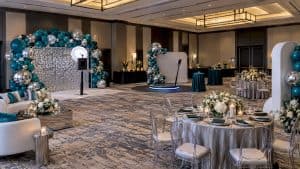
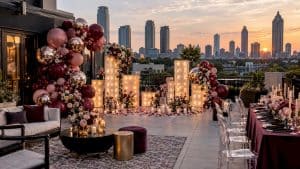
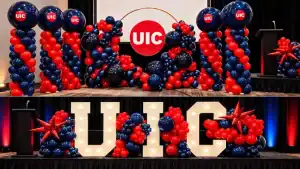
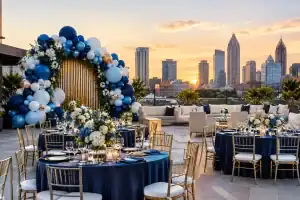
A luxury organic balloon installation, branded balloon arch, balloon columns, or custom entrance build can frame the door and signal that something major is happening inside. The strongest designs do more than add color. They incorporate your brand palette, complement the architecture, and create a backdrop guests naturally want to stand in front of.
Consider the trade-off between a fully outdoor display and a protected interior moment. Exterior decor captures passing traffic and creates instant visibility, but weather, wind, and venue restrictions can affect the plan. An indoor photo backdrop offers more control and can stay polished throughout the event. Many openings benefit from both: an attention-grabbing exterior statement and a branded indoor photo opportunity.
Design the Guest Journey, Not Just the Decor
Guests should never have to wonder where to go next. Map the experience from arrival to exit. The best grand openings have a natural rhythm: welcome, photo moment, check-in, refreshments, program, exploration, conversation, and a memorable send-off.
Use signage to guide traffic, especially if your event has multiple rooms, demonstrations, activations, or service stations. Keep the path clear around the entry, food area, ribbon-cutting space, and photo backdrop. If you expect a crowd, plan for a line before it forms.
Create one primary photo moment rather than scattering small decor pieces across the room. A customized photo backdrop, branded balloon wall, marquee letters, or statement installation gives guests a clear place to capture content. It also gives your social team a reliable visual anchor for event coverage.
For openings with a community or family audience, interactive entertainment can keep the energy moving. Balloon twisters, face painters, caricature artists, DJs, and photobooths work best when they reinforce the event’s personality instead of competing with the main message. A luxury medical office opening may want a polished photobooth and light music. A family entertainment venue may want colorful interactive stations from the moment doors open.
Plan a Ribbon Cutting That Looks Good on Camera
A ribbon cutting is short, but it can become the image everyone remembers. Do not treat it as an afterthought.
Choose a location with enough depth for the people participating, guests watching, and photographers shooting from more than one angle. Avoid placing the group in front of cluttered shelves, harsh sunlight, parked cars, or a narrow doorway. Add branded decor that frames the moment without blocking faces or signage.
Keep remarks brief and meaningful. A welcome from leadership, a thank-you to the community, and a clear statement about what the business brings to the area is usually enough. Identify the speakers in advance, give them a tight time limit, and make sure the scissors, ribbon, and microphones are ready before anyone gathers.
Have someone cue the crowd for the countdown and pause for photos after the cut. Those extra seconds matter. They give every camera a chance to capture the reaction, confetti moment, or applause without chaos.
Give Your Brand More Than One Way to Be Seen
A grand opening should produce content long after the final guest leaves. Build in branded details that appear naturally in photos and video: logo placement on a backdrop, custom colors in balloon decor, branded menus or drink signage, step-and-repeat elements, product displays, and a designated space for team photos.
Ask your content team to capture three types of footage: wide shots that show the scale, detail shots that show quality, and candid guest reactions that show energy. Do not rely only on posed photos. The most compelling recap content usually includes movement, laughter, interaction, and a room that looks genuinely full.
If media or creators are attending, prepare a concise fact sheet with the opening details, key spokespeople, and approved brand language. Make it easy for them to tell the story accurately. This is especially valuable for franchise launches, commercial real estate openings, and brand activations with multiple stakeholders.
Assign Day-Of Ownership
Even a beautifully planned opening needs a command center. Name a point person for vendors, a point person for leadership, and a point person for guest experience. They should not be the same person if the event is large.
Create a run-of-show that covers vendor arrival, decor installation, final cleaning, staff briefing, doors opening, programming, ribbon cutting, giveaways, and breakdown. Include phone numbers, timing, and a backup plan for common problems such as late deliveries, weather changes, or a speaker running behind.
Brief your staff on the brand experience you want to deliver. They should know how to greet guests, direct traffic, answer basic questions, and encourage visitors to use the photo area or take part in the featured activation. Your team is part of the decor story because service is what makes the visual polish feel real.
Keep the Momentum After Opening Day
The event may last a few hours, but the follow-up can stretch its impact for weeks. Share a recap while the excitement is fresh, thank guests and partners, and continue highlighting the products, services, or experience that brought everyone together.
Review attendance, RSVPs, sales or leads, social engagement, photo usage, and feedback from your staff. The results will show whether your next event needs a bigger invitation push, a stronger call to action, more guest flow support, or an even bolder visual statement.
Atlanta Balloon Designer creates high-impact decor, custom photo moments, and polished event experiences for brands ready to make their opening feel like the headline it deserves. When every arrival, photo, and ribbon-cutting shot carries your brand with confidence, guests do not just attend your launch. They remember where it began.