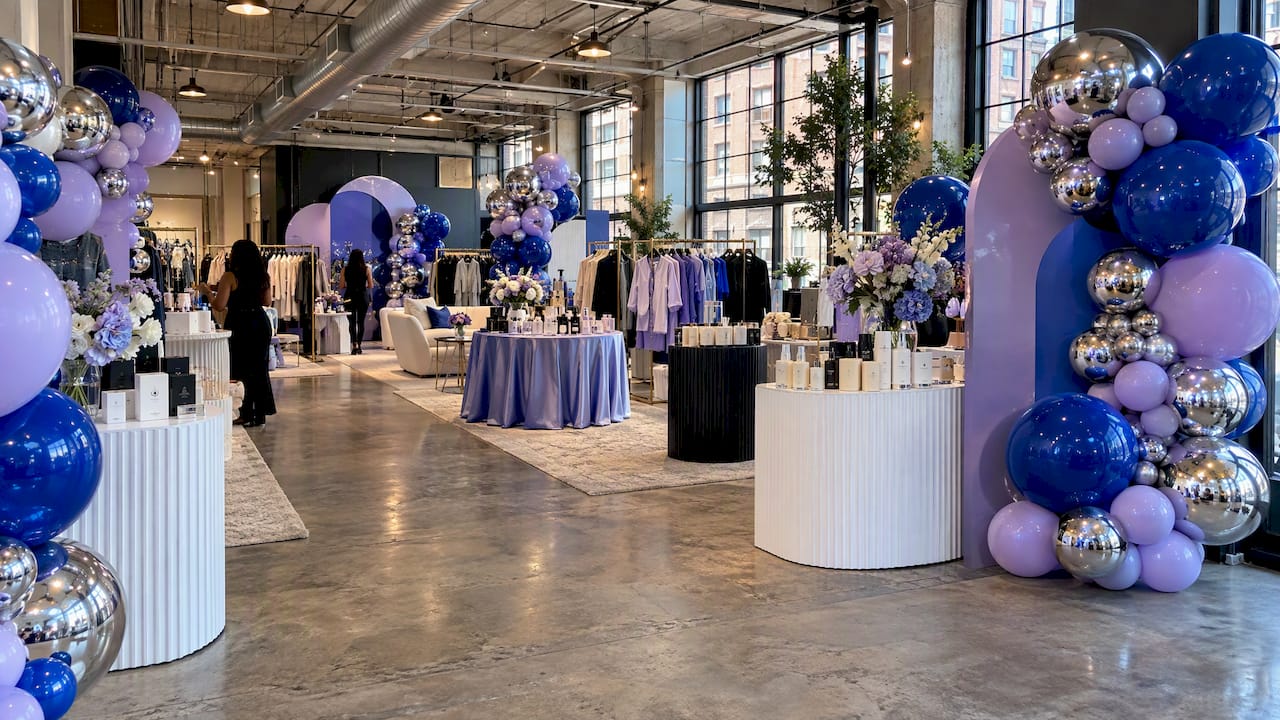
The best pop-up shop decor does three things fast: it stops people on the sidewalk, tells them what you sell in a few seconds, and gives them a reason to stay and photograph the moment. Start with one clear message, build one hero installation, light it well, and keep everything else simple enough to load in and strike out in a day. Below you will find the ideas, the layout logic and the budget realities, with an Atlanta lens for brands planning a launch, a holiday run or a grand opening.
TL;DR
- Pick one message for the whole space (a launch, a season, a collection) and let every decor choice serve it.
- Invest in one hero element at the entrance, such as a sculptural balloon installation, a branded backdrop or a bold sign, rather than spreading budget thin.
- Layer the floor plan into zones: a welcome moment, a discovery area and a checkout, with lighting that shifts between them.
- Design for impermanence: modular pieces, one signature material used in abundance, and a fast install and strike.
- Sort permits, fire-code capacity and accessible walkways weeks ahead, before you spend on decor.
Table of Contents
- Start With One Message, Not a Mood Board
- Build a Hero Moment at the Entrance
- Lay Out the Space in Zones
- Lighting and Color Do the Heavy Lifting
- Pop-Up Shop Decor Ideas by Type of Brand
- Design for Impermanence
- Make It Photographable
- Signage That Sells
- Before You Decorate: Permits and Paperwork
- A Sample Pop-Up Decor Budget Plan
- A Simple Timeline
- Our Perspective: Why Pop-Ups Reward Bold, Simple Decor
- Let Us Style Your Pop-Up
- FAQ
- Sources
Start With One Message, Not a Mood Board
Most weak pop-ups look like a smaller version of a permanent store. The strong ones look like an event. Retail strategist Melissa Gonzalez of The Lionesque Group makes the case in Retail TouchPoints that a pop-up should begin with a single clear message, whether seasonal, promotional or experimental, and that every design and marketing element should line up behind it.
Try finishing this sentence before you buy a single prop: “When someone walks past, they should instantly understand that ___.” Examples:
- “This is the only place to get the fall candle collection.”
- “This is the launch of our new skincare line.”
- “This is a holiday gifting shop for local makers.”
That sentence decides your palette, your signage, your hero installation and even your staff uniforms. If a decor idea does not support it, it is clutter, however pretty it is.
Build a Hero Moment at the Entrance
Shoppers decide in seconds whether to walk in. A single oversized focal point at or above the entrance does more work than twenty small touches inside. Strong hero options include:
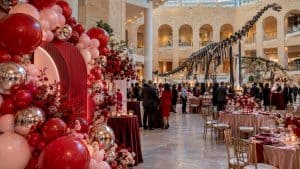
- A balloon installation. An organic arch framing the door, a sculptural garland across the facade, or oversized letters spelling your brand name. Balloons add scale, color and softness that a rented storefront rarely has, and they photograph beautifully. See how we approach retail balloon activations that stop traffic.
- A backdrop wall. A branded or textured wall that doubles as the photo spot. Our guide to custom event backdrops shows what works in Atlanta venues.
- A statement sign. Large, simple, high-contrast lettering, ideally lit from behind or from above.
- A living or floral feature. Greenery or a floral wall softens a warehouse or white-box space instantly.
Pick one. Then let the rest of the space support it in the same palette.
Balloon Installations That Fit a Pop-Up Budget
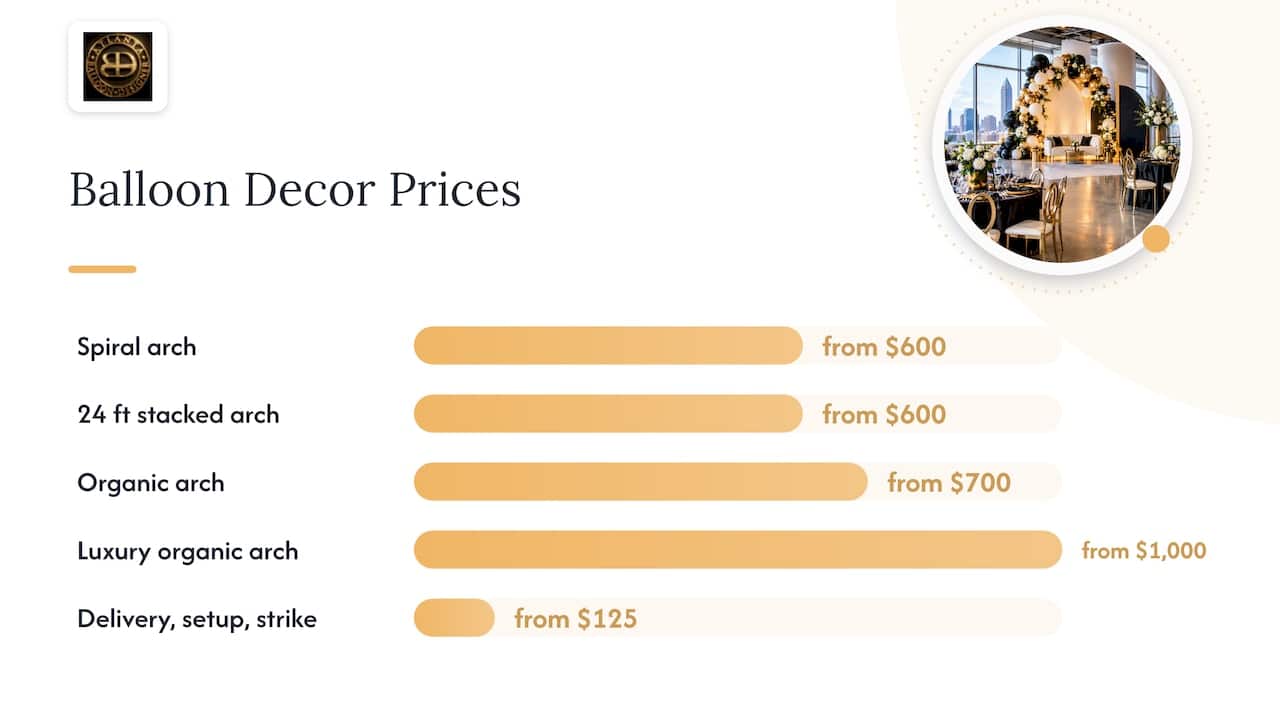
Balloon decor suits pop-ups because it is built to be temporary: it is made off site, installed quickly and struck without leaving marks on the space. Our published starting prices on the balloon decor pricing page give you a realistic planning range:
| Installation | Starting price |
|---|---|
| Spiral Balloon Arch | from $600 |
| 24 ft Stacked Arch | from $600 |
| Organic Balloon Arch | from $700 |
| Luxury Organic Balloon Arch | from $1,000 |
| Big Letters | from $50 per letter |
| Delivery, setup and strike down | from $125 |
| Site visit | $250 |
These are starting points, and a custom design for your storefront will be scoped to size, palette and venue. A four-letter brand word in big letters, for example, starts at $200 before delivery and setup. If you want to see the idea before you commit, our digital mockup service is $75 per mockup.
One practical note for pop-up runs of several weeks: balloons are best for launches, opening weekends and ticketed or invite-only moments. For a long run, plan a refresh visit or pair balloons with sturdier elements such as signage and fabric.
Lay Out the Space in Zones
A pop-up is small, so every square foot has a job. The team at Storefront recommends in their pop-up layout guide that you think in layers: a welcoming front-of-house area that communicates your brand mood, then a logical progression deeper into the space, with deliberate shifts in scale, texture and visual focus along the way.
Here is how that translates into a simple three-zone plan.
- Welcome zone (first 5 to 8 feet). Keep it open. This is where the hero decor, the greeter and one signature product live. No checkout counter here, no clutter.
- Discovery zone (middle). Product displays at varied heights, a feature table, and one interactive or sensory moment such as a scent, a sampling station or a styling bar.
- Conversion zone (back). Checkout, order pickup and a small photo area or wrap station. Putting the register at the back pulls people through the whole shop.
Vary Height and Scale
Flat shelves read as a stockroom. Mix low tables, waist-high plinths, wall-mounted rails and at least one tall element. A balloon column, a floral stand or a stack of crates next to a low table gives the eye somewhere to travel.
Respect Capacity and Walkways
Decor should never crowd the floor. Street-level retail is typically subject to occupant-load limits set under local fire codes, and SCORE’s pop-up guidance warns that overcrowded layouts can draw a fire marshal’s attention. Keep exits clear, keep aisles wide enough for strollers and wheelchairs, and confirm your allowed headcount with the landlord or local fire official before you build.
Lighting and Color Do the Heavy Lifting
A small observational study of six New York pop-up stores, published in the University of Florida Journal of Undergraduate Research, found that five of the six used bright white light for general illumination, while some added colored LED lighting to spotlight a product line or create a photo-friendly zone. The takeaway for your space: keep the base light clean so products look true, then add color only where you want attention.
- Base layer: bright, even light on products and signage.
- Accent layer: warm spots on hero displays, or a colored wash behind the backdrop.
- Photo layer: soft, flattering light on the spot where you want customers to take pictures.
If the pop-up doubles as an evening event, warmer tones feel more inviting. Our event lighting basics walk through color temperature, and our chrome versus metallic balloon test shows how reflective finishes behave under different venue lights, which matters if your storefront has big windows or harsh overheads.
Pick a Palette of Three
Choose two main colors and one accent. Some combinations that read as upscale in retail:
- Soft sand, warm white and brushed gold for a beauty or home-goods launch.
- Deep forest green, cream and copper for a fall or holiday market.
- Blush, ivory and a pop of chrome for a bridal, baby or gifting shop.
- Black, white and one electric color for streetwear and sneaker drops.
Carry the palette through balloons, signage, packaging and tablecloths so the space feels designed, not assembled. For more direction, see our event decor trends for 2026.
Pop-Up Shop Decor Ideas by Type of Brand
Fashion and Accessories
Rails at varied heights, a full-length mirror framed with a floral or balloon garland, and a fitting nook curtained in fabric. Add a backdrop so customers can post their outfit. Mannequins styled with florals or beads can serve as both display and decor.
Beauty and Wellness
Soft lighting, a sampling bar with clean white surfaces, and a sensory element such as scent or sound. A sculptural organic garland in neutral and metallic tones signals premium without shouting.
Food, Coffee and Hospitality Pop-Ups
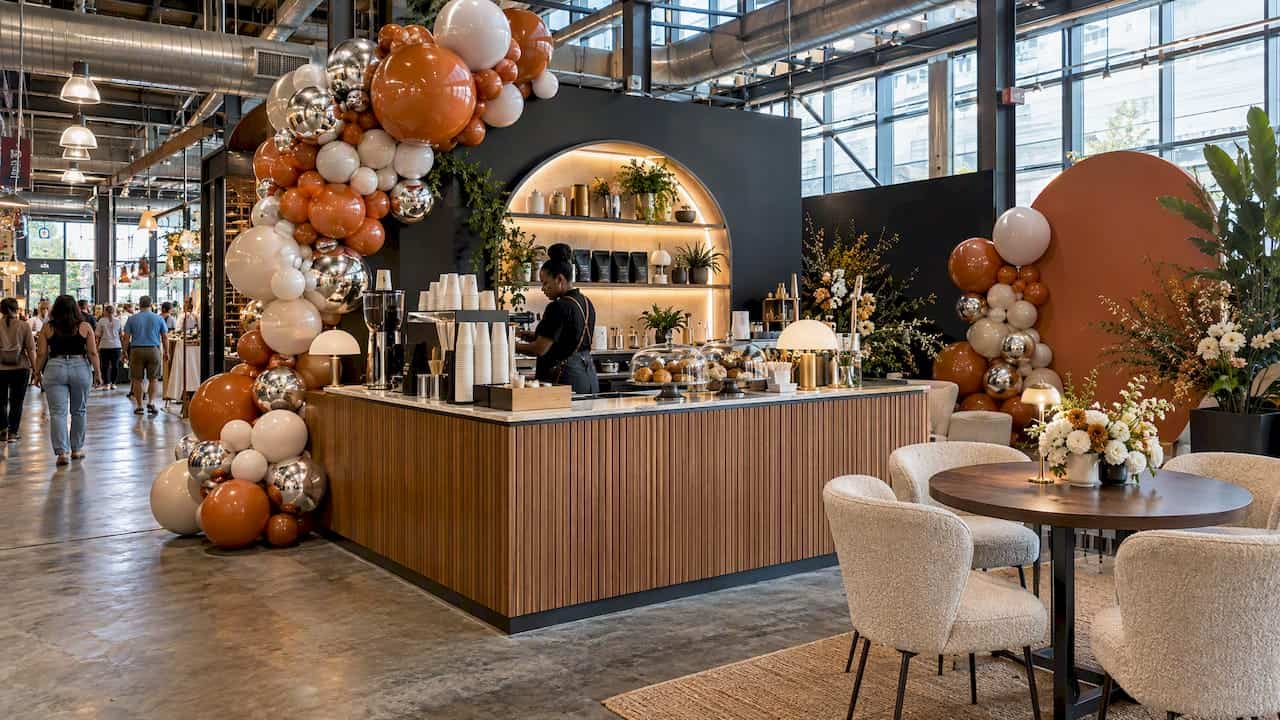
For edible pop-ups, the decor is part of the menu. A tidy counter, a lit menu board, candles or warm lamps on tables and a branded cup or sleeve photograph far better than a crowded table of signs. If you are planning a coffee or café-style activation, these coffee bar menu ideas for café owners help you decide what to serve before you style the counter around it. Check your food permit requirements separately, since they differ from retail ones.
Makers, Markets and Booths
If you are in a booth rather than a storefront, the US Chamber of Commerce’s guide to selling at pop-ups, markets and fairs stresses that your booth acts as your storefront: clear signage with your name, and a layout that is inviting and easy to navigate. A small garland across the top of the booth frame, a branded tablecloth and a tall sign make a booth readable from across a hall.
Holiday and Seasonal Shops
Theme the shop to the calendar, but do it with a restrained palette rather than a pile of props. In Atlanta, think a fall harvest shop in rust and cream, a December gifting shop in deep green and gold, or a spring launch in pastels. Our Events Balloons: 10 creative decoration ideas post has more seasonal inspiration.
Design for Impermanence
The research behind pop-up design supports what experienced stylists already know: because the space is temporary, the decor should be too. The same journal paper describes how pop-up designers embrace impermanence, using cost-efficient, easily assembled materials, sometimes an abundance of one material, to create high-impact, immersive spaces that come down easily.
In practice:
- Choose one signature material and repeat it: balloons in a single palette, a wall of paper, a grid of crates, or a canopy of fabric.
- Go modular. Pieces that clip, hang or stand without drilling are friendlier to landlords and faster to strike.
- Plan the load-in. Know your access window, elevator or door width, and how long install takes.
- Pack for reuse. Signage, fixtures and fabric can travel to your next pop-up. Balloon pieces are one-time, so budget them as event decor, not fixtures.
Make It Photographable
A customer’s phone is your cheapest ad. Give people a deliberate spot to shoot: a backdrop with your name or hashtag at eye level, flattering light, and enough floor space around it for a group. Keep products out of the frame of the photo spot so the image stays about the brand, and keep the checkout line away from it.
For more on how to plan this, read our guides to backdrops in photography, Instagrammable event ideas and product launch photo opportunities.
Signage That Sells
Signage is decor with a job. Use three levels:
- Street level: a big, simple name sign and one line about what is inside. If you use a sidewalk sign, leave a clear walking path; SCORE’s guidance flags accessibility compliance for sidewalk displays, so confirm your local requirements.
- In-store wayfinding: small signs that tell people where to start, where to try and where to pay.
- Product storytelling: short cards with the maker, the material or the price, written in the same typeface as your main sign.
Keep the typeface count to two and the message count to one per sign.
Before You Decorate: Permits and Paperwork
This is the unglamorous part that can sink a pop-up. SCORE advises that many pop-up operators assume their existing business license covers temporary or sidewalk sales, when cities often require their own temporary-use or vending permits, and it recommends starting permit research four to six weeks ahead. Rules differ by city: Chicago requires a Pop Up Retail License for temporary storefront sales, and Miami Beach issues pop-up venue permits for temporary retail spaces. For Atlanta and the surrounding counties, call the city or county business licensing office where your pop-up sits, since Atlanta, Marietta, Smyrna, Decatur and the unincorporated areas each have their own offices. Also ask your landlord about insurance and rules on hanging decor, and ask whether balloons and floor installations are allowed in the building.
A Sample Pop-Up Decor Budget Plan
There is no universal number, so build yours from priorities. A sensible split for a decor-led pop-up:
| Item | Share of decor budget | Notes |
|---|---|---|
| Hero installation | 40% | Balloon arch, backdrop or large sign |
| Lighting | 15% | Accent spots, LED wash for the photo zone |
| Displays and fixtures | 25% | Rentals or reusable modular pieces |
| Signage and printing | 15% | Window, wayfinding, price cards |
| Contingency | 5% | Last-minute fixes |
The percentages are our planning suggestion, not an industry standard. Adjust them to your product: a jewelry brand may weight displays more, a launch party may weight the hero piece more. If you want the numbers firmed up, a site visit is $250 and lets us measure your space, check load-in and recommend what will actually fit.
A Simple Timeline
- 6 to 8 weeks out: confirm the space, start permit research, define your one message.
- 4 to 6 weeks out: lock the palette, book decor and lighting, request a mockup.
- 2 weeks out: finalize layout, signage files and staffing.
- 2 to 3 days out: deliver fixtures and signage, do a walk-through.
- Day before or morning of: install balloons and last-minute florals so everything looks fresh at opening.
- Strike day: remove decor, return rentals and leave the space clean.
Our Perspective: Why Pop-Ups Reward Bold, Simple Decor
We style spaces for corporate launches, grand openings and milestone celebrations across Atlanta, so we see the same pattern again and again: the brands that win do not do more, they do one thing boldly. A single beautifully built installation, in a palette that matches the product, beats a storefront dotted with small props. It reads from the street, it photographs well and it makes the whole shop feel intentional.
We also tell clients to treat decor like part of the opening-day experience rather than a finishing touch. Walk the space with us, share your brand colors and tell us what you want people to feel when they step inside. From there, we design the arch, garland, letters or backdrop around your floor plan, and handle delivery, setup and strike so your team can focus on customers.
One more honest tip: do not decorate around a problem. If the space is dark, fix the light first. If the entrance is cramped, simplify the hero piece. Good decor works with the room, not against it.
— Kay
Let Us Style Your Pop-Up
Atlanta Balloon Designer creates custom balloon installations, backdrops, marquee letters, floral pieces and full event styling for brands, retailers and hosts across Atlanta and the surrounding communities, from our base at 135 Riverside Parkway, Austell. Browse our corporate and business event services, check starting prices or call 678.203.0200 to talk through your opening date, space and palette. Pop-up on the calendar? Book early, because install windows fill fast.
FAQ
What is the cheapest way to decorate a pop-up shop?
Focus on one high-impact piece and keep everything else simple. Good lighting, a clean sign and a single statement installation cost less than filling the space with props. Reusable modular fixtures and one repeated material also keep costs down.
How do I make a small pop-up look bigger?
Keep the entrance open, use vertical elements to draw the eye up, and group products on a few tables rather than scattering them. Even, bright light and a limited palette also make a small room feel larger.
Do I need a permit for a pop-up shop?
Usually yes, and it is often a temporary-use or pop-up license separate from your regular business license. Requirements vary by city and county, and SCORE recommends starting four to six weeks ahead. Contact the business licensing office where the pop-up will operate.
Are balloons a good fit for a retail pop-up?
Yes, especially for launches, opening weekends and photo moments. They are lightweight, install quickly and can be custom colored to match your brand. Confirm with your landlord that balloon installations are allowed in the space.
How far ahead should I book decor in Atlanta?
Start four to six weeks before opening so there is time to approve a design, finalize the layout and coordinate access to the space. Busy seasons such as the holidays fill up earlier.
Sources
- SCORE: Pop-Up Revenue Streams
- Storefront: How to Design a Pop-Up Shop Layout
- University of Florida Journal of Undergraduate Research: pop-up shop design study
- Retail TouchPoints: Pop-Up Strategies That Power Unique Shopper Journeys
- US Chamber of Commerce: How to Sell at Pop-Ups, Markets, and Fairs
- City of Chicago: Temporary Pop Up
- City of Miami Beach: Pop-Up Permits