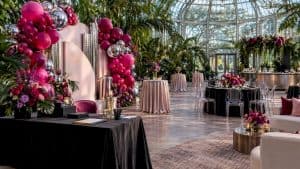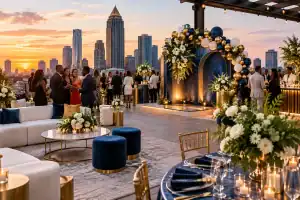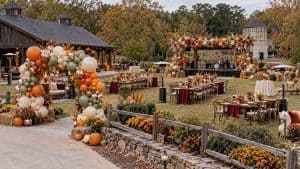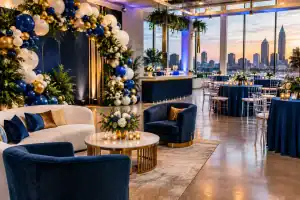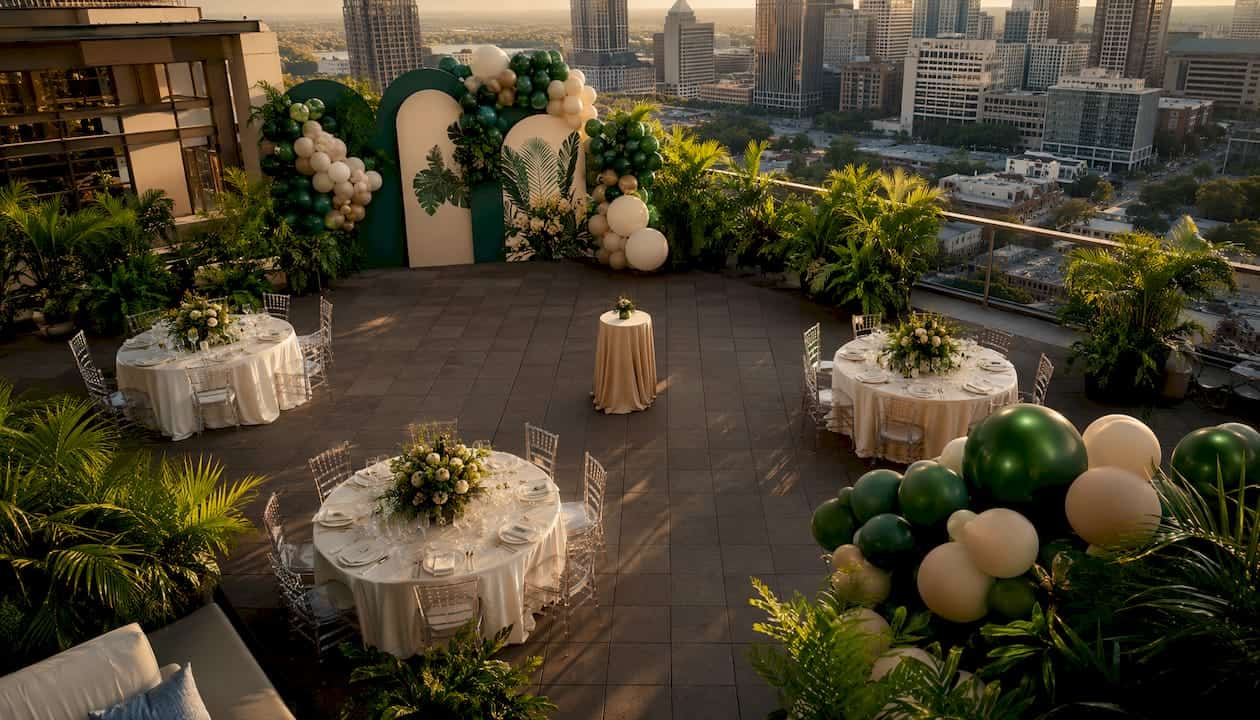
Graphics are the event’s visual story — the silent architect that shapes how guests feel, where they look, and what they photograph. Before you brief a single vendor, do three things: define your visual center of gravity (the one backdrop or installation that anchors every photo), specify viewing distances and photo use cases for each graphic element, and confirm material specs and proof timelines with your print vendor. Atlantaballoondesigner’s lead designer Kinyahnah builds every luxury installation around this sequence, and it shows in the social reach and sponsor feedback her events consistently earn.
- Define the visual center of gravity — one primary focal point that all other graphics support.
- Specify viewing distance and photo use — a 20-foot stage graphic reads differently than a 4-foot table card.
- Confirm materials and proof timelines — request a physical sample before full production begins.
Pro Tip: Brief your graphic designer and balloon installer in the same meeting. Misaligned scale decisions made separately are the single most common reason a stunning mockup disappoints on install day.
Table of Contents
- Why do graphics matter so much in luxury event environments?
- Where should you place graphics for maximum impact?
- How do you integrate graphics with balloon installations successfully?
- What design rules keep luxury graphics cohesive?
- What production options and lead times should Atlanta planners expect?
- What is the step-by-step workflow for delivering event graphics with balloon decor?
- Which venue safety and accessibility rules should you verify early?
- How do you measure whether your graphics actually performed?
- Three Atlanta event examples that show graphics and balloons working together
- Key Takeaways
- Graphics and balloons should never be briefed separately
- Ready to brief your Atlanta luxury event graphics and balloon decor?
- Useful sources and recommended resources
- FAQ
Why do graphics matter so much in luxury event environments?
Graphics do far more than display a logo or fill empty wall space. They build narrative, create emotional memory, and signal the quality of every other decision in the room. BizBash confirms that consistent typography, color, and imagery across touchpoints fosters attendee trust and signals professional orchestration — what design pros call the “silent architect” effect. When guests walk into a space where the palette on the balloon arch matches the foil on the menu card and the projection behind the stage, they feel cared for before a single word is spoken.
Strong visual identity also drives measurable outcomes. Scope Events notes that a cohesive visual identity turns spaces into shareable backdrops, improving attendee recall and social reach. Sponsors notice, too: when their brand lives inside a beautifully composed environment rather than a banner stuck to a pipe-and-drape, the perceived value of their sponsorship rises.
Where should you place graphics for maximum impact?
Not every surface deserves a graphic. Choose 3–5 primary touchpoints that will appear in guest flow hotspots and in photographs. The table below ranks placements by photo frequency and luxury impact.
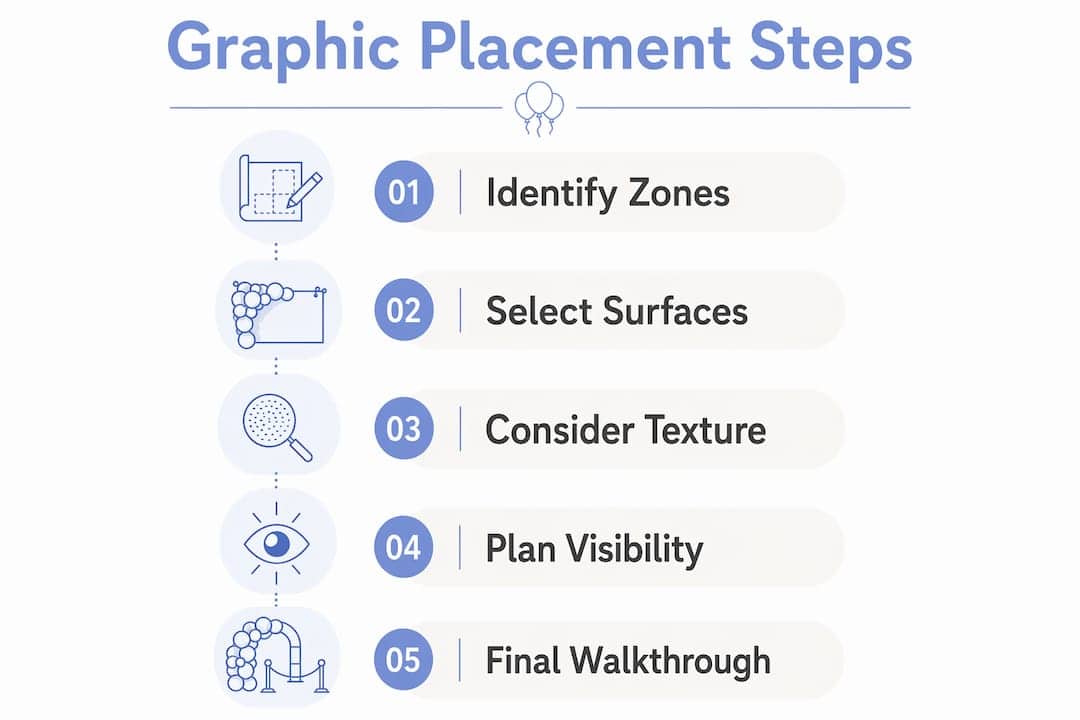
| Touchpoint | Photo Frequency | Luxury Recommendation |
|---|---|---|
| Entry / registration wall | Very high | Embossed foil on textured substrate |
| Stage / backdrop | Very high | Large-format giclée or fabric print |
| Photo-op wall | Very high | Custom mural or balloon-integrated panel |
| Bar front | High | Metallic vinyl or branded linen wrap |
| Table collateral | Medium | Letterpress or foil-stamped cards |
| Wayfinding signage | Medium | Brushed metal or acrylic with UV print |
| Balloon surfaces | Variable | Printed latex or Mylar, jumbo wraps |
| Projection surfaces | Variable | Motion-graphic loops for stage moments |
Luxury-specific placements reward texture over volume. Embossed finishes, metallic foils, and coordinated linens read as premium in person and in photographs. Printed latex balloons and Mylar wraps extend your graphic system into three-dimensional space — a capability unique to balloon-integrated installations that flat signage simply cannot replicate.
Pro Tip: Always walk the venue during setup and photograph each touchpoint from the angle a guest’s phone camera would capture it. Adjust placement before the event opens, not after.
How do you integrate graphics with balloon installations successfully?
The physics of an inflated balloon change everything. Curvature, material stretch, and latex texture all reduce print legibility, so artwork that looks sharp on screen often blurs or distorts on a balloon surface. PromotionChoice’s balloon printing guide recommends bold, simple artwork with high contrast — light text on dark balloons or dark text on light balloons — and notes that the printable area on an 11-inch latex balloon is roughly 5 inches in diameter. Scale your logo or text accordingly.
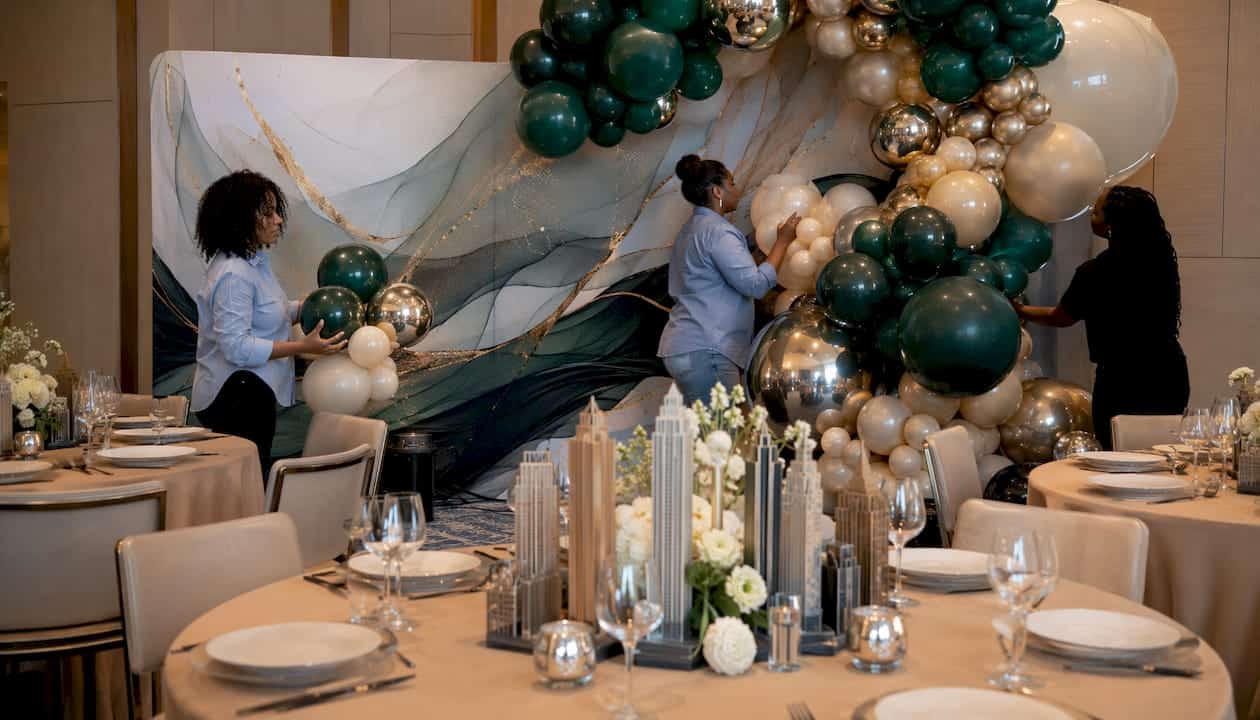
Art of the Event emphasizes that physical signage and jumbo balloons need heavier stroke weights and stronger contrast than digital artwork. Simplify, then simplify again.
Integration checklist:
- Deliver final print-ready files to the balloon vendor at least 10 business days before install.
- Request a physical proof balloon before approving the full print run.
- Confirm fastening method with the venue: Command strips, tension rods, or rigging points each have different weight limits.
- Schedule graphic delivery 24 hours before balloon inflation so both teams can check alignment.
- Designate a photo-check window 30 minutes after install to adjust placement before guests arrive.
| Element | Recommended Substrate | Fastening Method |
|---|---|---|
| Backdrop panel | Fabric or foamcore | Tension frame or pipe-and-drape |
| Balloon surface print | Latex-compatible ink | N/A — printed before inflation |
| Freestanding signage | Foamcore or PVC | Easel or weighted base |
| Hanging banner | Vinyl or fabric | Rigging point or tension cable |
What design rules keep luxury graphics cohesive?
Restraint is the defining characteristic of high-end graphic design for events. One primary brand moment plus one supporting visual motif is enough. Negative space is not wasted space — it is what makes the primary element breathe and photograph cleanly.
Typography carries more weight than most planners realize. For modern luxury events, a single high-quality sans-serif paired with a script accent outperforms a four-font system every time. For classical or formal occasions, a refined serif with generous letter-spacing signals elegance without effort. Custom lettering on marquee letters or balloon signage should match the event’s typographic system exactly — not approximate it. Color guidance follows the same logic: tonal accents over full-volume color matches, and metallic or matte finishes over saturated primaries. Avoid printing your logo on every balloon in the installation; one or two strategic placements carry more authority than saturation.
What production options and lead times should Atlanta planners expect?
Material choice affects both photo performance and durability. Matte finishes reduce glare under stage lighting and photograph cleanly in most venue conditions. Gloss and metallic finishes pop under controlled accent lighting but risk hotspots under broad wash lights. For outdoor or multi-day events, UV-laminated vinyl or dye-sublimation fabric holds up far better than standard foamcore.
| Substrate | Best Use | Typical US Lead Time |
|---|---|---|
| Vinyl banner (matte or gloss) | Outdoor, large-format | 3–5 business days |
| Foamcore / PVC board | Indoor freestanding | 2–4 business days |
| Fabric (dye-sub) | Backdrops, draping | 5–7 business days |
| Giclée fine-art print | Gallery-quality accent | 5–10 business days |
| Metallic foil (Mylar) | Balloon wraps, accents | 7–14 business days |
| Latex-compatible ink print | Balloon surface graphics | 7–10 business days |
Always build in a digital mockup stage, a color proof, and a physical sample before full production. Rush production typically adds 30–50% to print costs and compresses your correction window to near zero.
What is the step-by-step workflow for delivering event graphics with balloon decor?
A clear workflow prevents the two most expensive problems in event production: last-minute reprints and install-day conflicts between vendors.
- Brief — share brand assets, palette, venue dimensions, and photo-op priorities with both the graphic designer and balloon installer simultaneously.
- Moodboard — approve a shared visual reference before any artwork is created.
- Scaled mockups — review graphics at true scale, not just on screen; a 10-foot backdrop looks very different at 100% zoom.
- Proofs and samples — approve a digital color proof, then a physical sample for any printed balloon or premium substrate.
- Production — confirm delivery address, contact, and receiving window with the venue.
- Coordinated delivery — graphics arrive 24 hours before balloon inflation; delivery and setup logistics should be confirmed in writing.
- Install — balloon installer and graphic team work in sequence, not simultaneously.
- Photo check — 30-minute window to adjust, straighten, and confirm every touchpoint photographs correctly.
- Teardown — document which graphics are reusable and store them flat.
| Role | Responsibility | Sign-Off Stage |
|---|---|---|
| Client | Brand assets, budget approval | Brief, final proof |
| Lead planner | Timeline, vendor coordination | Mockup, production release |
| Graphic designer | Artwork, print files | Proof, physical sample |
| Print vendor | Substrate, finish, delivery | Production, delivery |
| Balloon installer | Inflation, mounting, sequencing | Install, photo check |
| Venue contact | Hanging limits, adhesives, egress | Brief, install |
Which venue safety and accessibility rules should you verify early?
Venue compliance is not a last-minute checklist item. Confirm hanging weight limits, flame-retardant requirements for fabric graphics, permitted adhesives, and egress clearance before any artwork is produced. Many Atlanta-area venues require fabrics to meet NFPA 701 flame-retardant standards — ask for the certificate from your fabric printer, not just a verbal assurance.
ADA signage guidelines recommend a minimum 60-inch mounting height for overhead signs and sufficient color contrast (a 3:1 ratio minimum for large text) for guests with low vision. Tactile elements on wayfinding signs are required in permanent installations and strongly recommended for large public events. Document every approved fastening method in writing from the venue coordinator — this protects you and your vendors if questions arise on install day.
How do you measure whether your graphics actually performed?
Measuring graphic performance turns a beautiful event into a repeatable system. Track these KPIs after every event:
- Photo-op capture rate — number of guests photographed at designated photo-op walls versus total attendance.
- Social shares with event hashtag — baseline against a previous event with minimal branding to isolate the graphic contribution.
- Sponsor visibility impressions — estimated reach from tagged posts featuring sponsor graphics.
- Post-event survey scores — ask specifically about visual experience and space memorability.
- Photographer feedback — your event photographer’s notes on which setups required the fewest adjustments are gold for future briefs.
Scope Events’ research confirms that visual identity directly improves attendee recall and social reach. Create a simple baseline by comparing social engagement from a branded environment against a previous event with minimal graphic investment. The delta tells you exactly what the graphics were worth. For corporate balloon decor ROI, this data is often the deciding factor in repeat bookings.
Three Atlanta event examples that show graphics and balloons working together
These three project types from Atlantaballoondesigner’s portfolio illustrate how graphic and balloon decisions compound each other’s impact.
| Event Type | Graphic Solution | Balloon Solution | Measurable Outcome |
|---|---|---|---|
| — | Metallic foil backdrop with brand wordmark, matte bar-front vinyl | Branded latex columns in corporate navy and champagne gold | Sponsor reported highest social impression count of the year |
| Luxury baby shower, Marietta | Custom watercolor mural panel, foil-stamped table cards | Organic ivory and sage garland framing the mural | Photo-op wall used by most guests per photographer count |
| Fashion show, Atlanta (RISE FASHION) | Projection-mapped stage graphic, custom step-and-repeat | Champagne and blush organic arch framing the runway entrance | Press coverage featured the arch in every published image |
For a closer look at these installations, the luxury balloon decor portfolio and photo op backdrop guide show the full range of graphic and balloon pairings Atlantaballoondesigner delivers across the Atlanta metro area.
Key Takeaways
Graphics are the visual architecture of a luxury event — and when they are designed in coordination with balloon installations from the brief stage onward, they produce measurably stronger photo engagement, sponsor satisfaction, and guest recall.
| Point | Details |
|---|---|
| Set one center of gravity | Choose a single primary focal point; all other graphics support it, never compete with it. |
| Prioritize photo-op touchpoints | Select 3–5 placements that appear in guest flow hotspots and photographs. |
| Require proof and sample stages | Always approve a physical sample before full production to catch color and scale errors. |
| Verify venue rules early | Confirm hanging limits, flame-retardant certifications, and permitted adhesives before artwork is produced. |
| Atlantaballoondesigner | Kinyahnah’s award-winning Atlanta team integrates custom graphics with balloon installations across the 60-mile metro area. |
Graphics and balloons should never be briefed separately
The conventional wisdom in event planning treats graphics as a print vendor’s job and balloons as a décor vendor’s job. That split is where most luxury events lose their cohesion. When typography, color, and scale decisions are made in the same room by both teams, the result is a space that photographs as a single composed image rather than two separate vendor deliverables placed near each other. Restraint matters more than coverage: one stunning, perfectly scaled graphic paired with a thoughtfully constructed balloon installation will outperform a room wallpapered in branded elements every time. Atlanta’s event venues — from Buckhead ballrooms to Marietta garden spaces — each have their own lighting conditions, ceiling heights, and surface rules that make local production knowledge genuinely valuable, not just a marketing claim.
Ready to brief your Atlanta luxury event graphics and balloon decor?
Atlantaballoondesigner offers the full picture: custom printed graphics, organic balloon arches, garlands, marquee letters, backdrops, and complete venue styling — all delivered and installed within a 60-mile radius of Atlanta, covering Buckhead, Marietta, Alpharetta, Decatur, Sandy Springs, and beyond. Every premium package includes a portfolio review, scaled mockup, and physical proof stage so you arrive on install day with zero surprises.
To get a quote, have these ready: guest count, venue photos and ceiling specs, brand asset files (logo, palette, fonts), budget range, and event date. Call 678.203.0200 or visit atlantaballoondesigner.com to start your consult. Browse luxury upscale event ideas for inspiration before your first call.
Useful sources and recommended resources
| Resource | What It Covers |
|---|---|
| BizBash — Visual Identity for Events | Typography, color, and imagery consistency across event touchpoints |
| Cohera — Branded Event Storytelling | Restraint-based branding and narrative-driven graphic placement |
| Art of the Event — Event Graphics | Medium-specific design strategies for physical signage and balloons |
| PromotionChoice — Balloon Printing Guide | Artwork specs, contrast rules, and curvature considerations for printed balloons |
| Scope Events — Visual Identity and Recall | Social sharing, attendee recall, and photo-op performance metrics |
| RMCAD — Graphic Design for Events | Foundational overview of graphic design’s role in event marketing |
| Atlantaballoondesigner.com | Portfolio, booking, and bespoke consult for Atlanta-area luxury events |
Recommended print specifications to request from your vendor:
- Outdoor vinyl: CMYK on 13-oz scrim vinyl, UV laminate finish
- Fabric backdrops: dye-sublimation on polyester, NFPA 701 flame-retardant certified
- Balloon surface graphics: latex-compatible water-based inks, bold artwork at minimum 300 DPI
- Accent foils: metallic laminate on foamcore or Mylar, spot UV for luxury finishes
FAQ
What is the role of graphics in event decor?
Graphics shape guest perception, guide attention, and create the shareable backdrops that extend an event’s reach on social media. They function as the visual story of the event, connecting every physical touchpoint into a single cohesive experience.
How far in advance should event graphics be ordered?
Standard print production in the US runs 3–10 business days depending on substrate; metallic foils and balloon surface prints typically need 7–14 business days. Always add time for a proof and physical sample stage before committing to full production.
How do you design graphics for balloon surfaces?
Use bold, high-contrast artwork with simplified shapes — light text on dark balloons or dark text on light balloons. The printable area on an 11-inch latex balloon is roughly 5 inches in diameter, so logos and text must be sized and simplified accordingly.
What KPIs measure graphic performance at an event?
Track photo-op capture rate, social shares with the event hashtag, sponsor visibility impressions, and post-event survey scores on visual experience. Comparing these against a previous event with minimal branding isolates the graphic contribution.
Does Atlantaballoondesigner handle both graphics and balloon installations?
Yes. Atlantaballoondesigner provides custom printed graphics alongside full balloon installations — organic arches, garlands, marquee letters, and backdrops — with coordinated delivery and on-site install throughout the greater Atlanta metro area within a 60-mile radius.