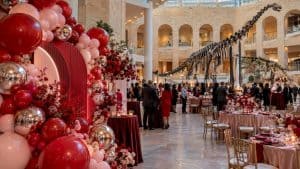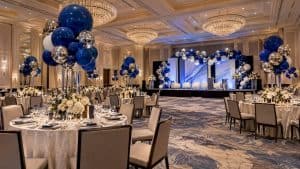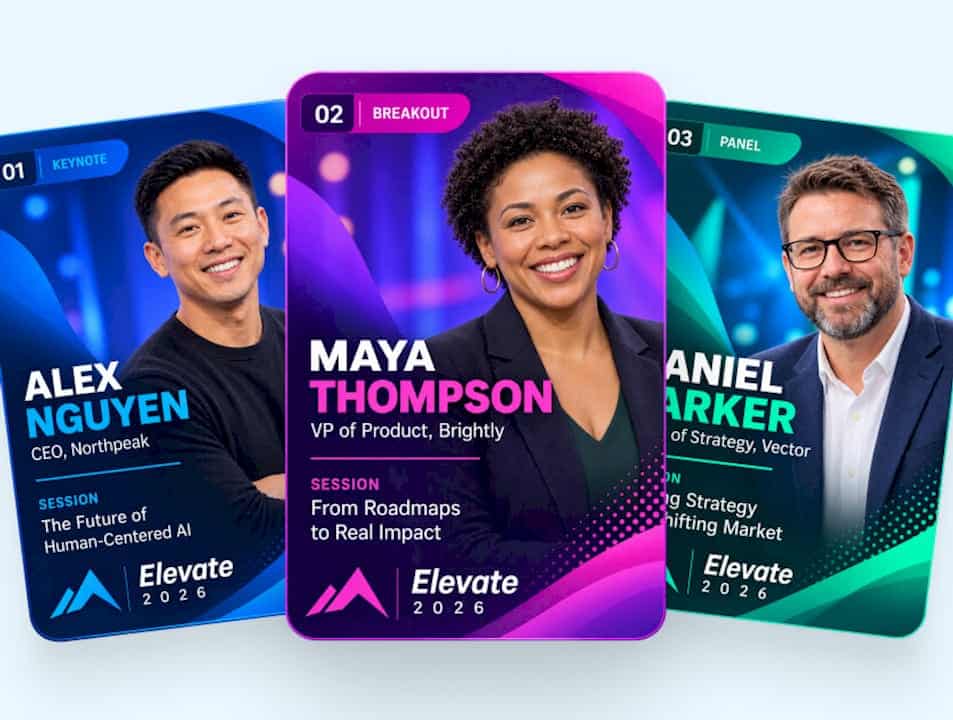
Four moves carry the most weight in conference branding: a tight visual identity anchored by one signature color, an on-site welcome moment built for photos, a consistent hashtag tied to a branded social wall, and branded materials that survive past the closing keynote. Marketing teams and venue-based businesses benefit most, because these four levers drive brand recognition, shareable content, and higher sponsor value with the least production risk. The sections below break down execution, sequencing, and how to prove it worked.
TL;DR:
The most effective conference branding moves are establishing a signature color, creating photo-worthy moments, and developing branded materials that last beyond the event.
A comprehensive visual toolkit with locked logos, colors, and templates ensures consistency and reduces errors during tight production phases.
Front-stage signage like registration backdrops and entrance arches should be prioritized for high photo shareability and visibility, with banners designed for reuse.
Attaching your branding to authentic, well-lit photo moments and coordinating digital channels with physical branding boosts shareability and attendee recognition.
Measuring branding success requires clear behavioral goals, tracking specific engagement metrics, and including post-event follow-up within a well-sequenced planning process.
Table of Contents
-
Building a Visual Identity Toolkit That Vendors Can Actually Use
-
How Do You Sequence Branding Decisions Without Missing Deadlines?
-
Case Example: A Luxury Installation as a Sponsor-Ready Brand Moment
-
Incorporating Sustainable and Eco-Friendly Branding Practices
-
Collaborating With Sponsors and Partners in Branding Efforts
-
Pre-Event Branding Strategies for Building Anticipation and Engagement
-
How Atlanta Balloon Designer Elevates Your Conference Branding
Quick Conference Branding Ideas by Touchpoint
Sort ideas by where attendees encounter them and pick two or three per category rather than trying everything at once.
Visual
-
Signature color paired with one accent (order printed backdrops well in advance).
-
Custom event logo lockup for badges, slides, and signage.
-
Branded motion graphic for stage transitions and countdown screens.
On-site 4. Oversized entrance arch or marquee letters spelling the event name. 5. Color-coded wayfinding signage by track or session type. 6. Branded registration desk skirting and step-and-repeat backdrop.
Experiential 7. Dimensional 3D logo or balloon sculpture as the main photo moment. 8. AI photo booth with branded filters for instant social sharing. 9. Sponsor “passport” activation driving foot traffic to booths.
Digital 10. One dedicated event hashtag used across all speaker and sponsor assets. 11. Branded event app splash screen and push notification templates. 12. Live social wall curating attendee posts near the main stage.
Swag/Printed 13. Reusable branded lanyard and badge holder. 14. Printed program with sponsor logos on a consistent grid. 15. Tote bag or notebook attendees actually keep using after the event.
Favor concepts that photograph well and give sponsors visible real estate, since those two filters do the most to justify the budget line later.
Building a Visual Identity Toolkit That Vendors Can Actually Use
An event visual toolkit needs to travel from a badge the size of a business card to a stage backdrop forty feet wide without falling apart. That means locking down logo versions (full color, one-color, reversed), a strict color palette with hex and Pantone values, and a type scale that covers headlines, body copy, and signage minimums.
Design the mark simple enough to survive both extremes. A logo with fine detail or thin script type looks sharp on a laptop screen and turns into mud on a 20-foot vinyl backdrop.
Build these into the toolkit before production starts:
-
Logo files in vector, PNG, and print-ready formats
-
A locked color palette (2 to 3 core colors, one accent)
-
A slide template and motion graphic package for AV and speaker decks
-
A one-page brand sheet vendors can reference without calling you
Pro Tip: A compact toolkit with strict color specs and ready-to-use slide templates cuts down on production errors and vendor back-and-forth in the final 90 days before the event, when everyone’s timeline gets tight.
Hand printers and AV vendors the same brand sheet, not separate briefs. Consistency breaks down fastest when two vendors are working off two different color references.
What Signage Deserves Priority at the Venue Entrance?
Registration backdrops, entrance arches, and stage headers carry the most weight because they’re where attendees take their first and most-shared photos. Prioritize those three placements before spending on smaller signage.
Color-coded wayfinding matters just as much for function as for branding. Assign one color per track or building level, and make sure signage sits at eye height with enough contrast for attendees with low vision to read from a distance.
-
Registration backdrop and entrance arch first, breakout room signage second
-
Wayfinding colors matched to the session guide and app map
-
Sponsor logos placed on their own zone, never crowding the main event mark
-
Vinyl or fabric banners for reuse across multiple events; foam board for one-time signage
-
Vendor briefs and print orders locked well before the event for large-format pieces
Sponsor branding works best when it reinforces the event identity instead of competing with it. A shared sponsor wall with equal-sized logo tiles reads as organized. Scattered sponsor logos on every surface read as cluttered, and that clutter dilutes your own brand faster than any single sponsor’s placement.
Which Photo Moments Actually Get Shared on Social Media
A dimensional logo, oversized initials, or a sculptural installation placed near natural light and away from foot traffic bottlenecks becomes the moment attendees line up for. Placement matters more than size. A modest installation in good light outperforms a massive one crammed into a dark hallway corner.
Interactive activations add a second layer. AI photo booths, persona quizzes, and branded trading card generators scale well for large audiences and double as lead-capture tools when tied to a registration email.
-
Place the primary photo moment where natural or supplemental lighting flatters skin tones and fabric colors
-
Pair one interactive, data-capturing activation with one purely visual photo moment
-
Brief photographers on the shot list in advance, including sponsor logo placement and preferred angles
-
For smaller conferences, a single well-lit backdrop can substitute for a full installation without losing impact
Pro Tip: Ask your photographer for a mix of wide shots showing the full installation and tight shots of attendee reactions. The reaction shots are what get reshared on LinkedIn and Instagram Stories, not the empty backdrop.
How Do You Extend Branding Into Digital Channels?
Your event website and registration flow need to match the physical event down to the color and imagery, because matching site assets to the event identity reduces friction and signals polish before anyone walks through the door.
Pick one hashtag and lock it early enough to build speaker and sponsor asset packs around it. Every partner social post should carry the same tag, the same logo crop, and the same color treatment.
-
Registration confirmation emails and app splash screens carry the same palette as printed materials
-
One hashtag, distributed to speakers and sponsors as part of their asset pack
-
Lightweight browser-based AR filters or lenses for attendees without a dedicated app download
-
A live social wall near the main stage, moderated to filter spam and surface quality attendee content
-
Consider a short branded video recap released within 48 hours to keep momentum going after the event closes
Branded Materials and Swag Worth the Budget
Badges, lanyards, and the printed program carry the most brand recall because attendees touch them constantly throughout the day. Tote bags and notebooks only earn their spot if the quality is high enough that people keep using them afterward.
-
Badge and lanyard: order several weeks ahead; branded fabric lanyards outlast printed paper ones
-
Printed program: keep sponsor logos on a consistent grid, order in advance, allowing for last-minute speaker changes
-
Reusable tote or notebook: mid-range budget item, choose materials people will actually reuse
-
Eco-friendly options: recycled paper stock, biodegradable lanyards, and reusable badge holders instead of single-use plastic
-
Budget guideline: allocate more toward the badge and signage system than toward one-time giveaways, since signage gets photographed and giveaways often get left behind
How Do You Prove Branding Investment Paid Off?
ROI measurement starts with naming the behavior change you want, not with counting likes. Decide upfront whether success means more booth visits, more app downloads, or more qualified leads.
-
Track social reach, hashtag impressions, and sponsor logo impressions across the event’s social wall
-
Use unique QR codes and promo codes per touchpoint to see which activation drove the most engagement
-
Gate one activation behind a short survey or registration form to capture lead data cleanly
-
Measure both short-term buzz and 30 to 90 day follow-up behavior, like return visits to the event website or repeat attendance
-
Package results for finance and sponsors around the specific behavior change you set out to drive, not just raw impression counts
Statistic Callout: Smart Meetings’ guidance on event ROI measurement recommends establishing a pre-event awareness baseline, then checking again at 30 to 90 days out. Skip the baseline and you have no way to prove the branding moved anything.
How Do You Sequence Branding Decisions Without Missing Deadlines?
Run every decision through the same filter: Goal, then Audience, then the “wow” moment, then Budget, then Timeline. Skipping straight to Pinterest boards before naming the goal is how conference branding turns into a patchwork of unrelated ideas.
-
Lock the goal and audience 12 to 9 months out, then draft the visual toolkit.
-
Brief vendors and sponsors on brand guidelines 9 to 6 months out.
-
Order large-format signage and swag 6 to 3 months out.
-
Confirm installation logistics, floor plans, and photographer shot lists 8 to 4 weeks out.
-
Walk the venue with your install and AV vendors 1 to 2 weeks before doors open.
Ask vendors directly about lead times for large-format pieces and any venue restrictions on floor load, rigging, or fire code before you commit to a design. The most common last-minute failure is a stunning installation concept that the venue can’t structurally support.
Pro Tip: Build a two-week buffer into your installation timeline. Large-format pieces almost always need more setup time than the vendor’s initial quote assumes.
Case Example: A Luxury Installation as a Sponsor-Ready Brand Moment
For a corporate client, an organic balloon arch framing the registration desk paired with a matching sponsor photo wall gave the conference a cohesive entrance moment and gave sponsors a branded backdrop attendees actually wanted to stand in front of.
-
Deliverables typically include a welcome arch, a sponsor-logo photo wall, and coordinating stage or table accents in the event’s palette
-
Lead time for large-format installs runs several weeks out, with budget built to cover installation labor, insurance, and venue restrictions like floor load
-
Ask your photographer for both wide establishing shots and close attendee-reaction shots near the installation
-
Confirm ceiling height and rigging access with the venue before finalizing the design
Incorporating Sustainable and Eco-Friendly Branding Practices
Sustainable branding starts with material choices, not a logo stamped with a leaf icon. Swap printed programs for a QR-code digital agenda where the venue’s WiFi supports it, and reserve print runs for items attendees genuinely need in hand, like a badge or a single-page schedule card.
Signage materials matter too. Fabric banners and reusable vinyl backdrops last across multiple events, cutting down on the single-use foam board that ends up in a dumpster the day after teardown. For badges and lanyards, recycled paper stock and biodegradable lanyard material now compete on price with standard options, so the eco-friendly swap rarely costs more.
Swag is where sustainability claims get tested the hardest. A branded tote made from recycled cotton or a notebook with a recycled cover signals genuine effort. A plastic-wrapped stress ball with a logo signals the opposite, and attendees notice the difference more than planners expect.
For installations, ask your décor vendor about reusable structural elements. Balloon garlands and arches built on reusable frames reduce material waste compared to disposable foam-core builds, and many can be restyled with a new color palette for the next event rather than discarded. Bringing sustainability into the vendor brief early, alongside the color palette and logo files, keeps it from becoming an afterthought squeezed in during setup week.
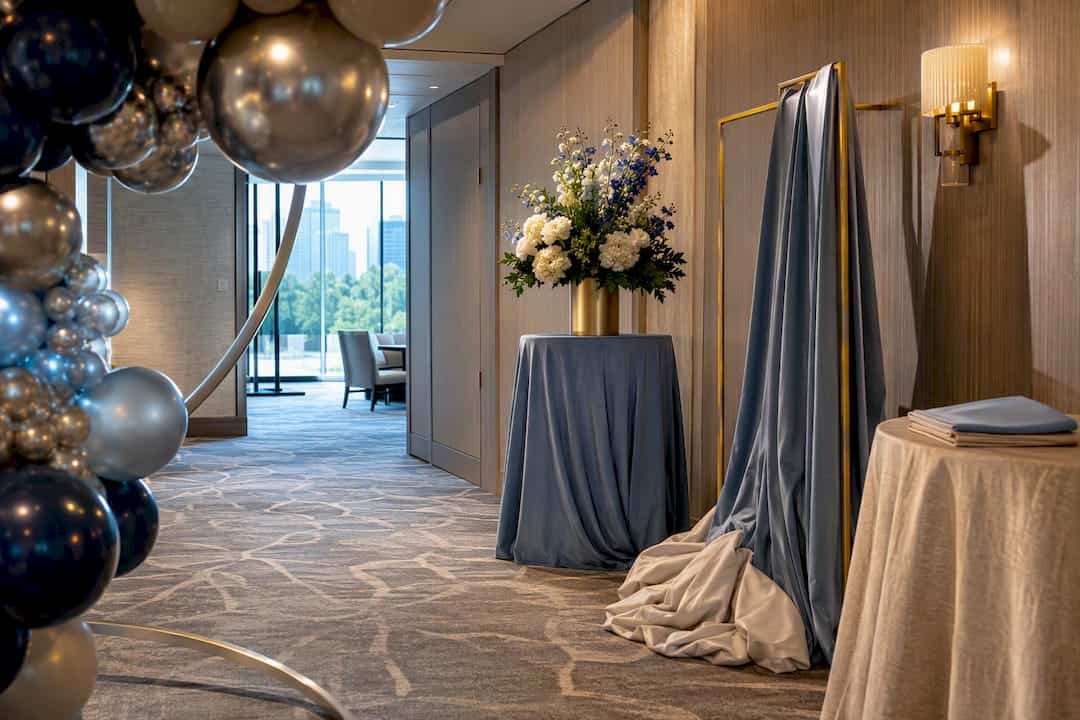
Communicate the effort, briefly. A small sign near the registration desk noting “printed materials kept to a minimum this year” does more for brand goodwill than a lengthy sustainability statement buried in the program.
Collaborating With Sponsors and Partners in Branding Efforts
Sponsor branding works best as a coordinated layer on top of your event identity, not a separate visual system competing for attention. Set sponsor tier guidelines early: logo size ratios, approved placement zones, and a shared style guide showing exactly how sponsor marks should sit next to your event logo on signage, slides, and the program.
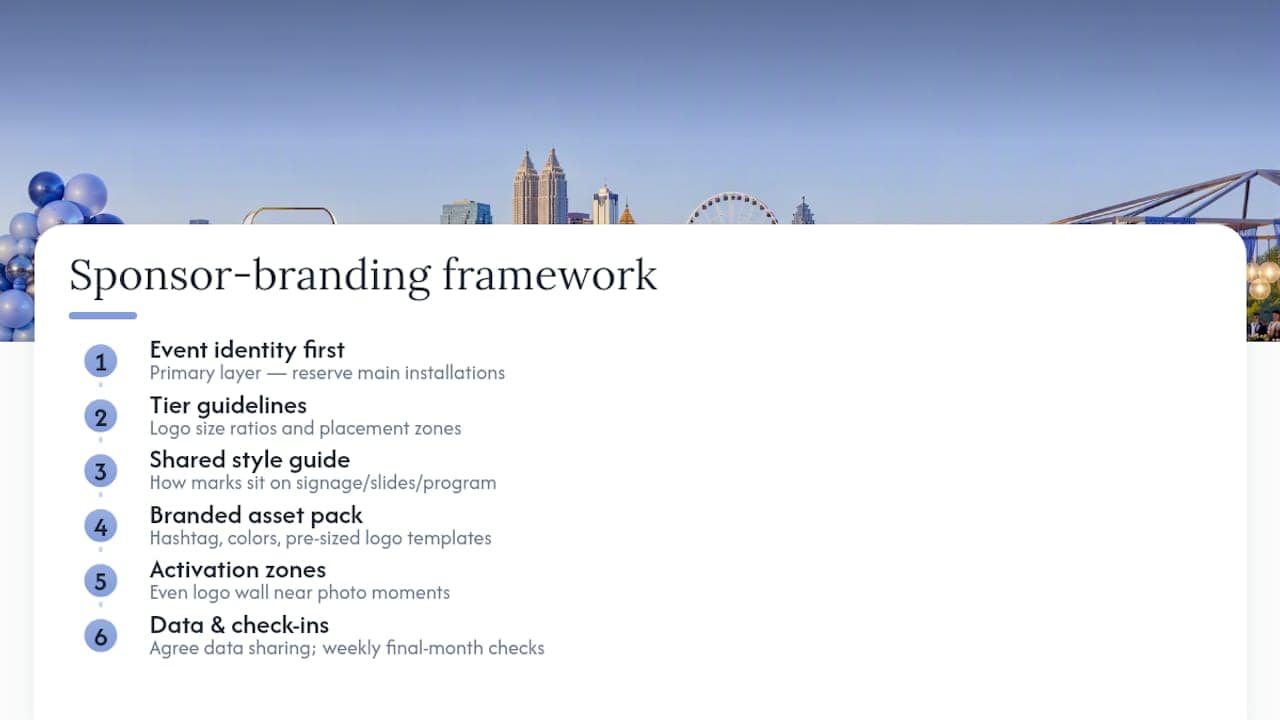
Give sponsors a branded asset pack rather than asking them to guess what fits. Include your hashtag, approved color combinations, and pre-sized logo templates for their own social promotion. This is also where consistent messaging across touchpoints increases sponsor value, because sponsors want their logo appearing in a polished, cohesive environment, not scattered across mismatched signage.
Sponsor photo walls and activation zones deserve their own design pass. A dedicated sponsor wall with evenly sized logo tiles, placed near a high-traffic photo moment, gives sponsors visibility without cluttering the main entrance backdrop. Reserve the biggest, most photographed installation, like the entrance arch, for your event brand alone, and let sponsors shine in a clearly designated adjacent space.
Set expectations on data sharing too. If a sponsor activation captures leads, agree in advance on how that data gets shared and reported back to them. Sponsors renew when they can see a clear line between their branding investment and the leads or impressions they walked away with, so build that reporting into your post-event package rather than treating it as an afterthought.
Weekly check-ins with sponsor contacts during the final month catch mismatched logo files and last-minute placement requests before they become on-site scrambles.
Pre-Event Branding Strategies for Building Anticipation and Engagement
Branding starts working long before doors open. A save-the-date email carrying your event’s color palette and logo, sent months ahead, primes attendees to recognize the same visual system when registration opens.
Countdown content on social media, using your locked hashtag from day one, builds a searchable thread attendees can follow. Speaker announcement graphics, built from your slide template, do double duty: they promote the lineup and reinforce the visual identity every time a speaker shares their own announcement.
Registration confirmation emails deserve as much design attention as the event program. That email is often the first branded touchpoint an attendee actually opens and reads, and a mismatched or plain-text confirmation undercuts weeks of promotional design work.
Consider a short pre-event survey or persona quiz tied to your hashtag. It captures useful data on attendee interests while giving people a reason to engage with your brand before the event starts, not just consume it passively.
Give sponsors and speakers their asset pack early enough that their own promotion, not just yours, carries the consistent look. A sponsor who posts about the event using off-brand colors and a generic stock photo dilutes months of visual identity work in a single post. Building anticipation is as much about controlling what your partners share as it is about what you post yourself.
By the time attendees walk into registration, they should already recognize the palette, the mark, and the hashtag from weeks of consistent pre-event content. That recognition is what makes the on-site photo moments feel like a payoff rather than an introduction.
What Ties Every Touchpoint Together
A theme only works if the messaging behind it survives translation across every surface, from the welcome email to the closing slide. Event branding depends on the total attendee journey, meaning visuals, messaging, environmental design, and even staff interactions at registration all shape whether the brand feels cohesive or scattered.
Pick a core message, one sentence describing what the conference stands for this year, and test every asset against it. If the tagline on your website doesn’t match the tone of your stage host’s script, attendees feel the disconnect even if they can’t name it.
Immersive experiences that generate shareable content rank among the defining event trends heading into 2026, and that shift rewards planners who treat the theme as a throughline rather than a decoration applied after the fact. Your entrance arch, your session titles, and your closing remarks should all echo the same idea in different forms.
Staff and volunteer briefing matters more than most planners budget for. A registration volunteer who can explain the event’s theme in one sentence reinforces the brand more effectively than another banner ever could.
Author Perspective: Three Rules for Branding That Lasts
Branding that survives the event comes down to three habits: staying consistent across every vendor and platform, designing for the photo before you design for the wall, and building measurement into the plan from day one instead of scrambling for numbers afterward. The conferences that struggle most are the ones treating branding as decoration applied at the end, rather than a decision made alongside the budget and floor plan. Get those three right, and the rest of the details fall into place faster than you’d expect.
— Kay
How Atlanta Balloon Designer Elevates Your Conference Branding
Atlanta Balloon Designer is the alternative to piecing together signage vendors, prop rental companies, and a separate décor contractor for your conference’s photo moment. One team designs, builds, and installs your entrance arch, sponsor photo wall, and stage accents in your locked color palette, so your visual identity stays consistent from the parking lot to the main stage.
Request a quote and expect a short consult on your theme and palette, a proposed layout matched to your venue’s floor plan, and a sample deliverable list covering arches, backdrops, and marquee letters before you commit. We serve conferences and corporate events across Atlanta and communities within roughly 60 miles, including Marietta, Alpharetta, and Sandy Springs. Browse creative balloon decoration ideas for inspiration, then reach out to book a consultation for your next conference.
Sources
-
Corporate Event Entertainment Ideas: 2026 Guide to AI Activations & Engagement Tech
-
Brand storytelling is a competitive advantage (Forrester blog)
FAQ
What Are the 5 C’s of Branding?
Definitions vary across marketing sources, but a common version includes Clarity, Consistency, Constancy, Competitive positioning, and Character. For conference branding specifically, consistency across every touchpoint matters most.
What Are Some Unique Conference Branding Ideas?
Dimensional logo installations, AI photo booths with branded filters, and a sponsor “passport” activation that drives booth traffic all stand out because they’re interactive rather than purely visual.
What Are Some Good Conference Topic Ideas That Support Strong Branding?
Themes that tie directly to your industry’s forward-looking challenges, like sustainability or emerging technology, give you a natural throughline for messaging, signage, and speaker content alike.
How Do I Choose a Signature Color for My Conference?
Pick one dominant color and one accent that contrast well under stage lighting and photograph clearly, then lock the exact hex and Pantone values before ordering any signage.
Can a Balloon Installation Really Work as Conference Branding?
Yes. A well-placed organic arch or sponsor photo wall from a company like Atlanta Balloon Designer gives attendees a dimensional, photo-ready brand moment that flat signage can’t replicate.