A crowded student center can swallow even the strongest program. A ballroom can feel forgettable the moment the lights come up. That is why a thoughtful guide to university event styling starts with more than a color palette: it starts with the moment you need people to remember, photograph, and talk about after they leave.
For universities, event decor has to work harder than it does at a typical private party. It must represent an institution, serve multiple audiences, accommodate real operational constraints, and still create the kind of visual energy that makes students want to step into the experience. From admitted-student days and commencement celebrations to donor galas, homecoming, career fairs, and campus activations, the right styling turns a scheduled event into a campus moment.
Start With the Campus Objective, Not the Decorations
Before selecting balloons, florals, backdrops, furniture, or lighting, define the event’s job. A recruitment event should feel welcoming, aspirational, and easy to navigate. A fundraising gala needs elevated details that support the value of the room without competing with the program. A student organization celebration may need high-energy photo moments that feel current and social-first.
The strongest styling decisions flow from that purpose. Ask what attendees should feel when they arrive and what action the university wants next. Is the goal to encourage prospective students to picture themselves on campus? Make alumni feel proud to give? Celebrate employees? Drive foot traffic to a department showcase? Each answer changes the design brief.
A visual concept also needs to respect the university brand. School colors are powerful, but relying only on two official shades can make a space look flat or overly literal. Build dimension with tonal variations, metallic accents, organic textures, and one carefully chosen contrast color. A crimson-and-white institution, for example, might add soft blush, burgundy, chrome gold, or warm ivory depending on whether the event needs to read as spirited, formal, or editorial.
Guide to University Event Styling: Design for the Camera
Campus events live far beyond the event day. Students post. Parents share. Alumni associations reuse images. Marketing teams need content that proves the energy of the experience. If the room does not give guests a reason to pause for a photo, the event misses a major visibility opportunity.
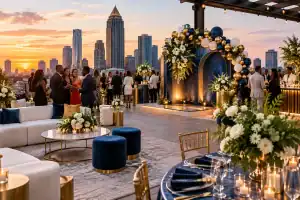
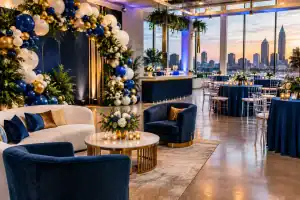
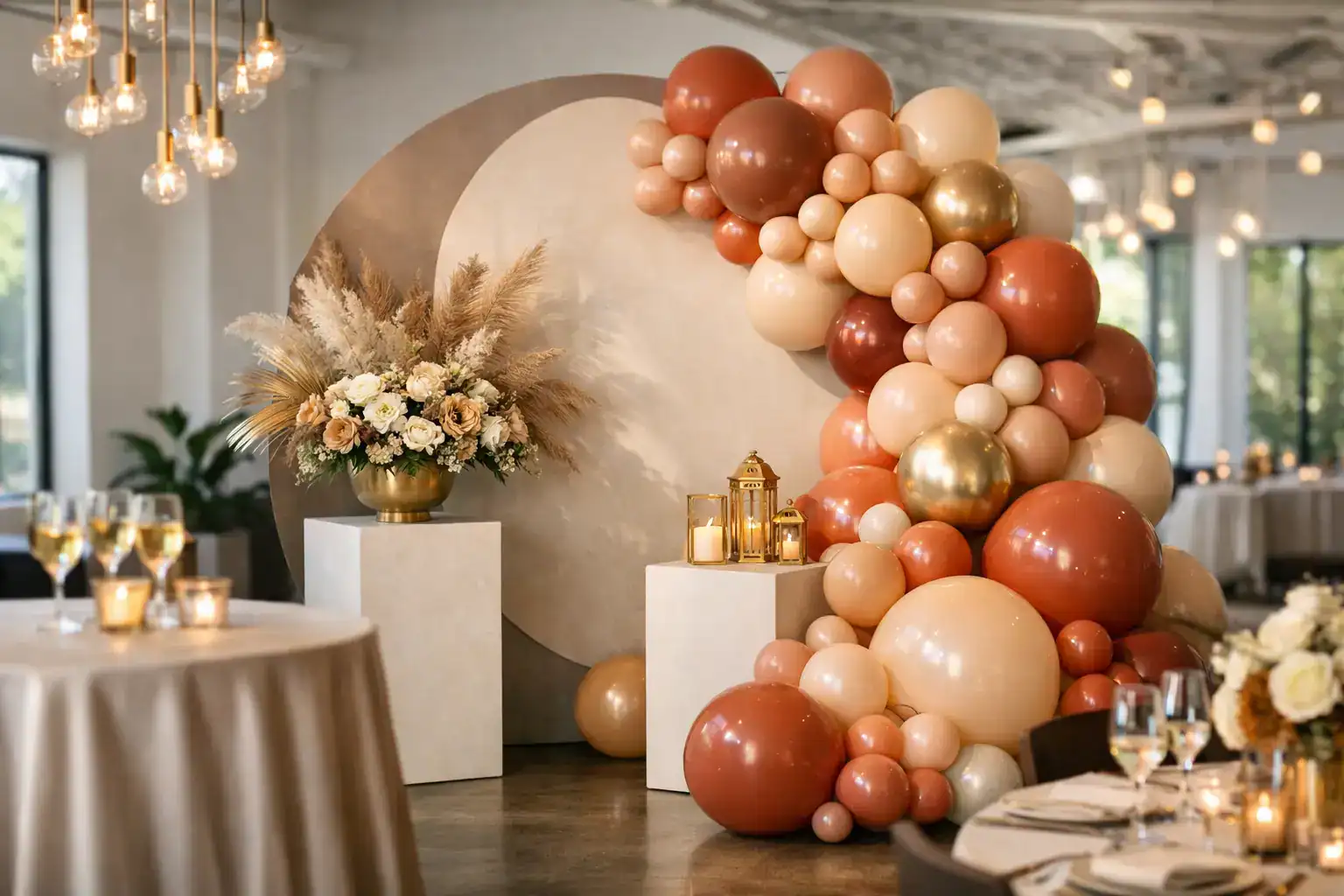
The photo moment should be intentional, not an afterthought placed beside a registration table. Place it where traffic naturally gathers, such as the entrance, cocktail area, student union atrium, or route between programming spaces. A custom backdrop with school branding, dimensional balloons, marquee letters, fresh floral moments, lounge furniture, or a branded step-and-repeat can create a strong focal point without overwhelming the venue.
Scale matters. A small backdrop may look polished in person but disappear in a wide event photo. Conversely, a dramatic installation can become the visual anchor for a large ballroom or arena concourse. The right choice depends on venue proportions, ceiling height, expected attendance, and where photographers will be positioned.
For high-volume events, consider more than one visual touchpoint. A statement entrance welcomes guests, a central installation creates an energy shift in the main room, and a dedicated photo activation gives attendees a place to make content. These moments should feel connected through color, shape, and messaging, rather than like separate decor packages dropped into the same event.
Make Wayfinding Part of the Experience
University campuses can be complicated, especially for prospective families, conference guests, and alumni returning after years away. Styling can make an event more intuitive while keeping the environment polished.
Use color zones, oversized branded elements, and focal installations to signal where guests should go. A balloon column or entry build can identify check-in. A visual installation near a career fair pavilion can help attendees find a featured sponsor area. A custom backdrop can define the VIP or donor reception without requiring a wall of temporary signage.
This is where decor and event production need to collaborate. If a beautiful installation blocks an ADA pathway, obscures directional signs, interferes with fire exits, or creates a bottleneck at registration, it is not doing its job. The best design teams plan for traffic flow, load-in routes, ceiling restrictions, weather exposure, and campus venue rules before the first balloon is inflated.
Choose Statement Pieces With a Clear Role
Not every event needs every decor element. A common mistake is trying to add arches, centerpieces, walls, marquees, entertainment, and rentals simply because they are available. Luxury styling is about editing. One jaw-dropping focal point, supported by a few refined details, often has more impact than a room full of disconnected accents.
For an admissions open house, a branded entrance installation and photo backdrop may be the strongest investment. For a scholarship dinner, refined centerpieces, stage treatment, and an elegant welcome moment could be more appropriate. For a student engagement festival, bold organic balloon installations, interactive entertainment, and high-visibility signage may create the biggest return in participation.
Consider these styling roles when building the event plan:
- Arrival impact sets the emotional tone before guests enter the program.
- Stage framing gives speakers, performers, and award recipients a polished visual setting.
- Photo-ready activation encourages social sharing and gives the event a recognizable signature.
- Table and lounge styling makes longer experiences feel more intentional and elevated.
- Interactive entertainment keeps energy high when guests need a reason to stay, mingle, or return.
The goal is not decoration for decoration’s sake. Every piece should either support the brand, improve the guest journey, or create a memorable visual payoff.
Plan for the Realities of University Venues
A university may host an event in a historic hall one week and an outdoor quad the next. Those environments demand completely different design approaches. Indoor ballrooms can support layered lighting, tall centerpieces, and dramatic ceiling-aware installations. Outdoor events need designs that can handle wind, sun, uneven surfaces, and the unpredictable pace of campus foot traffic.
Timing is another major factor. Campuses are active environments, and install windows can be tight around classes, athletics, security protocols, and building operations. A styling plan should account for early access, delivery routes, elevators, loading docks, parking restrictions, and the cleanup schedule. For multi-day conferences or orientation programs, durability becomes part of the creative brief.
Budget deserves the same level of clarity. It is tempting to spread funding thinly across a large venue, but a diluted design rarely photographs well. If the budget is focused, prioritize one high-impact location that every guest will see. If the event is a flagship fundraising gala, presidential celebration, or major brand partnership, an expanded approach with entry, stage, tables, and activations may be the right fit.
Build an Experience Students Actually Want to Enter
Students can tell when an event feels generic. They are also quick to respond when a university creates something visual, bold, and clearly made for them. The difference is usually specificity.
Instead of placing a few school-color balloons around a room, create a sculptural installation around the event message. Instead of a plain photo wall, build a backdrop that feels like a destination. Instead of treating entertainment as a side attraction, position it as part of the atmosphere. A photo booth, DJ, caricature artist, or balloon twister can help turn an informational event into an experience with momentum.
That does not mean every campus event needs to look trendy or loud. Academic symposiums, donor receptions, and leadership events may call for restrained luxury. The key is matching the visual language to the audience while maintaining a standard of finish that feels intentional. Sophisticated can still be exciting. High-energy can still be on-brand.
Partner With a Team That Thinks Like Event Producers
University events involve many stakeholders: marketing, advancement, student affairs, facilities, venue staff, campus leadership, security, and outside vendors. A decor partner should bring more than pretty ideas. They should be able to translate a concept into an installation plan that works within the realities of the space and schedule.
For Atlanta-area universities and campus organizations, Atlanta Balloon Designer brings luxury event styling, custom balloon builds, photo backdrops, rentals, and interactive entertainment into one design-forward production conversation. That integrated approach helps event planners create a consistent visual story from the arrival experience to the final photo.
Give the design team the event date, venue, estimated guest count, brand assets, key messages, and a clear sense of what success looks like. Share inspiration, but leave room for creative direction based on the actual site. The most impressive installations are rarely copied from a single image. They are designed for the room, the audience, and the exact moment the event needs to own.
When students, families, alumni, and partners walk into a space that feels considered from every angle, they understand the message before anyone reaches the microphone: this occasion matters. Make that first impression pure fire.