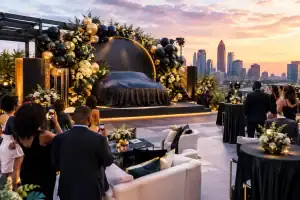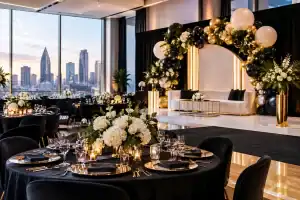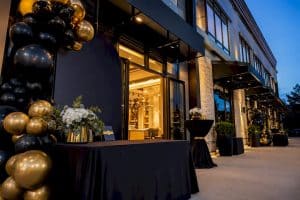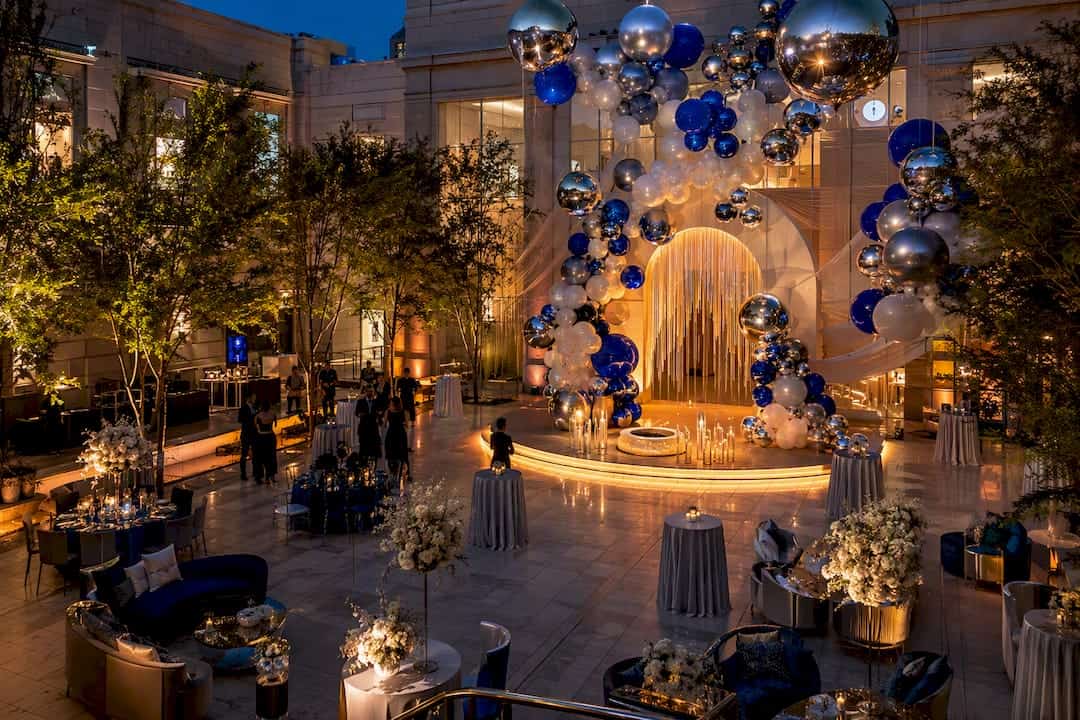
Interactive balloon installations are immersive environments built from scale, motion, or guest-triggered moments, designed so attendees do more than glance and walk past. They work best at galas, brand activations, product launches, and milestone events where you need shareability, dwell time, and a genuine “wow” that shows up on every phone camera in the room. Think kinetic centerpieces that rise on cue, tunnels guests walk through, or sculptural build stations where they help create the art.
TL;DR:
- Large-scale balloon installations require at least 8 weeks lead time, especially if they involve motorized or custom-branded elements.
- Venue constraints such as ceiling height, rigging points, power access, and safety certifications must be confirmed before design approval.
- Interactivity can rely on kinetic movement, guest-triggered mechanics, tactile sculpting stations, or AV integration, each requiring specific planning and safety measures.
- Placement and pacing are crucial for engagement, with arrival pieces placed where foot traffic slows and reveal moments positioned to avoid competing with speeches.
- Environmental considerations include using biodegradable latex, reducing helium use by opting for air-filled builds, and planning proper disposal and reuse of materials.
Table of Contents
- What Do Interactive Balloon Installations Look Like?
- How Do You Make a Balloon Installation Interactive?
- What Venue Logistics Determine Feasibility?
- How Do You Design for Guest Experience and Photo Moments?
- What Drives the Cost and Timeline of an Interactive Installation?
- How Does a Balloon Design Studio Actually Execute One?
- Are Balloon Installations Environmentally Sustainable?
- When Should You Commission an Interactive Installation Instead of a Decorative One?
- How Atlanta Balloon Designer Brings Interactive Concepts to Life
- Sources
- FAQ
What Do Interactive Balloon Installations Look Like?
Every immersive balloon room starts as a decision about how guests move through a space, not just what hangs above them. The best formats match the moment they’re built for.
- Balloon tunnels and rooms: Guests walk into a fully wrapped environment, ideal for arrivals or a signature entrance moment.
- Choreographed ceiling fields: Clusters cued to shift color or motion in sync with music, perfect for main-stage reveals.
- Kinetic centerpieces: Motorized elements that rise and fall on command, often timed to an award announcement or product unveiling.
- Sculptural participation zones: Balloon-build stations where guests shape their own piece and take it home.
- Reveal moments and drops: A curtain, net, or panel release that unveils a logo, product, or celebratory cascade.
For scale reference, large public exhibits like Balloon Story use hundreds of thousands of balloons across walk-through galleries, which shows how far the format can stretch when a venue has the ceiling height and floor space to support it. For arrivals, prioritize tunnels with strong sightlines. For main-stage moments, prioritize height and lighting. For networking zones, prioritize low-profile pieces guests can gather near without blocking traffic.
How Do You Make a Balloon Installation Interactive?
Interactivity comes from four practical levers, and most memorable installations combine at least two of them.
Kinetic movement relies on motorized rise-and-fall systems. Table Art’s kinetic balloon centerpieces can travel smoothly on command and sync with DMX lighting for choreographed sequences, but that reliability depends on a dedicated operator and enough ceiling clearance to let the mechanism travel freely.
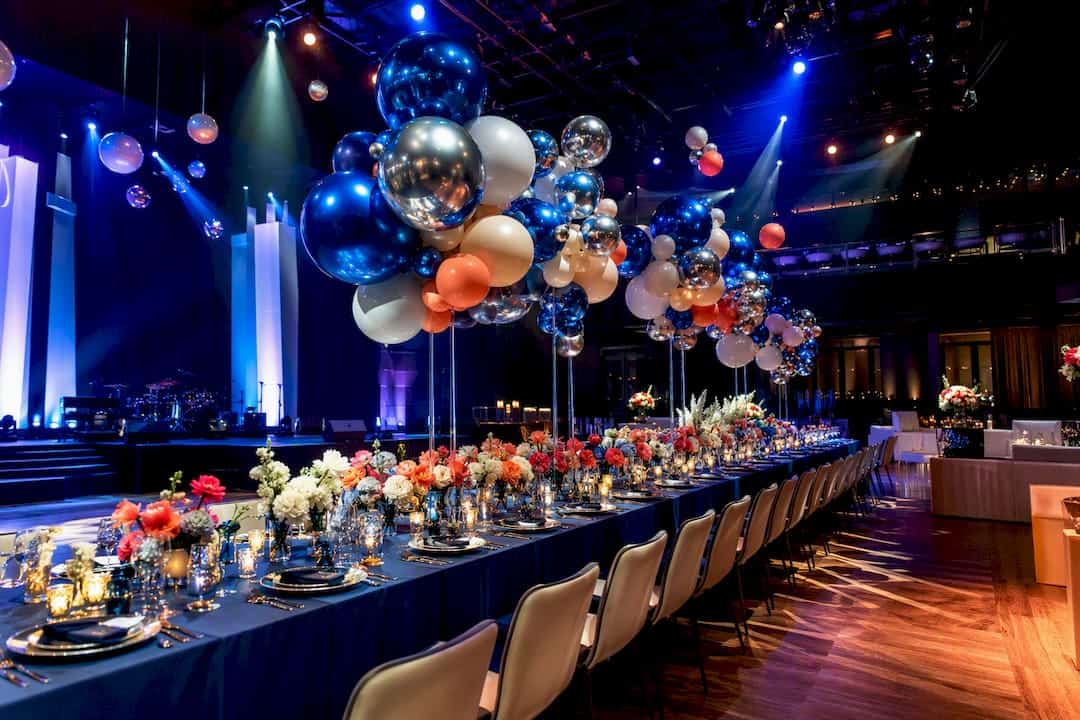
Guest-triggered mechanics use buttons, timed reveals, or confetti releases tied to a specific cue, like an award announcement. These need a safety plan for anything airborne and a clear line of sight so guests know when to react.
Tactile and participatory stations let guests shape balloons themselves. Balloon sculpting invites live audience participation and functions as genuine interactive entertainment that scales well across mixed-age crowds and sends people home with a keepsake.
Tech integration layers in projection mapping, sound cues, and DMX lighting, all of which require early coordination with the venue’s AV team.
- Motorized rise/fall systems need minimum ceiling clearance confirmed before design begins.
- Guest-triggered releases require a written safety and cleanup plan.
- Sculpting stations need staffing and a supply buffer for busy stretches.
- Any lighting or sound cue needs a shared script between the balloon crew and AV operator.
Pro Tip: Ask your vendor for a run-of-show document that lists every cue by time stamp. It’s the single easiest way to keep a kinetic reveal from colliding with the emcee’s mic moment.
What Venue Logistics Determine Feasibility?
Before any interactive concept gets approved, run it against the venue’s physical and safety limits. Most surprises on install day trace back to one of these getting skipped.
- Confirm ceiling height, available rigging points, and floor loading capacity with the venue’s production manager.
- Map power access and DMX lines for any motorized or lit element, and loop in AV coordination early.
- Verify flame-resistance treatment where required, and confirm certificate of insurance (COI) requirements with the venue.
- Staff enough technicians for the install size, especially for anything kinetic or guest-triggered.
- Lock the install and strike windows, since overnight or early-morning access windows directly affect crew cost.
Venues with unusually tall ceilings bring their own rigging math, which is worth reviewing in detail before locking a concept built around vertical scale.
How Do You Design for Guest Experience and Photo Moments?
Placement decides whether an installation gets seen or gets walked past. Arrival pieces should sit where foot traffic naturally slows, not where it needs to squeeze through. Main-moment reveals belong near the stage or focal wall, timed so they don’t compete with a toast or speech. Exit touches, like a smaller balloon moment near the door, extend the experience without demanding a detour.
Pacing matters just as much as placement. Spread interactive stations across the room and stagger their peak activity, or you’ll create a bottleneck around the one photogenic piece while the rest of the room sits empty. Keep at least one wide, accessible path clear at all times for guests using mobility devices.
- Choose lighting temperature and color to match how phone cameras render skin tones and fabric, not just how the piece looks to the naked eye.
- Keep branding subtle and integrated into color choice rather than stamped across the installation.
- Track engagement through dwell time near the piece, photo counts, and social shares tagged to the event.
Pro Tip: Walk the space at the same time of day your event runs, then check how the light actually hits your planned installation site. A piece that looks stunning at 2 p.m. can go flat under evening venue lighting.
What Drives the Cost and Timeline of an Interactive Installation?
Price and lead time move together, and both scale with the same handful of variables.
- Balloon count and overall installation scale
- Custom printing or branded balloon colors
- Motorized or kinetic components
- AV integration, including lighting and sound cues
- Crew labor hours and venue access complexity
Corporate providers generally recommend booking 3 to 8 weeks out depending on scale, with smaller installs on the shorter end and large brand activations or anything motorized needing the longer window. As a rough planning rule: small installs run 2 to 4 weeks, mid-scale designs need 4 to 8 weeks, and large or tech-enhanced activations deserve 8 weeks or more. When scoping proposals, ask vendors for a digital mockup, their COI, a written install schedule, a teardown plan, and their site visit policy before signing anything.
How Does a Balloon Design Studio Actually Execute One?
The company is a luxury event styling and balloon décor provider serving the greater Atlanta metro area, and the production path behind a kinetic or interactive piece looks fairly consistent from brief to teardown.
- Brief: Objectives, venue details, and reference images gathered upfront.
- Digital mockup: A visual proof before any fabrication begins.
- Prototyping: For motorized or complex sculptural elements, a smaller test build first.
- Logistics and AV coordination: Rigging, power, and cue timing confirmed with the venue.
- Install: On-site build within the confirmed window.
- On-site support: A technician present through key moments if the piece is kinetic or guest-triggered.
- Teardown: Strike scheduled against the venue’s own contract terms.
When comparing vendors, request the same deliverables every time: a digital mockup, a written install schedule, proof of insurance, a staffing plan, and a firm teardown estimate. Full-service execution, from organic arches to fully immersive installations, is what separates a reliable production partner from someone improvising on-site.
Are Balloon Installations Environmentally Sustainable?
Latex balloons are biodegradable, but that doesn’t mean an installation has zero environmental footprint, and planners are asking about this more with every passing event season. The material matters: natural latex breaks down over time, while foil or mylar accents do not, so a designer who mixes materials thoughtfully is making a sustainability decision, not just an aesthetic one.
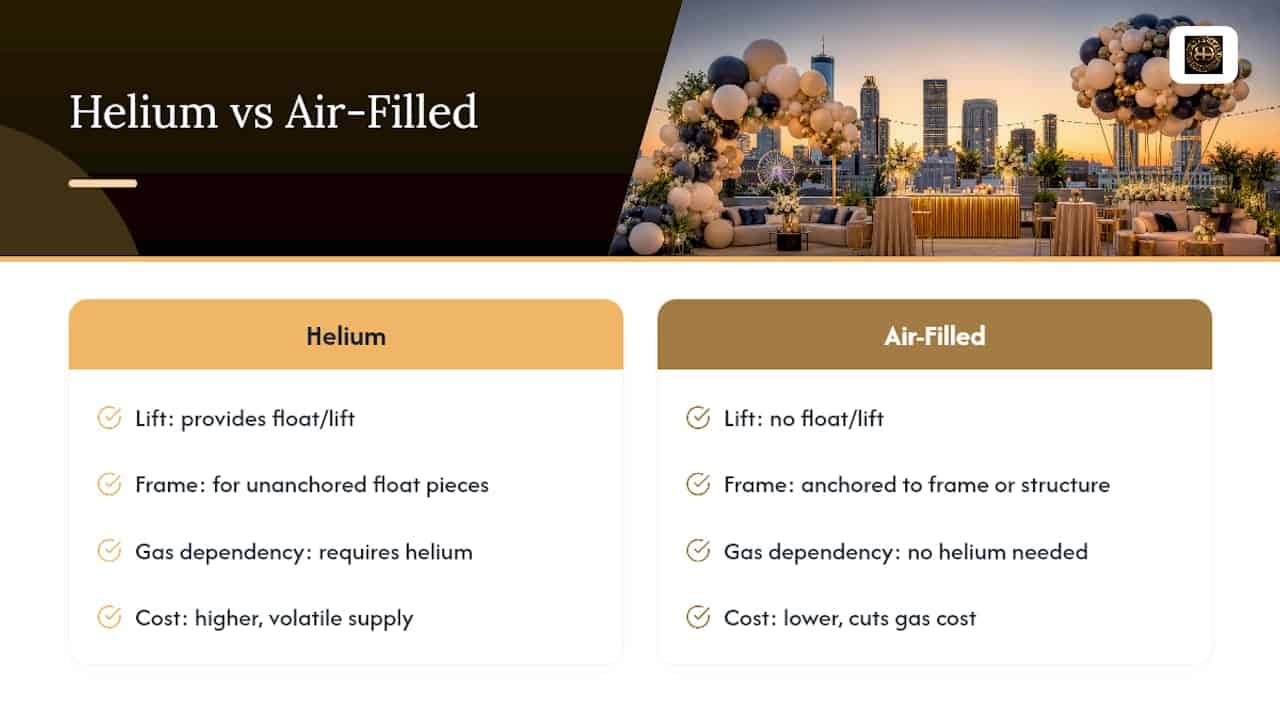
Helium supply and cost volatility have also pushed more designers toward air-filled techniques for installations that don’t need to float, which cuts both gas dependency and cost. The choice between helium and air-filled builds depends on whether the piece needs lift or is anchored to a frame, and that decision affects both your carbon footprint and your budget.
Responsible studios also plan for proper disposal and deflation rather than letting installations end up loose outdoors, and they reuse frames, rigging hardware, and structural elements across multiple events instead of treating every job as disposable. If sustainability is a stated priority for your event, ask your vendor directly how they source latex, whether they offer biodegradable-only builds, and what their disposal process looks like after strike. A studio with a clear answer to all three has thought about this before you asked.
When Should You Commission an Interactive Installation Instead of a Decorative One?
Interactive installations earn their cost at brand activations, galas, and high-photo-value events where engagement is the actual goal. If budget, venue height, or timeline are tight, a decorative arch or garland still delivers strong visual impact without the added AV and staffing layer. Either way, start by setting clear objectives, confirming hard venue constraints, requesting a digital mockup, and booking a site visit before locking any design.
— Kay
How Atlanta Balloon Designer Brings Interactive Concepts to Life
Atlanta Balloon Designer is the direct alternative to piecing together separate vendors for lighting, fabrication, and installation on a single interactive build. Serving Atlanta and communities within a 60-mile radius, including Marietta, Roswell, Buckhead, and Austell, the studio handles digital mockups, custom fabrication, motorized and kinetic elements, AV coordination, and full-service install and teardown under one roof, so you’re not chasing three separate contracts for one moment on stage.
Before your consultation, gather venue photos, your event objectives, and a tentative timeline. In return, expect a digital mockup, a written install schedule, and a certificate of insurance ready for your venue’s production team. Digital mockup services are available for $75 per mockup, and full pricing for arches, garlands, and custom builds is listed on the balloon decor pricing page. For corporate activations and grand openings specifically, the services overview covers what’s included in a full-service build. If you’re weighing options for a large-scale reveal or an immersive room, request a site visit today and get a proposal built around your actual venue, not a generic template.
Sources
For technical reference on motorized centerpieces, Table Art’s kinetic balloon page breaks down how rise-and-fall mechanisms sync with DMX. For tactile interaction ideas, this piece on balloon sculpting as live entertainment is worth a read. Designers hunting for physical photo-op hardware to pair with a backdrop can check Back Drop Banner Stands for printed signage options. Always confirm rigging capacity and insurance requirements directly with your venue’s production contact before finalizing any design.
- Kinetic Balloon Centrepieces for Events | Table Art
- How Balloon Sculpting Creates Interactive Entertainment for Live Events
- Branded Corporate Event Balloon Decor in Los Angeles
FAQ
How Much Does a Balloon Arch Setup Cost?
Pricing starts at $600 for a spiral balloon arch or a 24-foot stacked arch, with organic arches starting at $700 and luxury organic arches from 1000 $ one-off. Delivery, setup, and strike down are billed separately, starting at $125.
What Are the Latest Trends in Balloon Decor?
Kinetic and motorized elements are gaining ground because they turn a static centerpiece into a performance cue, especially for award reveals and product launches. Sculptural participation stations and choreographed ceiling fields synced to lighting are also trending for large-scale activations.
What Are Some Fun Interactive Projects I Can Do With Balloons?
Guest-triggered confetti releases, build-your-own balloon stations, and reveal walls timed to a specific announcement are all popular interactive formats. Live balloon sculpting also works well as standalone entertainment for mixed-age crowds.
Is the Balloon Story Exhibit in New York Still Open?
Exhibit schedules change, so check ticketed listings through apps like Fever or the exhibit’s own site for current dates before planning a visit. A quick map search can also confirm the venue’s current hours and address.
How Far in Advance Should I Book an Interactive Balloon Installation?
Book 3 to 8 weeks out depending on scale, with small installs needing as little as 2 to 4 weeks and large or motorized activations needing 8 weeks or more. Custom printing and kinetic components both push toward the longer end of that window.