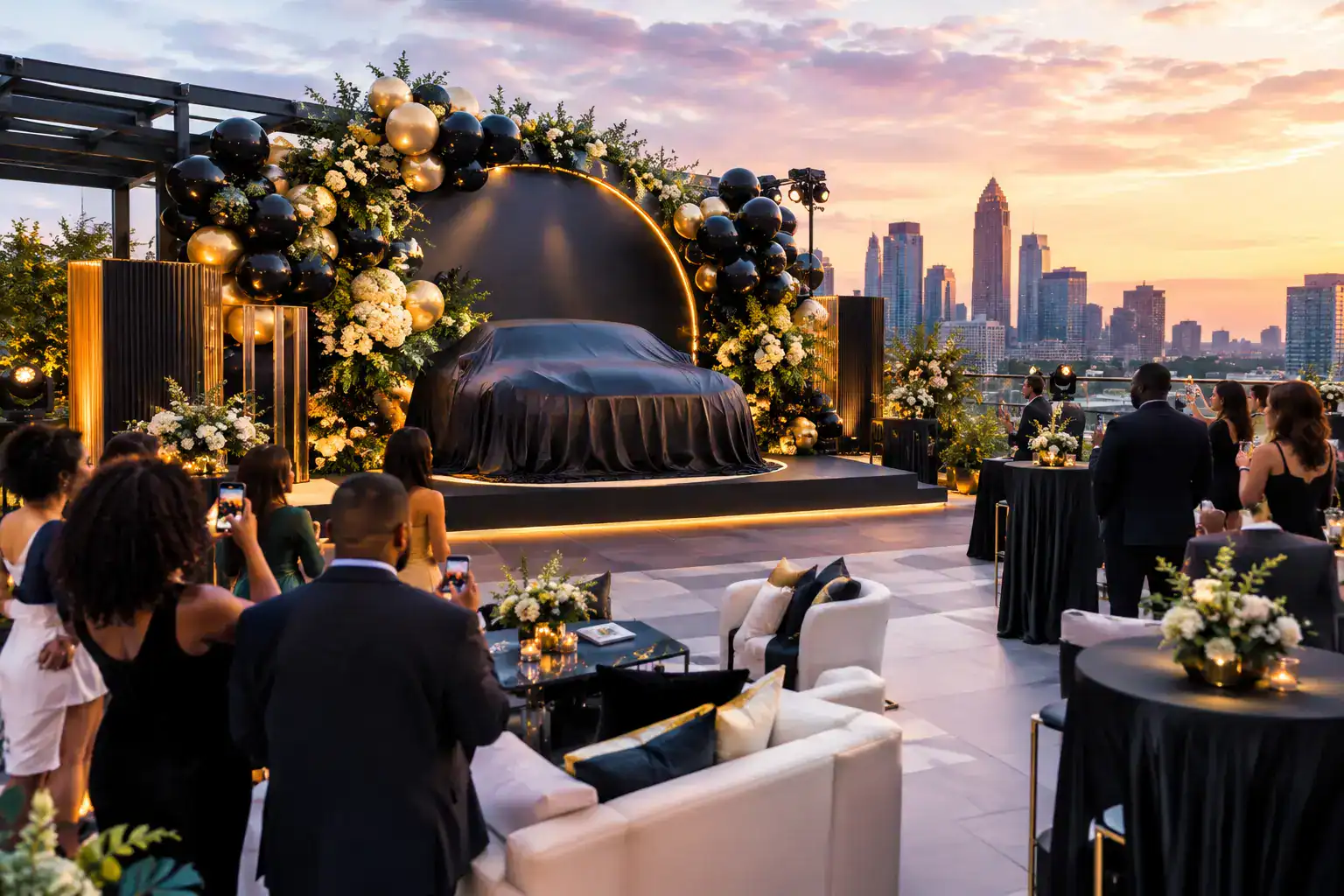
The product is ready. The room is booked. Now comes the moment that determines whether guests simply see the launch or feel it. Knowing how to stage a product reveal means designing anticipation before the curtain lifts, controlling what guests see first, and giving the brand a visual moment worth photographing, sharing, and remembering.
For a corporate launch, retail debut, rebrand, or media event, the reveal should never feel like an item placed on a table with a speech beside it. It should feel intentional, polished, and completely connected to the story your brand wants to tell. The right production choices turn a reveal into a high-impact experience.
Start With the One Reaction You Want
Before choosing a backdrop color or ordering a single balloon, define the reaction. Do you want a room full of VIPs to gasp? Do you want media guests to immediately reach for their phones? Are you introducing a luxury product that needs an elegant, editorial setting, or a bold consumer product that deserves pure fire and high energy?
That answer shapes every design decision. A sleek technology launch may call for a monochromatic installation, dramatic uplighting, clean lines, and a concealed product pedestal. A colorful beverage, beauty, or retail launch may need an oversized organic balloon installation, branded color blocking, custom signage, and a photo moment that pulls guests in from across the room.
The product itself should lead the visual direction. Pull from its packaging, finish, silhouette, campaign imagery, and intended customer. If the reveal set feels disconnected from the product, even expensive decor can look decorative instead of strategic.
Build Anticipation Before the Product Appears
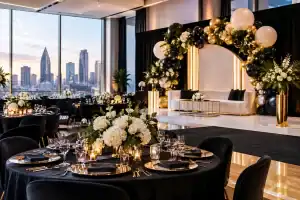
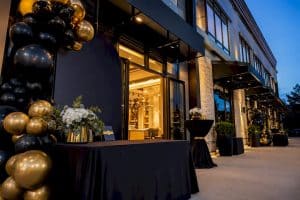
The best reveals begin before guests enter the main event space. Use the arrival experience to establish mood and create curiosity. A branded entry moment, welcome wall, step-and-repeat backdrop, or sculptural balloon installation tells attendees they have stepped into a fully produced brand experience.
Inside the room, keep the product hidden with purpose. That might mean a draped reveal structure, a custom-built display box, a branded curtain, or a centered focal wall that conceals the hero item until the exact right moment. The concealment does not need to be complicated, but it must look polished from every viewing angle.
Avoid giving guests an accidental preview as they walk in. Check sight lines from the entry, bar, seating area, stage wings, and photo zone. If the product can be seen too soon, the reveal loses its tension. If it is hidden so completely that guests do not know where to look, the reveal can feel confusing. The sweet spot is a clear focal point with just enough mystery.
Design the Reveal Zone Like a Camera Set
Every guest is a potential content creator, and every reveal photo may become part of your campaign after the event. Treat the reveal zone like a camera set, not just a stage. The product needs clean lighting, visual contrast, breathing room, and a background that makes sense on screen.
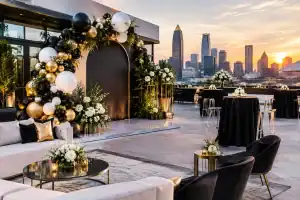
A statement backdrop can frame the product beautifully, but it should not overpower the item you are launching. If the package is small or highly detailed, use a simplified palette and give the display height. If the product is large, such as a vehicle, equipment piece, or oversized consumer installation, scale up the environment with wide-format decor, arches, balloon columns, florals, or dramatic dimensional branding.
Lighting does more heavy lifting than many teams expect. Flat overhead venue lighting can make a carefully styled display feel ordinary. Use focused lighting on the product, then layer ambient color around the surrounding decor. The moment the concealment drops, the product should be brighter and more visually dominant than the rest of the room.
For corporate teams working in hotels, convention venues, showrooms, restaurants, or office spaces, confirm ceiling height, loading access, power availability, fire-code requirements, and installation windows early. A jaw-dropping custom build is only useful if it can safely fit the room and be installed without disrupting operations.
Create a Run of Show That Protects the Moment
A reveal can be visually stunning and still fall flat if the timing is loose. Assign one person to call the moment and make sure the DJ, emcee, lighting team, photographer, videographer, and event staff all know the cue.
A simple run of show often works best:
- Guests are directed toward the reveal zone and the host sets the story.
- Music, lighting, and crowd energy build for 30 to 60 seconds.
- The emcee gives a clear countdown or final line.
- The cover, curtain, or reveal element moves on cue, followed by a pause for photos.
- Guests are invited into the branded photo experience or hands-on product moment.
That pause after the reveal matters. Do not rush straight into another announcement. Give the room time to react, capture the shot, and absorb what they are seeing. For a media-facing launch, this is also the window for clean photography before attendees crowd the display.
Plan Crowd Flow, Not Just Decor
A beautiful reveal becomes frustrating when 150 guests are fighting for one photo angle. Think through traffic from the first floor plan. Where will guests gather before the reveal? Where will they move afterward? Where can the press stand without blocking VIPs? Where will executives, product specialists, or sales staff be positioned for conversations?
For a smaller launch, an intimate semicircle around the display can create a strong sense of exclusivity. For a larger corporate activation, build multiple touchpoints: the hero reveal stage, a branded photo backdrop, product demonstration stations, and lounge or networking areas. This spreads the crowd while extending the experience beyond one big moment.
The photo opportunity should be close enough to the reveal zone to carry the same visual language, but separate enough that it does not cause a bottleneck. A custom backdrop, marquee letters, balloon wall, or logo moment gives attendees a reason to share the event while keeping the hero product visible and protected.
Match the Decor to the Brand, Not a Trend
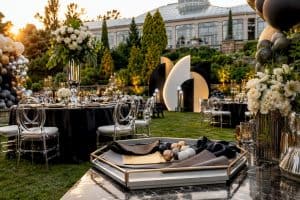
Balloon decor can be playful, sophisticated, architectural, or completely editorial. The difference comes down to palette, scale, material mix, and restraint. For a luxury reveal, consider refined tones, layered textures, metallic accents, florals, acrylic signage, or sculptural organic forms. For a high-energy launch, saturated color, oversized clusters, custom shapes, and bold branded moments can create immediate impact.
Trends can inspire the concept, but they should not run the event. A trend-forward design that has nothing to do with your campaign may photograph well for a second and feel dated by next quarter. A product reveal should look like your brand had a point of view, not like it borrowed someone else’s party.
At Atlanta Balloon Designer, reveal environments are designed around the product, the audience, and the room itself. That full-service approach is especially valuable when the event needs decor, custom backdrops, rentals, entertainment, and a cohesive visual plan working together under one creative direction.
Rehearse the Details Guests Never See
The most polished launches are built on details attendees rarely notice. Test the opening mechanism. Confirm that the product is clean, charged, stocked, and facing the correct direction. Walk the route your executives will take. Listen to the emcee from the back of the room. Take test photos from the guest viewpoint, not just from the stage.
If the reveal relies on a curtain pull, confetti effect, lighting change, or music cue, rehearse it at least once in the actual venue. Have a backup plan for common surprises like a delayed executive, a venue lighting limitation, or a product that cannot be moved at the last minute. The goal is not to make the event feel overproduced. It is to make the execution look effortless.
A product reveal earns attention when every element points to the same hero: the product and the promise behind it. Give that moment the space, suspense, and visual power it deserves, then let guests carry the excitement into every photo, conversation, and post-event follow-up.