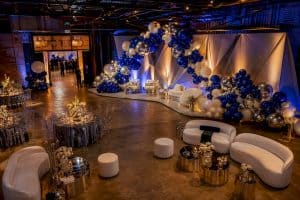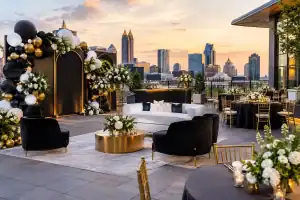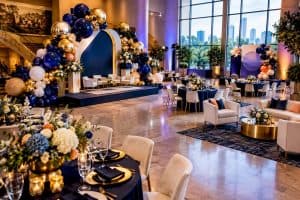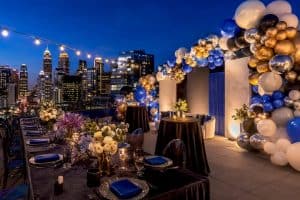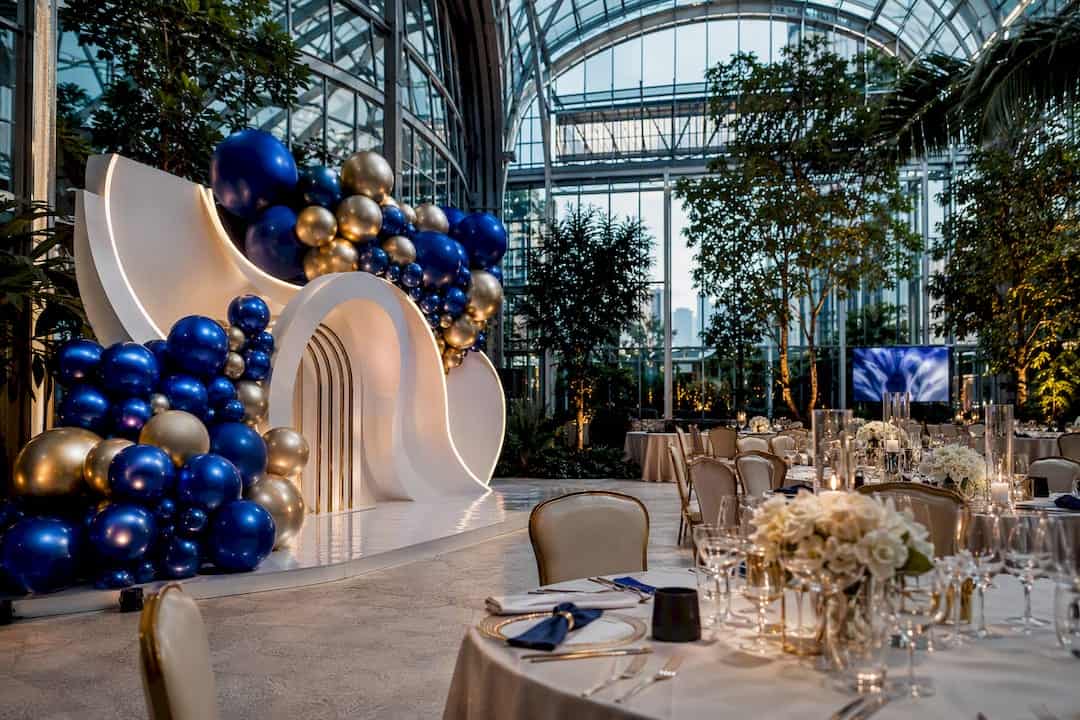
The highest-impact product launch backdrops share one trait: they give guests something worth photographing. LED walls and projection mapping create a hero moment on demand, organic balloon walls deliver instant shareable texture, persona-based vignette stations produce varied content for press and influencers alike, sculptural product plinths command attention, and living-green or textured fabric walls add a sensory depth that a flat banner never will.
TL;DR:
- LED walls and projection mapping are ideal for tech or motion-oriented product reveals, allowing multiple scene changes without physical set rebuilds.
- Organic balloon walls and arches are best for warmth-focused launches, with layered balloon finishes creating a personalized look that photographs well.
- Persona-based vignette scenes enable brands to capture multiple content styles in one event, such as influencer, press, and retail-ready settings.
- Material choices like fabric panels, foam props, and biodegradable balloons influence both the visual quality and installation complexity of backdrops.
- Scaling concepts to venue size and guest count is crucial, with modular, portable designs preferable for flexibility across event types and locations.
Table of Contents
- 1. Curated Backdrop Concepts for Every Product Story
- 2. Persona-Based Vignette Scenes for Content Capture
- 3. Materials, Fabrication, and Practical Build Tips
- 4. Lighting, AV, and Digital Techniques That Animate a Backdrop
- 5. Case Examples and Rules From Atlanta Balloon Designer
- 4. Adapting Backdrop Ideas to Different Event Sizes and Venues
- 5. Incorporating Brand Identity and Messaging Effectively
- 6. Sustainability Considerations and Eco-Friendly Materials
- 7. Why Backdrops Must Serve Storytelling, Not Just Branding
- How Atlanta Balloon Designer Brings These Ideas to Life
- Sources
- FAQ
1. Curated Backdrop Concepts for Every Product Story
The right backdrop concept depends on your product, your venue, and how much drama you want at the reveal. Here are the ideas experiential designers reach for most often, along with the quick wins that make each one camera-ready.
- LED wrap or projection mapping. Best for tech launches, automotive reveals, or any product that benefits from motion. Right-angled LED walls can create 360-degree, high-resolution environments that reconfigure quickly during a presentation, so one setup becomes three or four distinct scenes without a single prop change. Quick win: build your run-of-show around scene changes, not just slides.
- Organic balloon wall or arch. Best for beauty, lifestyle, hospitality, and consumer product launches where warmth matters more than tech polish. A garland in soft neutral tones with pops of gold or jewel-toned accents photographs beautifully under warm light. Quick win: cluster balloon sizes and finishes (matte, chrome, translucent) for the layered look that reads as custom, not off-the-shelf.
- Vignette-style persona stations. Best for launches with multiple audience segments (press, influencers, retail buyers). Quick win: repeat one signature color or texture across all stations so the photos feel like a set, not scattered rooms.
- Sculptural plinths and pedestals. Best for a single hero product that needs to feel like art. Quick win: light the plinth from below or the side to create shadow depth that a flat overhead light kills.
- Living or green walls and textured fabric. Best for wellness, food and beverage, or sustainability-forward brands. Real elements paired with digital displays create a sensory, less-sterile environment that encourages press and influencer shares(https://www.pcma.org/volvo-cars-woodland-wonderland-room-set/). Quick win: mix in one unexpected texture, ribbed fabric, dried botanicals, or a mossy panel, so mobile photos have visible depth instead of a flat green wash.
- Halo-lit marquee letters and reflective surfaces. Best for brand-name launches where the product name itself is the visual. Quick win: pair marquee letters with a mirrored or chrome panel behind the stage to double the light and multiply the photo angles.
For visual references that match these ideas to real installations, our balloon decor gallery is worth a scroll before you lock a concept.
2. Persona-Based Vignette Scenes for Content Capture
A single backdrop gives you one photo. Three or four persona-based vignettes give you a full content library from the same afternoon. Experiential launches increasingly segment space by user persona, creating multiple photo-ready settings, mock newsstands, stylized booths, lifestyle corners, so a brand can show how a product fits different lives, not just one glossy hero shot.
- Influencer photo-op scene: intimate scale, one to two people, dramatic lighting, a prop that photographs well in a vertical phone frame.
- Press demo or hero scene: larger scale, product front and center, bright even lighting that holds up on camera and in live streams.
- Shopper or retail-ready scene: styled like a real shelf or display, softer lighting, focused on how the product looks in daily use.
Place the hero scene near the entrance so it sets the tone, and route guests past the retail-ready scene last so the practical, purchase-ready image is the one they remember on the way out. Signpost each vignette with a subtle prop or color cue rather than a sign, letting the design itself do the talking. Our guide to product launch photo opportunities walks through staging each scene in more detail.
3. Materials, Fabrication, and Practical Build Tips
Material choice determines whether your backdrop looks premium or looks rushed, and it also determines your load-in time.
- Modular flats and vinyl: budget-friendly, easy to reprint for a new campaign, but flat lighting makes them read as “banner” rather than “experience” unless you add depth with props in front.
- Fabric and tension panels: wrinkle-resistant, lightweight for transport, and forgiving under stage lighting, a strong middle-tier choice.
- Foam and lightweight architectural props: ideal for sculptural elements like plinths or arch frames, easy to move but need secure bracing near high-traffic photo zones.
- Custom balloon builds: fastest way to add organic texture and color depth, highly photogenic, and typically installed same-day with minimal rigging compared to structural sets.
Before you commit to a material, confirm venue rules on rigging weight limits, fire certification for fabric and foam elements, and whether the space allows adhesive mounting. Ask your fabricator for photographer-friendly matte finishes wherever possible, since glossy vinyl throws glare under flash photography.
4. Lighting, AV, and Digital Techniques That Animate a Backdrop
Lighting does more work than the backdrop material itself. Dynamic lighting moods synchronized with audio let designers change the feel of a space without structural changes, which means one backdrop can shift from moody reveal to bright networking mode in seconds.
- Choose LED walls or projection mapping when you need to change scenes multiple times in one event; choose printed or physical graphics when the look needs to stay fixed and budget is tighter.
- Warm color temperatures flatter skin tones for guest photos, while higher contrast levels help phone cameras separate the product from the backdrop.
- Build a simple run-of-show that triggers lighting and background changes before the hero moment, since a lagging cue is the fastest way to flatten a reveal.
- Keep a backup playback device and a lighting console operator on standby, AV failures are the most common reason a beautifully designed reveal falls flat.
Pro Tip: Test your backdrop under the exact lighting you plan to use during a phone camera walkthrough the day before, not the week before.
5. Case Examples and Rules From Atlanta Balloon Designer
Balloon backdrops earn their reputation because they combine color, texture, and scale in ways flat graphics cannot. Right-angled LED configurations can build full 360-degree environments that reconfigure without a physical rebuild, and the same principle applies at smaller scale: a well-built organic arch or garland changes the entire feel of a room without touching the walls.
- Curate a palette before sourcing balloons, three to four tones read as intentional, more than that starts to look busy.
- Walk the venue with your fabricator before install day, ceiling height and load-in doors change what is buildable.
- Request a digital mockup so you see the finished color and scale before the event, not on-site under time pressure.
- Ask for photo-first finishes: matte balloon textures and layered depth read better under flash than glossy, single-layer builds.
Commissioning checklist: site visit, digital mockup, confirmed timeline, and clear delivery, setup, and strike-down windows, all four should be locked before you sign off on a design.
4. Adapting Backdrop Ideas to Different Event Sizes and Venues
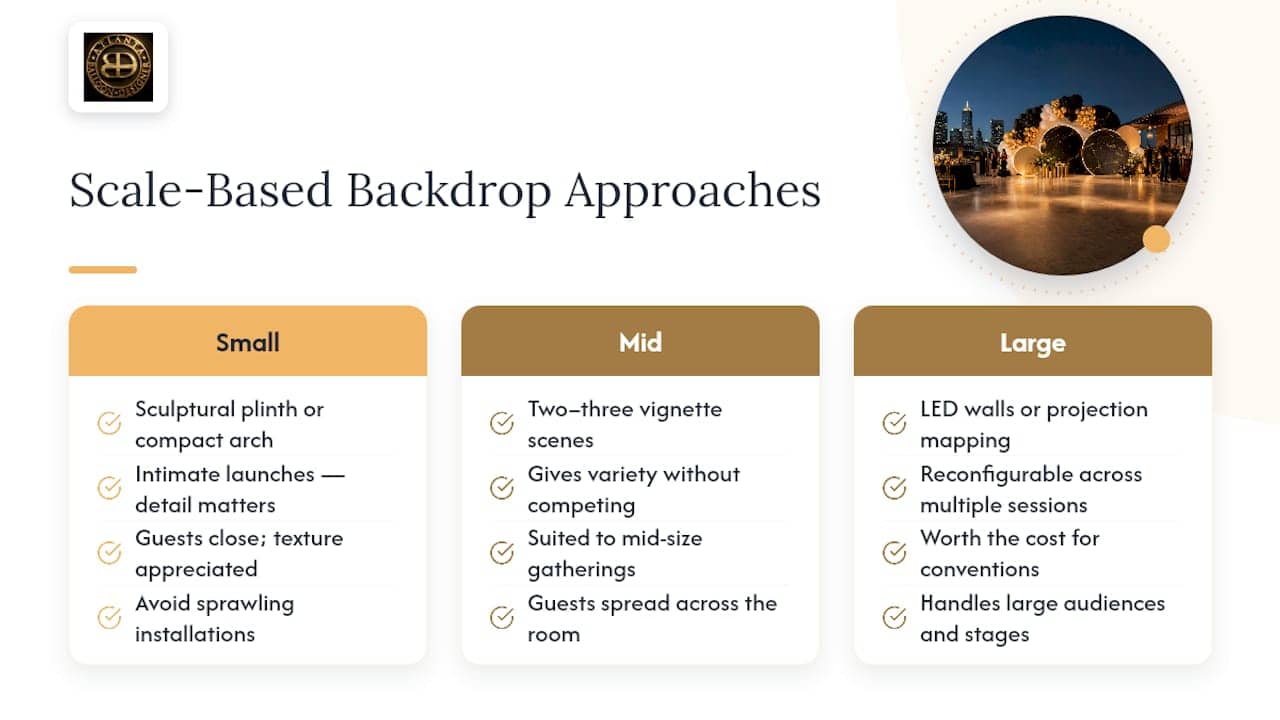
A concept that works in a 3,000-square-foot ballroom will overwhelm a boutique showroom, and a design built for an intimate press preview can feel thin at a 500-person launch. Scale is the first decision, not the last.
For small, intimate launches, a single sculptural plinth or a compact balloon arch does more work than a sprawling installation, since guests are close enough to appreciate texture and detail. For mid-size launches, two or three vignette scenes give enough variety without competing for attention across a large room. For large-scale launches or convention settings, LED walls and projection mapping earn their cost because they can reconfigure across multiple sessions in a single day, avoiding the expense of rebuilding a physical set between segments.
Venue type matters as much as guest count. A hotel ballroom with dimmable house lighting is forgiving for dramatic reveals, while a retail storefront or outdoor pop-up depends more on daylight control and weatherproof materials. Always confirm ceiling height, rigging points, and load-in access before finalizing scale, a stunning concept that cannot physically fit through the loading dock is not a plan. When in doubt, design modular: a backdrop built in sections travels better between venue types and lets you scale a concept up or down for future launches.
5. Incorporating Brand Identity and Messaging Effectively
The strongest backdrops carry brand identity without shouting it. Instead of a wall of logos, the most memorable launch environments lean on color, texture, and mood that guests associate with the brand instinctively. Subtle cues and atmospheric imagery communicate identity more effectively and are more shareable than text-heavy logo walls, because a photo full of logos reads as an ad, while a photo full of mood reads as an experience worth sharing.
Translate brand identity into palette first: if a brand’s visual world is warm and metallic, that becomes your balloon or fabric color story rather than a repeated wordmark. Translate messaging into placement second, a single well-lit sign or marquee letter moment near the hero product carries more weight than branding scattered across every surface. Save the literal logo for one clear, camera-friendly spot, usually near the product reveal itself, and let the rest of the environment carry the feeling of the brand instead of its name.
6. Sustainability Considerations and Eco-Friendly Materials
Sustainability is no longer a side note in backdrop planning, it shapes material choice from the start. Reusable modular flats and fabric panels cut down on single-use waste compared to printed vinyl banners that get discarded after one event. Living or green wall elements, when sourced from rental plant companies rather than purchased outright, offer a sensory, textured look with a much smaller footprint than synthetic greenery.
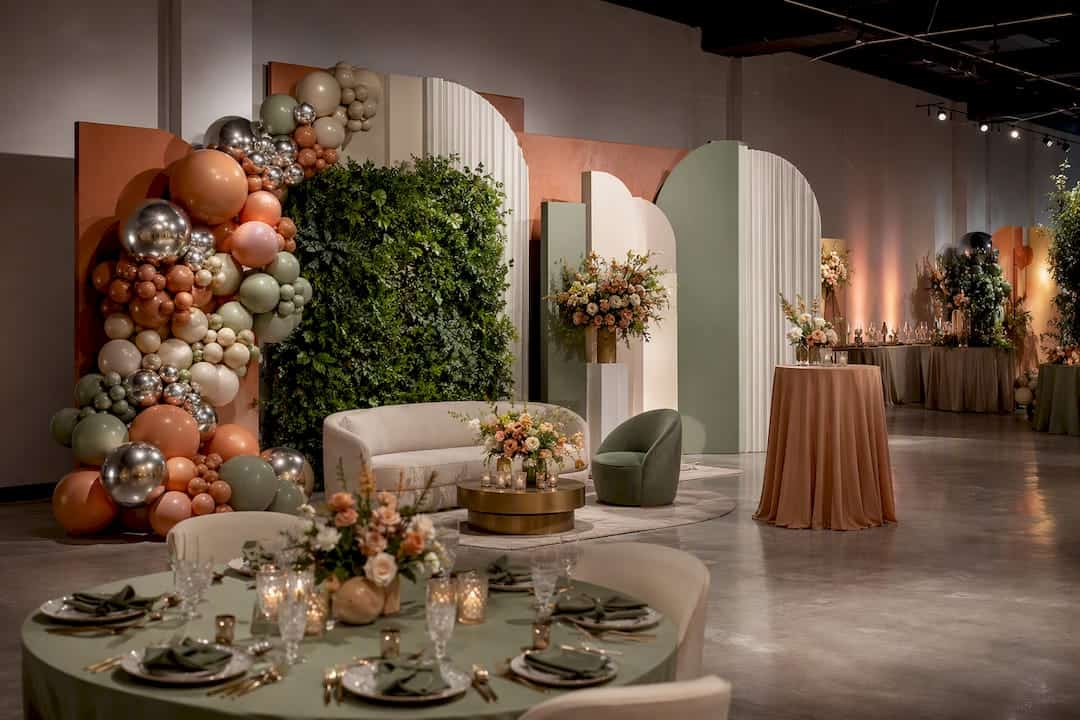
For balloon-based backdrops, choosing biodegradable latex over foil or mylar reduces long-term waste, and designing builds that can be broken down and reused across multiple events, rather than built once and discarded, stretches both budget and environmental impact. LED walls and projection mapping also carry a sustainability upside worth noting: because a single LED configuration can reconfigure into multiple scenes during one event, you avoid the material waste of building and striking several physical backdrops in a single day. When requesting quotes from any fabricator or stylist, ask directly about reuse, disposal, and material sourcing, the answer tells you a lot about how seriously a vendor takes the footprint of their builds.
7. Why Backdrops Must Serve Storytelling, Not Just Branding
The biggest mistake in launch design is treating a backdrop as a logo wall instead of a scene. The second is ignoring how a space photographs under real lighting until it is too late to fix. Storytelling should dictate the design, not the other way around, and when a launch feels bigger than your team’s design bandwidth, that is the moment to bring in a professional styling partner.
— Kay
How Atlanta Balloon Designer Brings These Ideas to Life
Every idea in this guide, organic texture, sculptural scale, layered color, can be built locally for Atlanta launches and events across the surrounding metro. Services include custom balloon backdrops, digital mockups for design preview before install day, site visits to confirm venue fit, and event styling from concept through strike-down.
- Custom balloon backdrops and arches built around your product’s palette
- Digital mockup services to see the design before committing
- Site visits to confirm scale, rigging, and load-in logistics
- Full-service styling for launches of various sizes across the Atlanta area and surrounding communities
Ready to see your concept before your event date? Request a digital mockup or browse balloon backdrop pricing to start planning your reveal.
Sources
- PCMA — Singapore Tourism Board / Marina Bay Sands MICE
- Event Marketer — Stanley and Barbie pop-ups case
FAQ
What are some creative ideas for a product launch?
Strong options include LED walls or projection mapping for tech-forward reveals, organic balloon arches for warmth and texture, and persona-based vignette stations that give press, influencers, and buyers different photo settings in one event. Mixing a digital element with a real, sensory one tends to create a less sterile, more shareable atmosphere.
What are some unique ideas for a backdrop?
Halo-lit marquee letters paired with a reflective or mirrored surface add depth and multiply the angles a phone camera can capture. Layered textures, ribbed fabric, dried botanicals, or a mossy panel, also help mobile photos read as three-dimensional rather than flat.
What is a good backdrop for selling items?
A shopper or retail-ready vignette, styled like a real shelf or display with soft, even lighting, works best because it shows the product in a context buyers recognize. Keeping the palette consistent with the rest of the event ties the retail moment back to the overall brand story.
What is a good backdrop for a product photoshoot?
A sculptural plinth or pedestal lit from the side or below gives a single hero product the shadow depth that flat, overhead lighting tends to erase. Warmer color temperatures generally flatter skin tones when people are in frame alongside the product.
How do I choose a backdrop that fits my venue and budget?
Start with your guest count and ceiling height, since a design built for a small showroom will not scale to a large ballroom without adjustment. Modular materials like fabric panels or sectioned balloon builds offer the most flexibility across different event sizes and budgets.