
Chrome balloons give you a mirrorlike, ultra-reflective latex finish, while “metallic” is an umbrella covering foil (Mylar) and pearl or metallic latex with a softer sheen. Pick chrome for a camera-ready, high-gloss brand look, and metallic when you need printed artwork or longer float. At Atlanta Balloon Designer, we test both with Hi-Float and venue lighting before anything goes up.
TL;DR:
- Chrome’s mirrorlike highlights suit bright, directional lighting and branded backdrops, while pearl latex softens reflections and can flatter portraits in dimmer rooms.
- Foil balloons hold helium longer and support printed designs, but their plastic film does not biodegrade and should go in the trash after use.
- A 96 oz bottle of latex treatment covers about 568 balloons measuring 11 inches; apply it on event day and keep them cool.
- Heat expands helium and raises burst risk, so keep filled balloons out of hot cars and direct sun, especially during transport.
- Foil balloons belong in the trash, never outdoors; recycling rules vary, so check local guidance before discarding deflated balloons.
Table of Contents
- 1. How chrome and metallic finishes look under real light
- 2. What each finish is made of and why it matters
- 3. How long each finish lasts at your event
- 4. Which finish fits your event and photo goals
- 5. Care, inflation and disposal done responsibly
- 6. What we do before locking in a finish
- 7. Our rule of thumb: if it needs to mirror, go chrome
- 8. Let us choose and install your chrome or metallic décor
- FAQ
- Sources
1. How chrome and metallic finishes look under real light
Chrome and metallic finishes behave very differently once light and cameras hit them. Here is what we see on installations across Atlanta and nearby cities like Marietta, Smyrna and Decatur:
- Chrome latex: highly specular, with crisp, mirrorlike highlights and a uniform, deeply saturated color field. Our stylists find chrome balloons are often thicker and more textured than standard metallic ones, and that density reads as richer color in photos.
- Foil (Mylar) metallic: a reflective film with visible seams, and it can carry printed patterns or lettering.
- Pearl or metallic latex: soft light scattering and jewel-like depth, with gentler reflections that flatter portraits.
For photography, chrome delivers crisp reflections and brand continuity across a backdrop. Metallic latex is the choice when you want warmth and softer skin tones in the frame. For palette ideas, see our metallic balloon color schemes and our guide to what chrome balloon decor is.
Industry note: Mylar has seams and a shiny reflective surface, while latex comes in many colors and finishes. That is the simplest visual tell between the two families.
2. What each finish is made of and why it matters
Material decides how a balloon stretches, shines and ages.
- Latex chrome (reflex): a patent for metalized latex describes adding elemental metals, with aluminum preferred, into the latex to make a more reflective, opaque balloon with better inflateability.
- Foil (Mylar): metallized plastic film that can be printed and sealed with seams. It does not biodegrade.
- Pearl latex: traditionally mica-based pigments. The same patent compares newer metalized formulations favorably against mica-based “metaltone” balloons.
The takeaway: chrome gets its mirror from metal in the latex itself, and foil gets its shine from a metallic coating on plastic. That is why they photograph so differently.
3. How long each finish lasts at your event
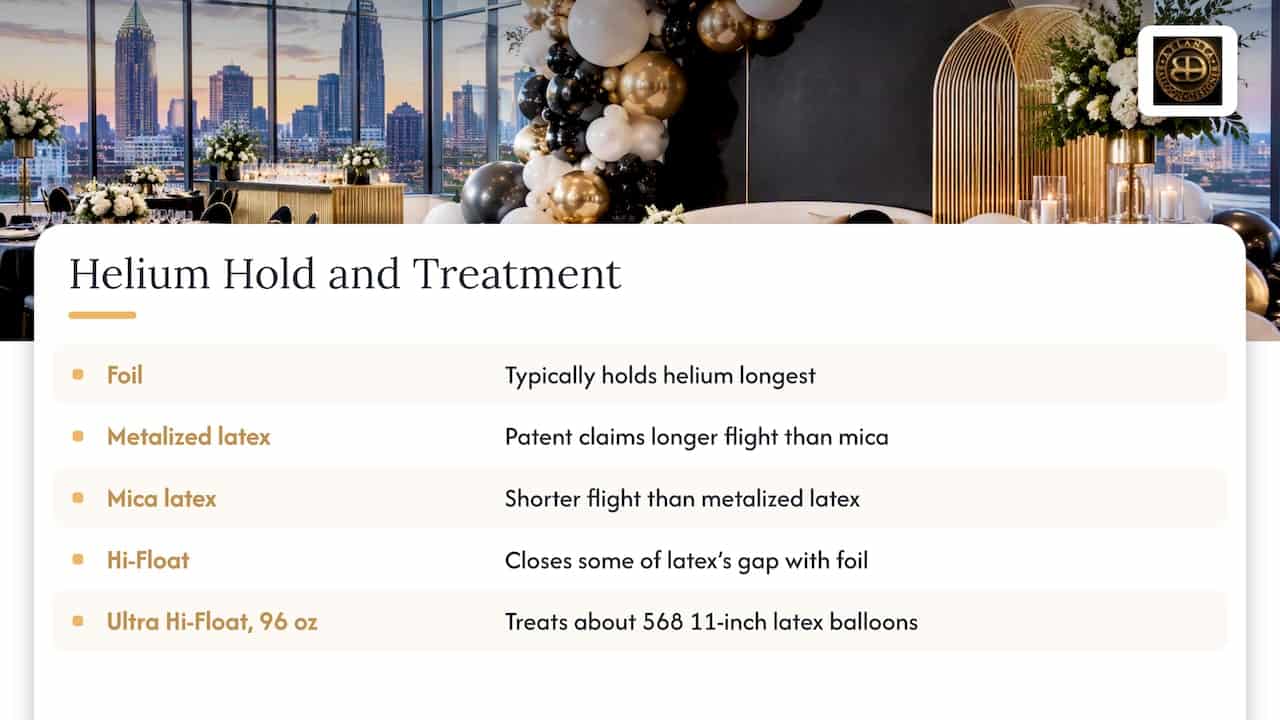
Foil typically holds helium longest. The metalized-latex patent claims longer flight times than mica-based balloons, though latex generally still trails foil. Hi-Float closes some of that gap for latex: it is a clear, non-toxic, biodegradable liquid that extends float, and the manufacturer lists that a 96 oz bottle of Ultra Hi-Float treats about 568 11" latex balloons.
Heat matters too. Higher temperatures increase gas expansion and burst risk, so never leave helium-filled balloons in a hot car, and plan climate-controlled transport.
Pro Tip: Treat latex with Hi-Float the day of the event, not days ahead, and keep finished pieces out of direct sun until guests arrive.
4. Which finish fits your event and photo goals
Match the finish to the room, the camera and the timeline.
- Check venue lighting. Bright, directional light makes chrome sing; dim rooms flatter pearl latex.
- Rank your photo priority. A step-and-repeat or brand wall wants chrome’s consistent mirror sheen.
- Look at guest interaction. Hands-on areas favor sturdy latex over delicate foil seams.
- Plan transport and timeline. Long events or outdoor setups lean toward foil or treated metallic latex.
Decision rules we use:
- Luxury brand events and camera-forward backdrops: chrome latex for saturated, mirrorlike color.
- Long timelines or printed artwork: foil, or metallic-latex blends.
- Modern looks: chrome against matte neutrals.
- Intimate celebrations: metallic latex with jewel tones.
Cost-wise, specialty finishes are priced into the design, so we quote from your layout. You can see published starting points on our balloon decor pricing page, and see finished results in our gallery.
If you are scouting a venue for the day, even a guide to hosting a party at a Houston billiards venue shows the kind of logistics (lighting, guest flow, load-in) worth settling before you pick a finish.
5. Care, inflation and disposal done responsibly
Use helium for floating pieces and air for structural garlands, since air holds all day without treatment. Add Hi-Float to latex per the bottle’s capacity guidance, and keep everything cool in transit.
At cleanup, the rules differ by material:
- Latex: biodegradable, but it can take 6 months to 4 years to break down.
- Foil (Mylar): plastic-based and never biodegrades, so it belongs in the trash.
- Recycling: some towns collect deflated balloons, such as the Town of Huntington, but many curbside programs do not, so check local guidelines.
- Never release balloons. NOAA warns that releases harm wildlife, and Mylar is conductive and can cause power outages.
Scale of the problem: Volunteers collected more than 104,000 balloons during the 2019 International Coastal Cleanup, with about half found in the United States.
6. What we do before locking in a finish
We never finalize chrome or metallic on instinct. We order sample balloons, build a digital mockup, and test the finishes in your actual venue lighting. Then we match color against your linens and florals, plan transport, and handle on-site inflation so nothing shifts in the heat.
Our team provides digital mockups, site visits and full-service execution for clients across Atlanta and surrounding communities. If you want to see our range first, our overview of balloon garlands, arches and luxury décor is a good place to start.

7. Our rule of thumb: if it needs to mirror, go chrome
If the goal is a mirror, choose chrome; if the goal is a pattern or all-day float, choose foil or treated metallic latex. And always see it in a mockup before you commit. If you want a camera-ready chrome installation, reach out to our stylists and we will walk you through it.
— Kay
8. Let us choose and install your chrome or metallic décor
We turn this guide into a finished room. Here is what we offer:

- Digital mockups at $75 per mockup, so you preview the finish first
- Luxury event styling from concept to teardown
- Custom arches, garlands and backdrops, with delivery and professional setup
- On-site testing in your venue
See our pricing, then book a consultation and we will build your chrome or metallic look together.
FAQ
What are chrome balloons?
Chrome balloons are latex balloons with a mirrorlike, highly reflective finish. They are made with metal added to the latex, which gives a saturated, uniform color that photographs crisply.
What helps helium balloons last longer?
Hi-Float, a clear, non-toxic, biodegradable liquid, extends float time for latex balloons. Foil balloons naturally hold helium longer, and keeping balloons out of heat helps both types.
How should I dispose of metallic balloons?
Foil (Mylar) balloons are plastic-based and should go in the trash, never released outdoors. Latex is biodegradable but slow, and a few municipalities accept deflated balloons, so check your local rules.
What is the difference between chrome and metallic finishes?
Chrome is a mirrorlike latex finish, while metallic covers foil film and pearl or metallic latex with a softer sheen. Chrome suits high-gloss brand looks; foil suits printed designs and longer float.
Sources
- Aces
- Blog
- Commercial fishermen are helping tackle marine pollution, one balloon at a time. | NOAA Fisheries