The easiest, longest-lasting wedding balloon ceiling is an air-filled installation hung on removable hooks or a lightweight grid. Helium floaters only make sense when your venue allows same-day setup and you don’t need the display to survive more than a few hours. For anything covering a full reception ceiling, spanning a tented structure, or requiring rigging near chandeliers, hire a professional installer rather than attempting a DIY ladder-and-fishing-line approach.
TL;DR:
Air-filled installations are better suited for full-coverage ceilings, last longer, and can be installed days in advance, reducing last-minute stress.
Helium balloons are only practical for short-term displays and require quick setup on the day of the event, making timing more critical.
Different ceiling surfaces demand specific attachment methods, such as hooks for drywall, clips for drop ceilings, or frames for tents, so venue policies must be verified early.
Reusable frame systems and verified biodegradable balloons offer eco-friendly options, but balloon releases are banned in many areas and should be avoided.
Table of Contents
Wedding Balloon Ceiling Ideas That Photograph Beautifully
Your ceiling is the one design element every guest looks up at during toasts, first dances, and cake cutting, so the look you choose should match both your venue’s architecture and your photographer’s angles. A few directions consistently show up in bridal inspiration galleries because they read as elegant rather than “party store,” and Pinterest boards dedicated to balloon ceiling weddings consistently favor full-coverage clouds and clustered accents over scattered single balloons.
-
Cloud canopy: full ceiling coverage in soft whites, blush, and champagne, best over 10 to 12 foot ceilings where guests can take in the whole effect from below.
-
Chandelier accent: balloon clusters framing an existing chandelier or lighting fixture, ideal when the venue already has an architectural centerpiece worth highlighting.
-
Perimeter garland: an organic garland tracing the ceiling’s edge instead of covering it entirely, a smart choice for tented or lower-ceiling venues.
-
LED-lit canopy: clear or frosted balloons with embedded string lights, striking for evening receptions and first dances.
-
Floral-accented cluster: balloons mixed with greenery or dried florals for a texture-rich, garden-wedding feel.
-
Rose-gold statement kit: metallic and blush balloons paired with tassels, a popular retail option often sold as pre-bundled kits with roughly 160 balloons for smaller rooms.
-
Oversized balloon tails: dramatic single large balloons trailing ribbon or fabric, best for entrance points or photo backdrops rather than full ceilings.
-
Balloon drop reveal: a netted cluster released during the reception, a showstopper moment that requires the most technical rigging of the eight.
Cloud canopies and perimeter garlands are the most DIY-friendly. Balloon drops and LED-integrated designs are where hiring a pro pays off, since both involve rigging and timing that are hard to get right on a wedding morning.
Helium, Air-Filled, or Net Frame: How to Pick Your Method
Three installation methods cover almost every wedding scenario, and choosing the right one comes down to how long you need the display to last and what your venue allows. Helium floaters, air-filled installs, and net or frame systems each solve a different problem.
-
Helium floaters rise and hold themselves in place naturally, but standard latex balloons lose lift within 12 to 20 hours. Treating them with Hi-Float extends that window, but you’re still working same-day.
-
Air-filled installs hang from hooks, fishing line, or a grid, and once secured they don’t sag or drift. Because there’s no float-time clock running, air-filled ceilings can go up the night before the wedding, which removes a huge source of morning-of stress.
-
Net or frame systems support large-scale coverage across ballrooms or tents where individual attachment points aren’t practical or allowed.
Pro Tip: If your venue has a strict “no adhesives on the ceiling” policy, ask about a freestanding frame system before you fall in love with a full-coverage cloud design. It solves the attachment problem entirely.
Balloon Materials and How Many You’ll Actually Need
Latex balloons are the standard for ceiling work: they’re inexpensive, biodegrade faster than foil, and come in the widest range of matte, pearl, and chrome finishes. Foil and mylar balloons hold air longer and give you that shimmering metallic look, but they cost more per unit and don’t blend as seamlessly into an organic cloud effect.

Sizing your order correctly avoids the two most common mistakes: running short mid-install or over-ordering and wasting budget. A standard 11-inch balloon covers about 0.66 square feet of ceiling space, which is the math behind the counts below.
It’s a small line item that saves you from a visibly thin patch over the dance floor.
Matching Your Attachment Method to the Venue
Not every ceiling can take the same approach, and guessing wrong can mean damaged drywall, a rejected setup on the wedding day, or a venue deposit you don’t get back. Match your method to the actual surface you’re working with.
-
Drywall ceilings: removable adhesive hooks rated for the balloon cluster’s weight, spaced to distribute the load.
-
Drop-tile ceilings: clips designed for the tile grid rather than adhesive, since drywall hooks won’t hold.
-
Textured or exposed beam ceilings: fishing line anchored to structural points, often requiring a pro’s eye for load-bearing spots.
-
Tents: a freestanding net or frame system, since tent fabric can’t support hung weight at all.
Before you book anything, ask your venue coordinator three questions: how close can decor come to sprinkler heads, are adhesives permitted on their ceiling surface, and who handles cleanup and balloon disposal after the event. Getting those answers early prevents a last-minute design pivot.
What a Wedding Balloon Ceiling Costs and When to Book It
Budget scales with square footage and complexity, not just balloon count. Medium installations typically run $500 to $2,000, covering things like a partial canopy over the sweetheart table or dance floor. Full-venue transformations, tented receptions, or anything with integrated lighting commonly exceed $2,000 once labor and rigging are factored in.
-
Book your installer well in advance during peak wedding season.
-
Air-filled ceilings typically go up the night before; helium installs go up morning-of unless the balloons are Hi-Float treated.
-
Ask any quote to itemize design time, on-site labor, rigging equipment, and teardown, not just the balloons themselves.
Safety Rules and Eco-Friendly Choices for Balloon Ceilings
Balloons and sprinkler heads don’t mix, and no balloon cluster should ever be anchored to a sprinkler pipe or positioned close enough to trigger a fire suppression system. Helium tanks also need careful handling on-site, and many venues require advance notice or a permit before tanks are brought in.
On the sustainability side, “biodegradable latex” claims deserve a second look before you build your whole design around them. Verify certification with your vendor rather than taking a marketing label at face value, and skip balloon releases entirely. They’re banned in many jurisdictions and reusable frame systems are simply the better long-term option regardless of policy.
Pro Tip: If sustainability matters to your wedding, ask your installer whether reusable frame components are available. You get the same visual impact with less waste.
Kay’s Professional Tips for a Flawless Install
Scale is where most DIY ceilings fall short of the wedding-magazine look. A cloud that stops short of the walls or clusters that dangle below chandelier height reads as unfinished in photos, not intentional. Full-venue ceilings, anything requiring rigging above a dance floor, or multi-zone installs spanning a ceremony space and reception hall are where a professional team earns its fee.
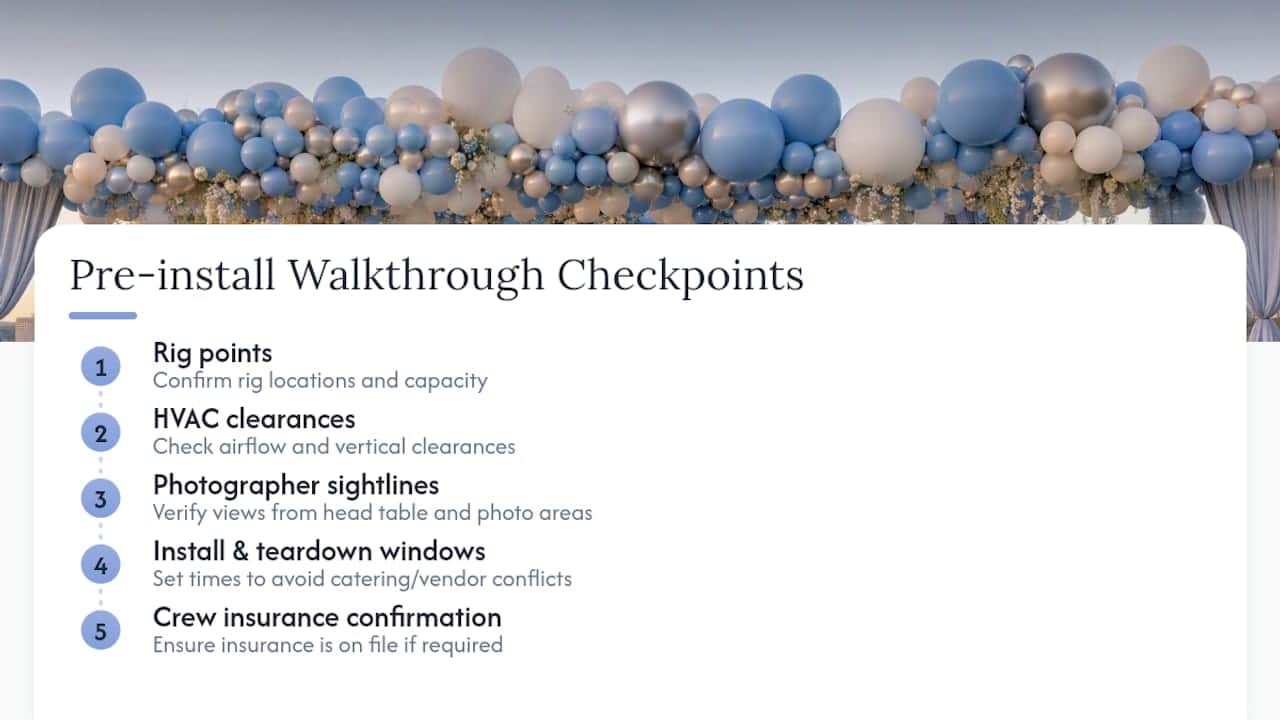
Before any large install, Kay’s team walks the venue in person to confirm rig points, HVAC clearances, and sightlines from the head table and photo areas. That walk-through also sets the install and teardown windows so nothing conflicts with catering setup or vendor timelines coordinated with the venue, and it confirms crew insurance is on file if the venue requires it. On design, the rule is simple: scale the cloud to the room’s existing chandeliers, keep clusters out of the photographer’s key sightlines, and choose palettes with metallic accents for a luxe rather than juvenile finish.
What Actually Matters When You’re Planning This
Most advice on wedding balloon ceilings obsesses over color palettes and Pinterest aesthetics while glossing over the one variable that actually determines whether your day goes smoothly: timing pressure. Helium looks effortless in photos, but it puts you on a clock the moment tanks arrive, and that clock doesn’t care about a delayed ceremony or a late vendor load-in.
Air-filled installation solves that problem by removing the float-time deadline entirely, which is why it’s become the default choice among wedding professionals rather than a fallback. The conventional wisdom treats helium and air-filled as interchangeable style choices. They’re not. They’re different risk profiles.
The other place couples underinvest is the venue conversation. A gorgeous design concept means nothing if the ballroom bans adhesives or the tent can’t support hung weight. Ask those questions before you fall in love with a specific look, not after you’ve booked a vendor around it. Scale and proportion, not color trends, are what separate a ceiling that looks like a wedding from one that looks like a birthday party moved indoors.
— Kay
Book a Custom Wedding Balloon Ceiling in Metro Atlanta
Atlantaballoondesigner is the alternative to guesswork and rented ladders for couples in Atlanta, Marietta, Austell, and across the metro who want a ceiling that actually looks like the inspiration photo. Where a DIY kit gets you 160 loose balloons and a glue gun, our team handles the venue walk-through, rigging, scale, and teardown so your ceiling matches your chandeliers and your photographer’s sightlines instead of fighting against them.

Packages typically start with a design consult and site survey, followed by install and same-night or morning-of setup depending on whether your look calls for air-filled longevity or helium float. For couples wanting the full luxury treatment, from organic cloud canopies to LED-integrated installs paired with tablescapes and marquee letters, our luxury balloon decor packages outline what’s included at each tier. Ready to see it come together? Request a quote or schedule a site visit through our creative balloon decoration ideas page and we’ll walk your venue with you.
Sources
For more inspiration and setup logistics, browse our wedding reception style guide, our ceiling decor ideas page, and Brides’ roundup of balloon wedding décor for broader style trends.
FAQ
How Many Balloons Do You Need for a Balloon Ceiling?
A standard 11-inch balloon covers about 0.66 square feet, so you need roughly 150 balloons for full coverage of a 10 feet by 10 feet area. Always add 10% extra to account for pops during setup.
How Much Does a Wedding Balloon Ceiling Cost?
Medium installations covering a dance floor or sweetheart table area typically run $500 to $2,000, while full-venue transformations often exceed $2,000 once rigging and labor are included.
What Do You Use to Hold Balloons to the Ceiling?
Removable adhesive hooks work on drywall, clip systems suit drop-tile ceilings, and fishing line anchored to structural points handles textured or beamed ceilings. Tents typically need a freestanding net or frame system instead.
How Do You Create a Balloon Ceiling?
Choose your method first (helium, air-filled, or net frame), calculate your balloon count based on square footage, then match your attachment method to your venue’s ceiling surface. For full coverage or complex venues, a professional installer like Atlantaballoondesigner handles the rigging, scale, and timing that DIY setups often get wrong.