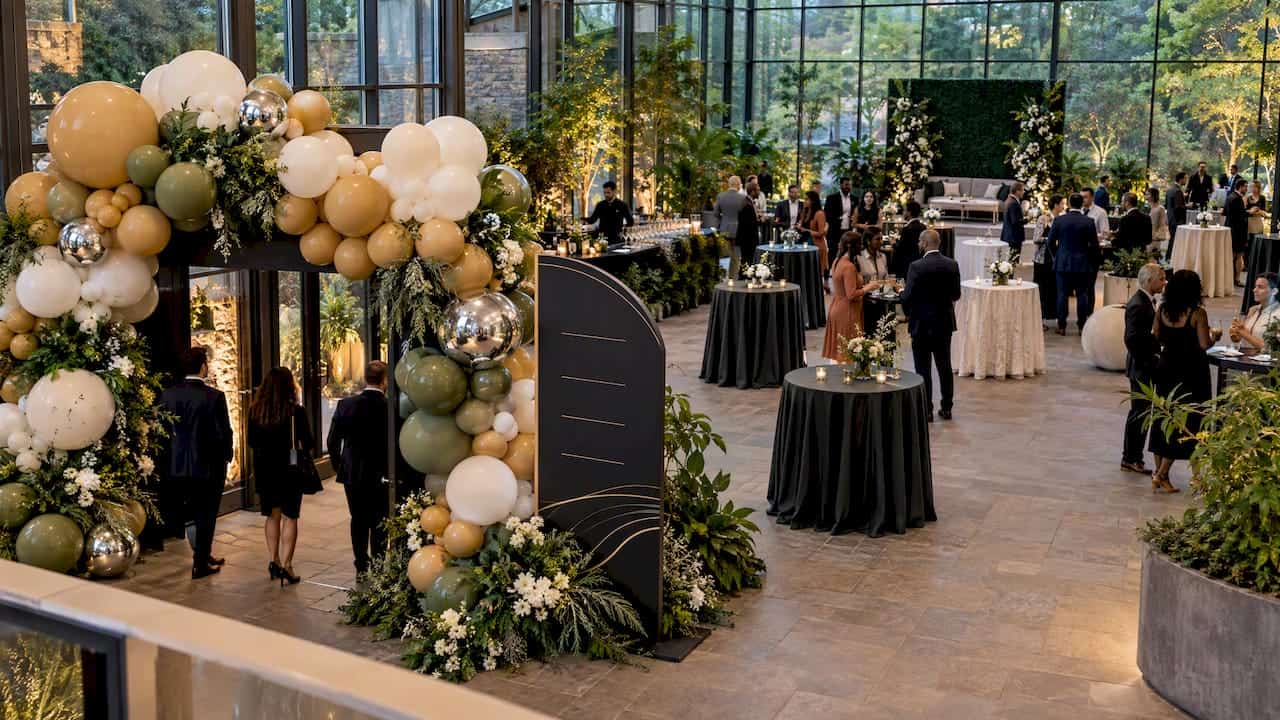
Prioritize four signage categories above all else: a bold welcome sign, clear wayfinding at every decision point, at least one branded photo-op moment, and a single high-impact digital or illuminated feature. Below, we break down creative ideas by category, the placement rules that make them work, ADA basics every planner should know, and real production notes drawn from our own luxury installations.
TL;DR:
- Size lettering at one inch per 10 feet of viewing distance, use high contrast, and place directional signs at every hallway or room junction.
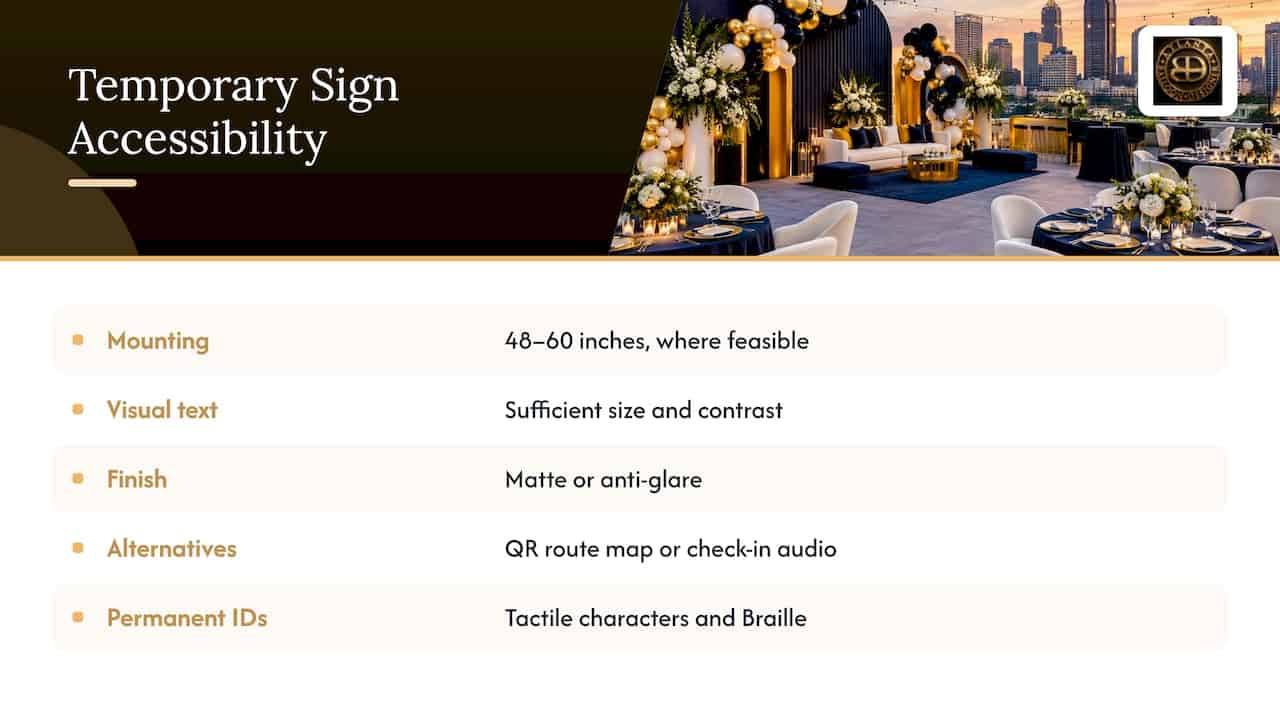
- Temporary signs need visual standards, while permanent room signs require tactile characters and Braille; mount directional signs 48 to 60 inches high where feasible.
- Choose coroplast for brief outdoor use, acrylic for reusable displays, and vinyl that resists weather for festivals; allow two to three weeks for custom production.
- When available, digital wayfinding is used by 77% of visitors, and a QR code route map or audio directions can support guests with visual impairments.
Table of Contents
- 1. Signage Ideas by Category: Indoor, Outdoor, Wayfinding, and More
- 2. Design, Placement, and Legibility Rules Every Planner Should Use
- 3. Accessibility and ADA Essentials for Event Signage
- 4. Materials, Finishes, and a Vendor-Ready Production Checklist
- 5. Inspiration and Client Examples From Atlanta Balloon Designer
- 6. Custom Balloon Signage Ideas Integrating Event Branding and Themes
- 7. Coordinating Signage Colors and Styles With Balloon Décor
- 8. Signage as an Experience Investment
- How Atlanta Balloon Designer Brings Signage and Decor Together
- FAQ
- Sources
1. Signage Ideas by Category: Indoor, Outdoor, Wayfinding, and More
Every event needs a signage ecosystem, not just a single pretty sign at the door. Each category solves a different guest problem, and the strongest events layer several together.
- Indoor welcome signs: A freestanding acrylic or foam-board sign in the lobby greets guests and sets the tone immediately; pair it with soft uplighting for galas or a floral frame for showers.
- Outdoor arrival markers: Weatherproof A-frames or vinyl banners at the parking entrance guide guests before they even reach the door, especially useful for festivals and large corporate campuses.
- Wayfinding and directional signs: Arrow-marked tablets or hanging banners at hallway junctions reduce confusion in multi-room venues like convention centers or hotels.
- Branding and sponsor signage: Step-and-repeat panels or lobby banners reinforce brand identity and give sponsors visible placement at corporate activations.
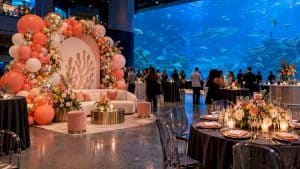
- Photo-op backdrops: A styled wall, balloon installation, or floral arch gives guests a built-in moment to pause and share, which EventTrack 2026 research notes is increasingly treated as content rather than simple decor.
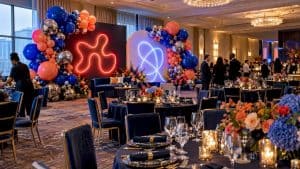
- Digital and lighting displays: LED marquee letters, projected monograms, or a single digital map station add polish without requiring a full tech budget.
A wedding might pair an organic welcome arch with a hand-lettered seating chart, while a corporate launch leans on LED marquee letters and a branded step-and-repeat. Vary scale and material to match tone: soft neutral palettes with gold accents for an intimate shower, bold jewel tones and metallic finishes for a milestone birthday. For receptions with assigned seating, coordinating signage with the floor plan matters as much as the sign itself, and resources like this long table seating guide offer useful layout thinking for planners mapping guest flow around tables.
2. Design, Placement, and Legibility Rules Every Planner Should Use
A gorgeous sign that nobody can read from across the room is a wasted investment. FedEx small-business guidance recommends bold, cohesive fonts and colors paired with clear directional cues, and that advice holds whether you are working with coroplast or custom acrylic.
- Match type size to viewing distance: a general rule is one inch of letter height for every 10 feet of reading distance.
- Use high contrast between text and background; dark text on a light panel (or the reverse) reads fastest under event lighting.
- Place welcome signs at eye level near the main entrance, directional signs at every hallway or room junction, and exit signage at natural departure points.
- Mount outdoor signage securely with stakes or weighted bases rated for wind, and schedule installation early enough to adjust before guests arrive.
- Build in a strike-down window; signage removed too quickly looks unfinished in late-event photos.
Pro Tip: Test every sign under the venue’s actual lighting before the event; what reads clearly in daylight can wash out under string lights or stage spots.
3. Accessibility and ADA Essentials for Event Signage
Permanent room identification signs, like restroom or exit labels in a venue you do not own, typically need tactile characters and Braille under the Access Board’s ADA guidance. Temporary directional and informational signs you bring in for the event generally only need to meet visual character requirements: sufficient size, contrast, and a non-glare finish.
Where feasible, mount directional signage between 48 and 60 inches from the floor so it is visible to guests using wheelchairs as well as those standing. A matte or anti-glare finish keeps text legible under bright event lighting and in photos. For guests with visual impairments, a QR code linking to a digital route map or a simple audio announcement at check-in preserves accessibility without compromising a styled, upscale look.
4. Materials, Finishes, and a Vendor-Ready Production Checklist
The right material depends on where the sign lives and how long it needs to last. Coroplast is lightweight and budget-friendly for one-day outdoor use, acrylic brings a polished, reusable look for welcome signs and seating charts, fabric banners pack flat and travel well for touring events, vinyl holds up to weather for multi-day festivals, and foamcore or wood suits indoor displays with a softer, boutique feel.
Matte or anti-glare finishes outperform gloss under stage lighting and camera flashes, and UV inks help outdoor colors resist fading over a long event day.
- Confirm file specs (vector artwork, correct bleed and safe area) before sending to print.
- Request a physical proof for any sign with precise brand colors or logos.
- Build in production lead time of at least two to three weeks for custom pieces.
- Schedule install and strike windows directly with the venue and AV team to avoid last-minute conflicts.
5. Inspiration and Client Examples From Atlanta Balloon Designer
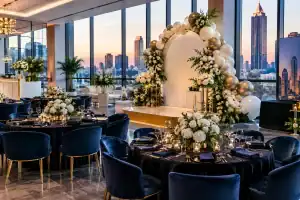
One build we style often pairs a lush organic welcome arch with a matching logo backdrop and a set of directional tablets finished in the same palette, solving common problems planners face with guest navigation. Another favorite layout places a photo-op wall near the entrance so the first thing guests see becomes the first thing they share.
Every project starts with a digital mockup so clients can approve colors and scale before a single balloon is inflated, followed by palette curation and, for larger venues, a site visit to map sightlines and power access. We handle install and strike so signage, balloon garlands, and marquee letters land in sync with the rest of the room. You can browse completed builds in our balloon decor gallery or see how we approach larger corporate footprints through our corporate gala styling work.
6. Custom Balloon Signage Ideas Integrating Event Branding and Themes
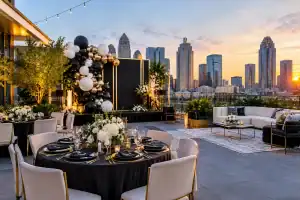
Balloons are one of the most flexible materials for turning a brand palette into a physical, camera-ready moment. A logo rendered in balloon mosaic form above a step-and-repeat gives sponsors and corporate clients a three-dimensional version of their brand mark, far more memorable than a flat banner. For milestone birthdays, a number or age spelled out in an oversized balloon mosaic doubles as both signage and centerpiece.
Organic garlands threaded with acrylic or wood directional tablets blend wayfinding function with styled decor, so arrows and room labels do not feel like an afterthought bolted onto an otherwise elegant room. Marquee letters wrapped with micro-lights and flanked by balloon clusters work especially well as a welcome statement at a gala entrance or a grand opening storefront.
For themed events, like a luxury safari first birthday or a jewel-toned retirement party, balloon signage lets the theme show up in texture and dimension rather than just color. A safari-themed welcome arch built from earthy neutral balloons with organic greenery accents communicates the theme before a guest reads a single word on the sign itself. The goal is always the same: let the balloon work carry part of the branding load so printed signage stays clean, legible, and uncluttered.
7. Coordinating Signage Colors and Styles With Balloon Décor
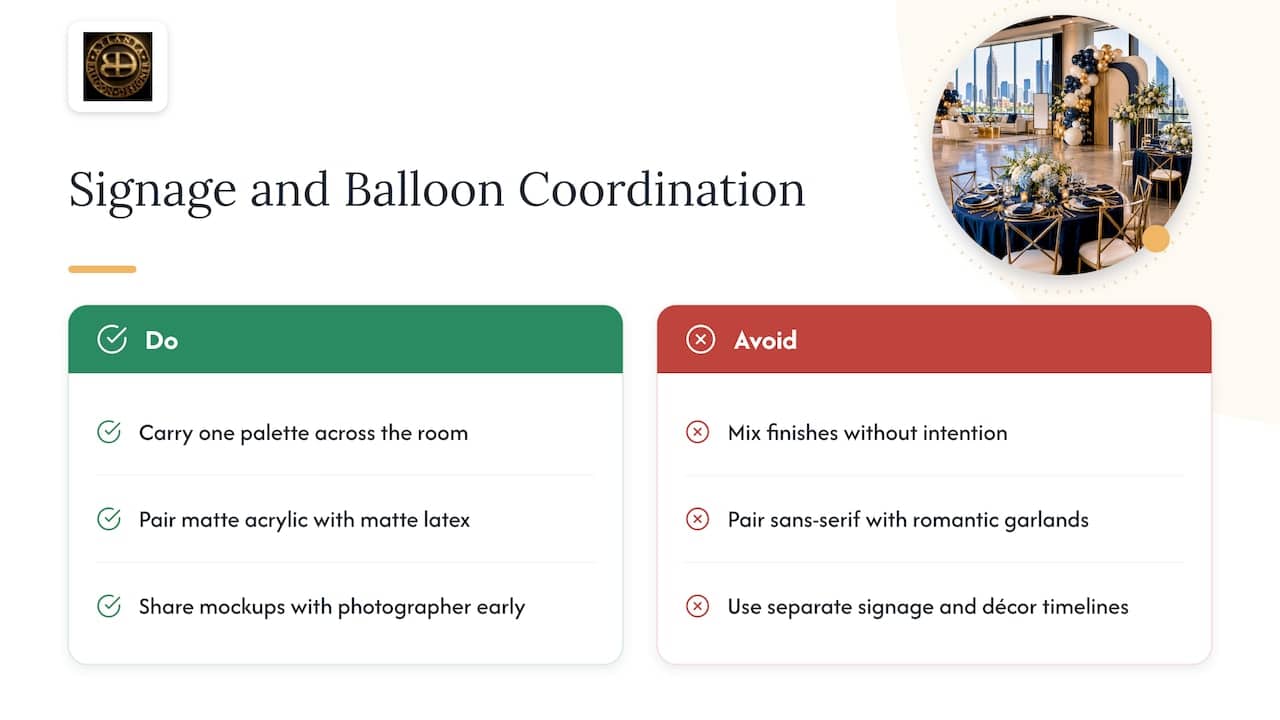
Signage and balloon decor should read as one designed system, not two separate vendors working in isolation. Start with a single curated palette, whether that is soft neutral tones with pops of gold, or deep jewel tones with shimmering metallic accents, and carry it across every sign, garland, and marquee letter in the room.
Match finishes as well as colors: a matte acrylic welcome sign pairs more naturally with matte latex balloons than with high-gloss foil, and mixing finishes without intention can make a room feel visually busy. Typography matters too; a modern sans-serif sign looks out of place next to soft, romantic organic garlands, while a hand-lettered script complements them.
Share your sign mockups and balloon palette with your photographer ahead of time so logos reproduce correctly and reflective surfaces do not create glare in photos. Coordinating these elements early, rather than finalizing signage and decor on separate timelines, is what makes a room feel intentional instead of assembled piece by piece.
8. Signage as an Experience Investment
The planners who get the best results treat signage as part of the design budget from day one, not a last-minute print job squeezed in the week before the event. A welcome sign ordered in isolation, without seeing the balloon palette or the lighting plot, rarely matches once everything is in the room together.
Our recommendation: loop in your decor team and AV contact during the mockup phase, especially when branding, lighting, and signage all need to align. A quick digital proof upfront saves far more time than an on-site fix later.
— Kay
How Atlanta Balloon Designer Brings Signage and Decor Together
We build welcome arches, backdrops, directional tablets, and marquee letters as one cohesive package, so you are not coordinating separate vendors for decor and signage. Every project starts with a digital mockup and, for larger venues, a site visit to confirm placement and power needs before installation.
Browse packages and pricing on our balloon decor pricing page, or explore the full scope of what we build through our services overview. Reach out today to schedule a consult and get a mockup started for your next event in Atlanta or the surrounding metro.
FAQ
What is a strategy for effective event signage?
Prioritize a bold, cohesive welcome sign, clear directional cues at every decision point, and matching fonts and colors throughout, which FedEx’s small-business guidance identifies as the core drivers of signage that actually works. Layer in one branded photo-op and a single digital or illuminated feature rather than trying to make every sign do everything.
What are the 4 types of wayfinding signage?
Event wayfinding typically includes identification signs (marking a room or space), directional signs (arrows and pointers at junctions), informational signs (schedules, maps, or rules), and regulatory signs (safety or restricted-area notices). Pairing static versions of these with a digital map station noticeably improves guest flow, since Mappedin’s research found that 77% of visitors use digital wayfinding when it is available.
How do I make event signage stand out?
Use high contrast between text and background, size lettering for the actual viewing distance, and choose a matte or anti-glare finish so signs read clearly under event lighting and in photos. Adding dimension, such as a balloon mosaic logo or a lit marquee letter, makes a sign memorable rather than purely functional.
What is an example of promotional signage?
A branded step-and-repeat backdrop at a product launch or sponsor banner at a conference entrance are common examples, since both pair visual identity with a built-in photo moment. EventTrack 2026 notes that this kind of signage increasingly functions as shareable content rather than a static label.
Does event signage need to meet ADA requirements?
Permanent signs identifying rooms in a venue, like restrooms, generally require tactile characters and Braille under the Access Board’s ADA guidance. Temporary directional or informational event signage typically only needs to meet visual requirements such as adequate size, contrast, and a non-glare finish.
Sources
- Venue experience & wayfinding statistics
- Chapter 7: Signs (Access Board ADA guidance)
- EVENTTRACK 2026 forecast & benchmark
- Smart event signage ideas to maximize the wow factor