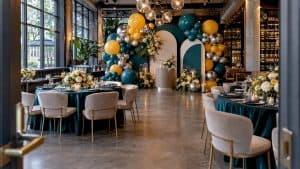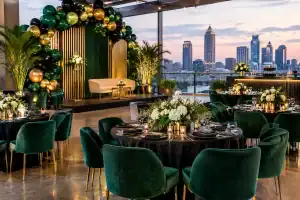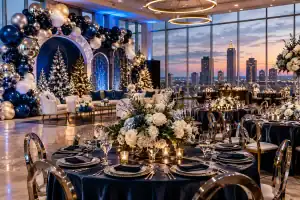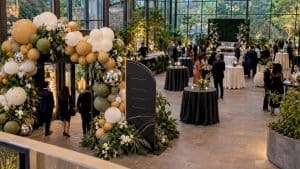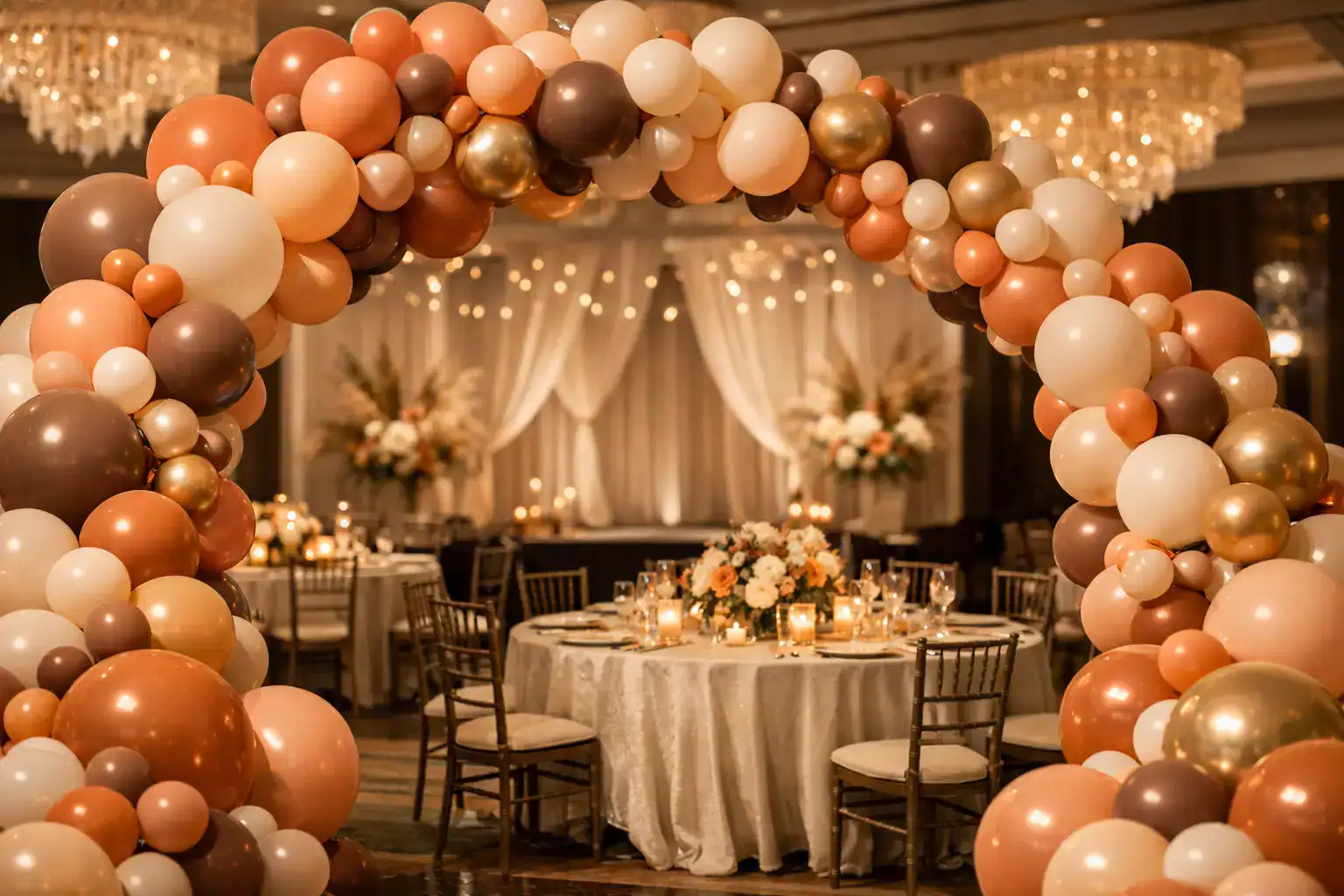
A hotel ballroom can either feel like a blank box with banquet chairs or the setting for a major brand moment. The difference is design intention. This guide to hotel ballroom styling is built for planners who need a polished, high-impact room that photographs beautifully, supports the program, and gives guests an experience worth talking about long after the final toast.
For corporate galas, conferences, product launches, holiday parties, nonprofit fundraisers, and milestone celebrations, ballroom styling is not just about filling open space. It is about directing attention, shaping energy, and making every visual detail feel connected to the event’s purpose.
Start With the Ballroom’s Real Personality
Before choosing balloons, florals, linens, or lighting, look at the room as it truly is. Hotel ballrooms often come with patterned carpeting, low ceilings, chandeliers, movable air walls, neutral drapery, and pre-set furniture that can either support the vision or compete with it. A luxury result starts by identifying what should be celebrated and what needs to fade into the background.
Walk the venue with your event designer and assess the ceiling height, wall dimensions, entrances, existing lighting temperature, power locations, loading access, and the path guests will take from registration to the main event. Those practical details influence every design decision. A dramatic installation may look incredible in a 20-foot foyer, for example, but feel compressed in a ballroom with an 8-foot ceiling.
It also helps to ask one key question: what is the first thing guests should notice? For a company awards night, that might be a branded arrival moment. For a gala, it could be an elegant stage framed with light and texture. For a launch, it may be the product itself. Build the room around that visual priority rather than spreading the budget evenly across every corner.
Build a Design Concept Before Ordering Decor
The strongest ballroom designs have a point of view. “Black, gold, and balloons” is a color direction, not a concept. A concept gives the color palette, materials, and focal points a clear job to do. Think modern black-tie with sculptural metallic details, an electric brand-forward launch with saturated color, or a garden-inspired gala that brings softness to a formal room.
For corporate events, pull from the brand without turning the ballroom into a logo explosion. Brand colors can appear in a custom balloon installation, stage wash, floral accents, lounge pillows, menu cards, or a photo backdrop. Use one dominant color, one supporting tone, and one accent or metallic finish to create depth. Too many competing colors can make a large room feel scattered, especially under hotel lighting.
Texture is where luxury begins to show. Matte balloons paired with chrome finishes, velvet linens, acrylic signage, fresh florals, illuminated marquee letters, or custom-built panels create dimension that flat decor cannot deliver. The room should feel layered from the guest’s first photo to the view from across the dance floor.
Choose One Hero Moment
A ballroom does not need a major installation on every wall. In fact, too many statement pieces weaken the impact of each one. Choose one hero moment: an elevated stage treatment, an immersive branded photo wall, a ceiling installation above a VIP lounge, or a grand entrance framed by organic balloon styling.
Then support that moment with smaller, intentional details. Centerpieces can echo the palette. Registration can carry a simplified version of the entrance design. Cocktail tables can receive small sculptural accents. This creates visual rhythm while keeping the room sophisticated instead of overdecorated.
Style the Guest Journey, Not Just the Main Room
Hotel ballroom styling begins before guests reach the ballroom doors. The arrival experience sets expectations, and it is one of the most valuable places to invest when the event includes photos, press, sponsors, executives, or social sharing.
Start at registration. A clean check-in environment with branded signage, florals, or a tailored balloon moment signals that the event is organized and elevated. From there, use the foyer to create anticipation. A custom photo backdrop can pull double duty as a guest experience and a content asset, while branded columns or an arch can visually lead attendees toward the ballroom.
Inside the room, think in zones. The stage, dining area, bar, dance floor, sponsor activation, and photo area each have a different purpose. They do not need identical decor, but they should feel like part of one visual story. A branded launch may call for a bold stage and high-energy photo moment, while a fundraising gala may give more attention to elegant tablescapes and a clearly visible auction area.
Do not forget sightlines. Guests seated at the back still need to see the stage, screens, and important signage. Tall centerpieces can look beautiful, but they are the wrong choice if they block conversation or obstruct the program. Low, lush arrangements are often smarter for dinner tables, while height can be added in perimeter installations, stage design, or ceiling-focused decor.
Use Balloons as Architecture, Not Filler
Modern balloon styling has moved far beyond basic clusters tied to a chair. In the right hands, organic balloons create scale, movement, and sculptural impact. They can soften a hard-edged ballroom, frame a brand message, define a lounge, or turn an ordinary wall into the most photographed place in the venue.
For a premium result, balloon installations should be designed around the architecture. A custom garland can sweep around a step-and-repeat backdrop, climb a stage wall, curve around an entry portal, or cascade from an existing feature. Mixing sizes, finishes, and selective specialty elements gives the design a full, editorial feel. The goal is controlled abundance, not random volume.
There are trade-offs. Large balloon installs deliver major visual value, but they require appropriate load-in timing, setup space, and careful coordination with the venue. If the ballroom turns over from another event shortly before yours, a focused photo moment or stage treatment may be more realistic than a room-wide build. A professional design team will shape the concept around the schedule instead of promising decor that cannot be installed properly.
Light the Design You Paid For
Even exceptional decor can disappear under flat hotel lighting. Lighting is one of the highest-return styling decisions because it changes the way every material, color, and photograph reads in the room.
Warm uplighting can make neutral ballroom walls feel rich and intentional. Color washes can reinforce a brand palette, although intense colored light may distort skin tones and alter the appearance of florals, food, and balloons. For an awards ceremony or executive dinner, a warm neutral room with branded color at the stage is often a polished balance. For a dance-forward celebration, bolder lighting can bring pure fire once the formal program ends.
Coordinate lighting early with the audiovisual team. Confirm where screens, speakers, truss, projectors, and cables will sit before finalizing installations. A photo backdrop placed directly beneath a harsh downlight or beside an AV tower loses some of its magic. Great styling is as much about avoiding visual conflicts as adding beautiful elements.
Give the Stage the Attention It Deserves
In most corporate ballrooms, the stage is the visual anchor. It appears in event photography, audience videos, executive remarks, award presentations, and social content. Yet it is often treated as an afterthought.
Start with the screen and podium placement, then build the styling around them. A balloon installation can frame the stage without covering sightlines. Custom panels, florals, branded elements, and intentional lighting can add depth behind speakers. If the event has a strong logo, create a clean placement where it reads clearly from a distance and on camera.
Scale matters here. Petite decor can vanish against a wide stage, while oversized elements can crowd speakers or compete with presentation slides. It depends on the stage width, screen size, camera angles, and program format. The right design makes the presenter look more polished, not less visible.
Plan for the Photos Guests Will Actually Take
Guests will photograph the entrance, the people they came with, the first impressive reveal, and any place that makes them feel part of the moment. Give them a clear photo destination rather than hoping the entire ballroom will do the work.
A custom backdrop, branded balloon wall, floral statement piece, or interactive photo booth area can generate strong content while keeping candid photos away from less polished areas such as service doors or unfinished venue walls. Position the moment where it is easy to find but does not create a bottleneck at registration, the bar, or ballroom entry.
For branded events, make logos visible without making every image feel like an advertisement. A subtle repeating mark, dimensional sign, or well-placed brand color often photographs better than oversized graphics. The design should invite guests in first, then let the branding do its job.
Work Backward From the Schedule
Ballroom styling has to work in the real world of venue rules, freight elevators, union requirements when applicable, catering deadlines, AV load-ins, and guest arrival times. The best concepts account for all of it from the beginning.
Share the floor plan, event timeline, guest count, brand assets, and must-have moments with your decor partner as early as possible. Be clear about whether the event needs a daytime professional look, a nighttime celebration atmosphere, or both. A room can transform during the evening with lighting and entertainment, but that transition must be planned.
For Metro Atlanta planners, working with a full-service creative team can reduce the number of moving parts. Atlanta Balloon Designer creates custom installations, photo backdrops, rentals, and entertainment experiences that can be designed as one cohesive visual production rather than a collection of disconnected rentals.
The ballroom should never feel decorated just because decor was added. It should feel claimed by the event – every color, focal point, and photo-worthy detail working together to make guests stop at the door, look around, and know they have arrived somewhere special.