The ribbon may be small, but the moment is not. A ribbon cutting is your first public statement that a new location, rebrand, expansion, or community investment is ready for attention. Knowing how to plan ribbon cutting details with intention can turn a simple photo moment into a high-energy brand experience that fills the room, earns social content, and gives guests a reason to remember your opening.
For Atlanta businesses, property teams, restaurants, healthcare groups, universities, retailers, and corporate brands, the strongest ribbon cuttings balance ceremony with celebration. The goal is not to stretch out a 10-minute program. It is to create a polished arrival, a powerful visual reveal, and a photo-ready moment that makes your business look every bit as established as it is ambitious.
Start With the Moment You Want People to Remember
Before choosing a ribbon color or sending an invitation, define the purpose of the event. Are you introducing a flagship location? Welcoming a new audience after a rebrand? Celebrating an office expansion or recognizing a major community partnership? Your answer should shape every decision, from the guest list to the decor.
A restaurant grand opening may call for a lively crowd, entertainment, branded photo opportunities, and an immediate invitation to sample the menu. A medical office or commercial development may need a more polished, VIP-forward atmosphere with community leaders, key stakeholders, and a concise speaking program. Neither approach is better. The right approach is the one that supports the brand and the people in the room.
Choose one clear takeaway for guests: “This is a destination,” “This company is growing,” or “This opening is a win for our community.” When the event has a focused message, your visuals, remarks, signage, and social posts start working together instead of competing for attention.
How to Plan a Ribbon Cutting Timeline That Stays on Track
A ribbon cutting can come together quickly, but six to eight weeks gives you room to create an experience rather than simply organize a ceremony. For a larger corporate opening, a heavily branded activation, or an event involving elected officials and media, allow more lead time.
Begin by securing the venue area and identifying the exact cutting location. This sounds obvious, but it is one of the most common planning misses. The front door may be ideal for visibility but too narrow for a group photo. A lobby may offer better lighting and crowd flow but need extra branding so guests immediately understand the moment. Walk the space at the same time of day as the event to check sun direction, noise, parking, power access, and the backdrop in photographs.
At four to six weeks out, finalize your invite list, event schedule, speakers, decor direction, photographer, and any entertainment. Confirm whether you will involve a chamber, local officials, franchise leadership, property management, or community partners. Their calendars can affect your date, so lock those details early.
Two weeks before the event, review every cue in a run-of-show. Confirm who welcomes guests, who introduces speakers, who holds the ribbon, who presents oversized scissors, and who directs the crowd immediately after the cut. A ceremony feels effortless when everyone knows where to stand before the cameras start rolling.
Build a Guest Experience, Not Just a Ceremony
Guests should feel the energy before they hear the first speech. That begins at arrival. Branded welcome signage, a polished check-in point, directional signs, music, and an intentional entry installation tell people this is a celebration worth attending.
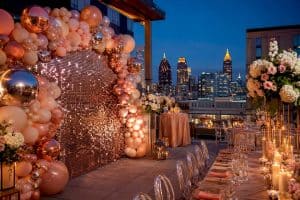
Visual design matters because the ribbon cutting photo will travel far beyond the event itself. A custom balloon garland, organic balloon installation, luxury arch, branded backdrop, or statement balloon wall can frame the entrance and create a natural photo destination. For brands launching something bold, color is part of the message. A saturated palette can feel fearless and modern; a neutral palette with metallic accents can feel upscale and editorial.
Do not make the ceremony setup carry all the visual weight. If the cutting happens at the entrance, build an additional photo moment inside or nearby. Guests need a place to take pictures while they mingle, and your team needs clean brand-forward content that does not include a line of people, parked cars, or an awkwardly cropped doorway.
The strongest designs are purposeful, not crowded. If your storefront already has dramatic architecture, use decor to frame it. If the space is visually plain, use a larger installation, dimensional signage, or a customized backdrop to create the impact the building does not provide on its own.
Choose the Right Ribbon, Scissors, and Photo Setup
The traditional elements still matter. Use a ribbon that is wide enough to photograph well and long enough for the full group to hold without bunching together. Satin ribbon offers a clean, elevated look, while grosgrain can work well when you want a more structured or branded feel. Your brand color is usually the best starting point, though a complementary shade may photograph better against the building facade or decor.
Oversized ceremonial scissors are a must for visibility. Make sure they are functional, tested, and easy for the designated cutter to use. Nothing drains momentum like a ribbon that will not cut on camera.
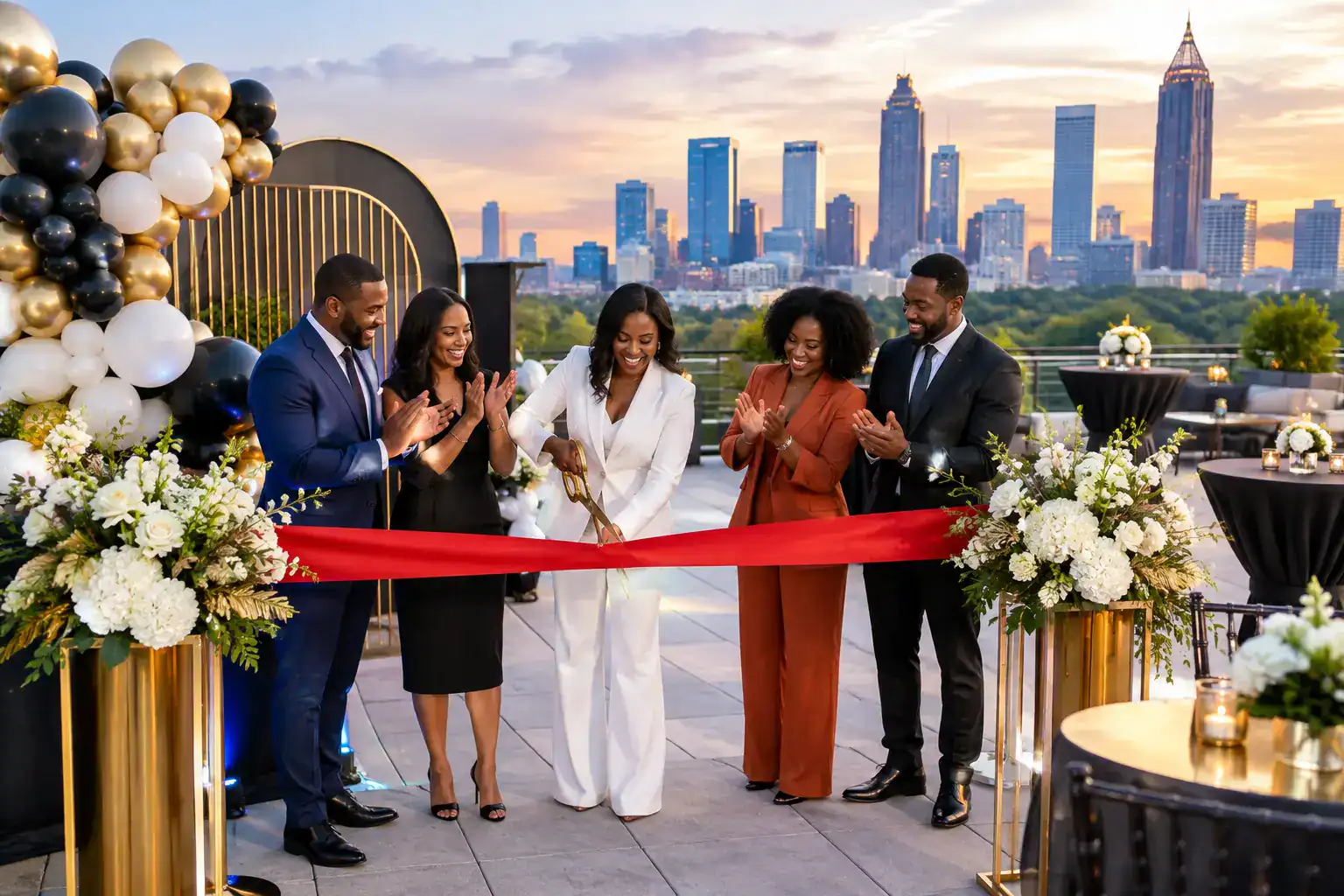
Plan the photo lineup in advance. The best group is usually five to 10 people: company leadership, a key partner or official, and a few representatives who visibly reflect the organization. Too many people create a scattered image. Too few can make a major opening look underattended. If you expect a large crowd, photograph the VIP group for the actual cut, then invite guests into a second celebratory group photo afterward.
Ask the photographer to capture the scene from more than one angle. You need the wide shot showing the scale of the event, a tight image of the cut, candid crowd reactions, decor details, and vertical content for social media. Consider a photobooth or interactive photo activation if guest-generated content is part of your marketing plan.
Keep the Program Short and High-Impact
A ribbon cutting should move. The sweet spot for the formal portion is often 15 to 25 minutes, depending on the guest list and number of speakers. Long speeches may be meaningful internally, but they can dilute the energy of an opening event.
A smart program starts with a welcome, follows with two or three short remarks, recognizes meaningful partners, and moves directly into the countdown and cut. Give speakers a clear time limit, usually two to three minutes. If there are multiple executives, choose one primary voice and let the others be recognized visually in the lineup.
Use a confident emcee or event lead to maintain pace. They can cue the music, move the group into position, build anticipation, and tell guests exactly what happens next. The countdown should be audible, upbeat, and coordinated with the photographer. After the ribbon falls, celebrate immediately with applause, music, confetti if the venue permits, or an invitation to enter the new space.
Plan for the Details That Can Disrupt the Big Moment
Outdoor ribbon cuttings are exciting, but they require a weather plan. Have a covered alternative, weighted decor, backup signage, and a decision point for moving the ceremony indoors. Balloons, floral elements, paper signage, and electronics all react differently to wind, rain, and heat, so share venue conditions with your event design team early.
Also think through parking, ADA accessibility, guest check-in, security, and crowd flow. For a retail or restaurant opening, guests may arrive all at once. For an office opening, attendees may need badge access or a greeter at the building entrance. Assign a point person for vendors and another for VIPs so your leadership team can focus on hosting rather than answering delivery questions.
Create a simple communication plan as well. Send guests a reminder with parking and arrival instructions. Prepare a media advisory or press note if relevant. Draft social captions before event day, including the correct brand tags, location details, and approved language for announcements. The faster you publish strong visuals, the longer the opening moment works for your business.
Make the Celebration Feel Worth Sharing
A ribbon cutting is often the first chapter of a larger launch, not the finish line. Give guests a reason to stay after the scissors close. Offer a guided tour, product demonstration, tasting, networking moment, giveaway, or live entertainment that suits your audience. This is where a ceremonial crowd becomes an engaged crowd.
For a premium visual impact, work with an event design partner that understands both brand presentation and event-day logistics. Atlanta Balloon Designer creates custom installations and photo-forward decor that can make a storefront, lobby, venue entrance, or branded activation feel like a major occasion from the first guest arrival.
The best ribbon cutting does more than mark an opening date. It makes people feel they were present for something growing, exciting, and built to last.