TL;DR:
- Fortune 500 corporate event decor is a carefully designed environment that reinforces brand identity through custom fabrication, lighting, and AV production. Proper budgeting, early planning, and technical lighting are essential for creating a polished, broadcast-ready experience. Local Atlanta vendors offer the expertise needed to execute high-end decor that meets Fortune 500 standards.
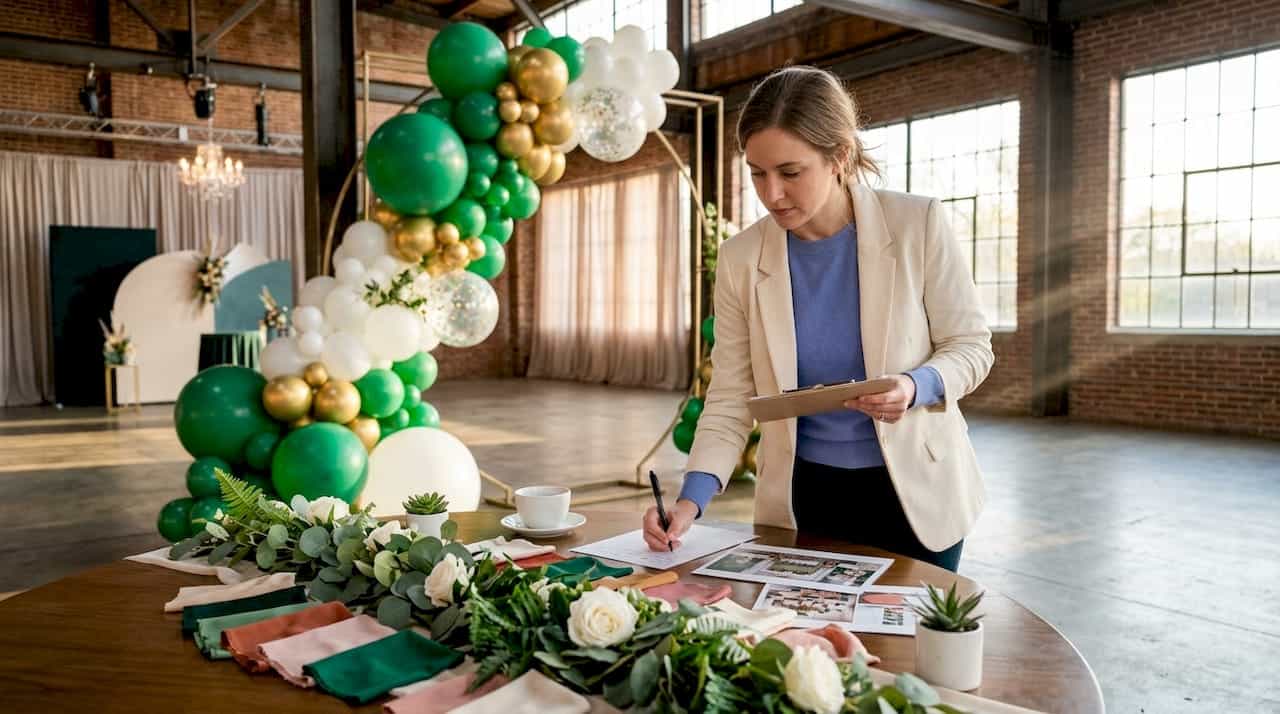
Fortune 500 corporate event decor is defined as the deliberate integration of custom fabrication, branded scenic design, layered lighting, and AV production to create an immersive, brand-aligned environment for high-stakes gatherings. The industry term for this discipline is experiential event design, and it goes far beyond table centerpieces or floral arrangements. At this level, every visual element serves a strategic purpose: reinforcing brand identity, guiding attendee experience, and performing flawlessly on camera. Whether you are planning a business gala in Midtown Atlanta, a product launch in Buckhead, or a multi-brand summit at a Cobb County convention center, the decor decisions you make in the planning phase determine everything that happens on event day.
What defines Fortune 500 corporate event decor?
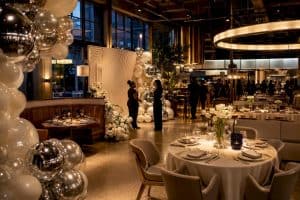
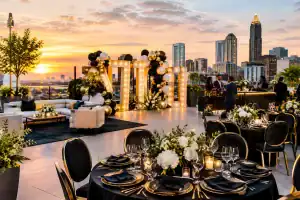
Fortune 500 corporate event decor combines custom scenic panels, programmable LED lighting, broadcast-ready finishes, and branded installations into a single cohesive visual system. This is not a collection of rented props. It is a designed environment where every surface, color, and light source works together to tell one story. The entrance experience, the stage backdrop, the photo activation zones, and the gala table settings all carry the same visual language. When these elements align, attendees feel the brand before they read a single word of signage.
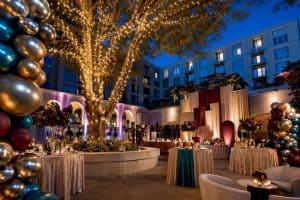
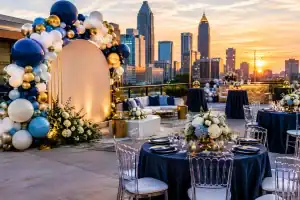
The core components of high-end corporate event design include custom scenic fabrication, layered lighting rigs, LED video walls, branded graphic panels, and specialty decor elements like organic balloon installations, marquee letters, and sculptural centerpieces. Each component requires its own lead time, vendor, and approval process. Getting all of them to arrive, install, and perform together is the real challenge of luxury corporate decor at the Fortune 500 level.
How to budget and allocate production costs for Fortune 500 events
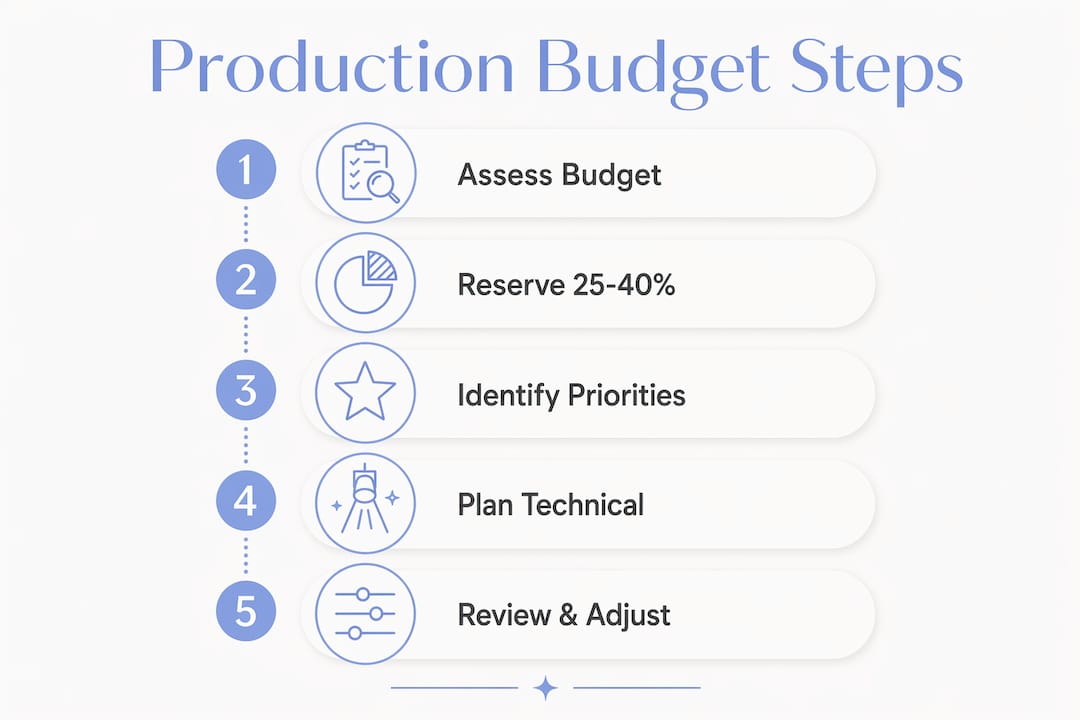
Production typically accounts for 25–40% of the total event budget in high-end corporate galas, covering decor, staging, lighting, and AV. That percentage is not arbitrary. It reflects the actual cost of building a visually compelling environment that performs reliably for hundreds or thousands of attendees. When planners allocate too much budget to venue rental and catering first, production is the first category to get cut, and the result shows on every screen and in every photo.
A common and costly mistake is treating decor as a line item to trim rather than a core production investment. Single in-house production companies reduce vendor gaps, own the entire scope, and improve budget clarity compared to managing multiple separate vendors. Separate vendors add markup, create logistics complexity, and introduce multiple failure points on event day. For Fortune 500 event planning, consolidating scenic, lighting, and AV under one production partner is the cleaner, more reliable path.
Budget allocation best practices for high-end corporate events:
- Reserve 25–40% of total budget for production before finalizing venue and catering costs
- Build a contingency fund of at least 10% for last-minute scope changes or material upgrades
- Lock decor and scenic budgets before issuing vendor RFPs to avoid scope creep
- Prioritize custom fabrication for hero moments: the stage, the entrance, and the primary photo zone
- Account for festive meal and decor coordination when aligning catering and table styling budgets
Pro Tip: If your initial budget leaves less than 25% for production, expect to make scope trade-offs. Identify which decor elements are non-negotiable before the first vendor conversation, not after.
What are the key technical elements for corporate event lighting and AV?
Lighting is the single most powerful decor tool at a Fortune 500 event, and most planners underinvest in it. Lighting has three distinct layers: ambient light that sets the overall mood of the room, key light that makes presenters look polished and camera-ready, and accent or effects lighting that adds drama to scenic elements and branded installations. Skipping any one of these layers creates a flat, unfinished look that no amount of floral or balloon decor can fix.
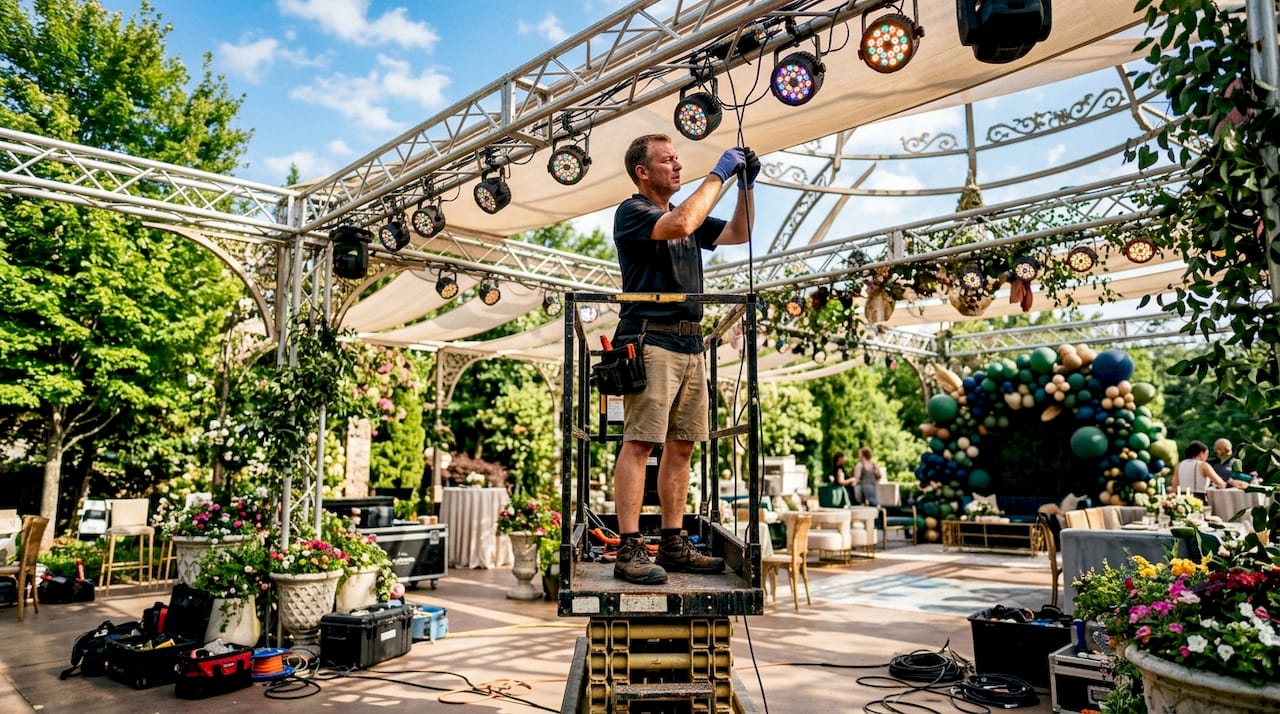
Mid-range gala lighting packages cost $6,000–$12,000, while full production rigs can reach $40,000 for large-scale events. Basic conference lighting starts around $2,500–$5,000. That range reflects the difference between a room that looks like a meeting and a room that looks like a brand experience. The investment in proper lighting pays back in every photograph, every broadcast clip, and every attendee memory.
LED walls vs. projectors: which is right for your event?
LED walls cost $2,500–$4,000 for a 10×6 ft rental and consistently outperform projectors in venues with ambient light or windows. Projectors wash out in mixed lighting conditions, which describes most hotel ballrooms and convention centers in the Atlanta metro area. LED walls deliver sharp, vivid imagery regardless of room brightness, and they read cleanly on broadcast cameras. For Fortune 500 events where brand visuals must look perfect on screen, LED walls are the correct choice.
| Element | Best for | Cost range |
|---|---|---|
| LED video wall | Ambient light venues, broadcast events | $2,500–$4,000 per 10×6 ft |
| Projector | Fully blacked-out rooms, large throw distances | Lower upfront, higher risk |
| Gala lighting package | Mid-scale branded galas | $6,000–$12,000 |
| Full production rig | Large-scale summits, multi-brand events | Up to $40,000 |
Pro Tip: Always request a lighting plot from your AV vendor before load-in day. A lighting plot confirms fixture placement, color temperatures, and coverage zones so there are no surprises when the room goes live.
How do multi-brand Fortune 500 events manage decor transitions?
Multi-brand Fortune 500 events require decor that functions like a broadcast system. Modular scenic systems with programmable LED wash lighting enable fast brand palette shifts between multiple sponsors or business units without physically striking and rebuilding the stage. This approach keeps transitions tight, maintains visual impact, and eliminates the downtime that kills event momentum. The result is a production environment where one brand’s blue and silver can become another brand’s gold and black in under two minutes.
Non-reflective scenic finishes and 5600K calibrated lighting are the standard for broadcast-ready corporate event environments. These specifications prevent glare on camera, maintain color accuracy across different lighting zones, and create the clean, polished look that Fortune 500 brands expect. Planners who skip these specs often discover the problem only when reviewing event footage.
Key decor features for multi-brand corporate events:
- Modular scenic panels that accept programmable LED color washes
- Non-reflective surface finishes on all stage and backdrop elements
- 5600K daylight-calibrated lighting for camera and broadcast consistency
- Branded graphic panels that swap without disturbing the scenic structure
- Coordinated color palette documentation shared with all decor vendors before fabrication
The event decor vendor guide for planners covers how to align multiple vendors around a single visual brief, which is the foundation of any successful multi-brand production.
What is the right timeline for Fortune 500 corporate event decor execution?
Planning windows for events with 500 or more delegates run 90 days for domestic events and 120 days for international gatherings. These are not conservative estimates. They reflect the actual time needed to coordinate 15–30 vendors, complete custom fabrication, secure approvals, and execute load-in without compressing the schedule. Planning compression is the top failure mode for large-format events, and it almost always shows up first in the decor and scenic elements.
Custom scenic fabrications require lead time for asset proofs and materials sourcing to meet exact brand palette and staging specifications. Last-minute rentals routinely mismatch brand standards and create visual inconsistencies that are impossible to fix on event day. Locking your hero moments, the entrance installation, the stage backdrop, and the primary photo activation zone, early in the planning cycle prevents production rework and keeps the entire vendor schedule intact.
Execution timeline checklist for large-scale corporate events:
- 90–120 days out: confirm venue, lock production partner, begin scenic design briefs
- 60–75 days out: approve all custom fabrication proofs and finalize brand color palettes
- 45 days out: confirm LED wall and lighting specifications with AV vendor
- 30 days out: complete all vendor load-in schedules and coordinate access windows
- 14 days out: conduct a full technical walkthrough with lighting, AV, and decor teams
- Event week: prioritize hero moment installation first to allow time for adjustments
Pro Tip: Lock the entrance experience and stage design before any other decor element. These are the two moments every attendee photographs and every camera captures. Changing them late costs more than any other revision.
For Atlanta-area planners managing large corporate gatherings in venues across Marietta, Smyrna, Sandy Springs, Alpharetta, or Decatur, the corporate holiday party decor ideas resource offers additional inspiration for seasonal and themed event environments.
Key Takeaways
Fortune 500 corporate event decor succeeds when production budget, technical lighting, modular scenic systems, and a 90-to-120-day planning window are locked in place before any vendor receives a brief.
| Point | Details |
|---|---|
| Budget production first | Reserve 25–40% of total budget for production before finalizing venue and catering costs. |
| Use three-layer lighting | Ambient, key, and accent lighting together create a polished, broadcast-ready environment. |
| Choose LED walls over projectors | LED walls perform in ambient light venues and deliver sharper brand visuals on camera. |
| Lock hero moments early | Secure entrance, stage, and photo zone designs at 60–75 days out to prevent costly rework. |
| Plan for 90–120 days | Large delegate events require coordinating 15–30 vendors; compressed timelines cause decor failures. |
What I have learned from planning at the Fortune 500 level
The most consistent mistake I see in high-end corporate event planning is treating decor as decoration. Planners spend months on the speaker lineup and the catering menu, then hand the scenic and lighting brief to a vendor with six weeks on the clock. The result is a room that looks like it was assembled rather than designed. At the Fortune 500 level, the environment is the message. When a guest walks into a room and immediately feels the brand, that is not an accident. It is the result of a lighting plot, a modular scenic system, and a fabrication timeline that started 90 days earlier.
The other pattern I see regularly is multi-vendor fragmentation. A separate company handles AV, another handles scenic, another handles specialty decor, and nobody owns the full visual brief. Every handoff is a gap where the brand palette drifts, the lighting spec gets approximated, and the balloon arch arrives in the wrong shade of gold. Consolidating production under one partner, or at minimum one lead creative director, is the single change that most improves the final result.
For planners working in the Atlanta metro area, including Cobb County, Fulton County, Gwinnett, and the surrounding 60-mile radius, the local luxury decor market is genuinely strong. You do not need to import everything from New York or Los Angeles. The talent and fabrication capability exist here. The key is finding partners who understand broadcast-grade standards and Fortune 500 brand governance, not just beautiful aesthetics. Beautiful and technically correct are two different things, and at this level, you need both.
— Kinyahnah
Atlantaballoondesigner brings Fortune 500 decor vision to life in Atlanta
Atlantaballoondesigner is an award-winning luxury event styling and balloon decor company based in Austell, GA, serving the greater Atlanta metro area including Marietta, Smyrna, Alpharetta, Sandy Springs, Decatur, and beyond. The team specializes in large-scale corporate event environments, delivering custom organic balloon installations, branded backdrops, marquee letters, sculptural centerpieces, and complete venue transformations that meet Fortune 500 visual standards.
From shimmering metallic arches at gala entrances to immersive photo activation zones with jewel-tone balloon garlands, Atlantaballoondesigner creates the kind of luxury balloon decor that photographs beautifully and performs reliably at scale. The team coordinates directly with production partners, AV vendors, and venue managers to keep your visual brief intact from concept to load-out. Contact Atlantaballoondesigner at 678.203.0200 or visit atlantaballoondesigner.com to plan your next corporate event.
FAQ
What percentage of a corporate event budget should go to decor and production?
Production typically accounts for 25–40% of the total event budget for high-end corporate galas. Allocating less than 25% usually results in scope cuts to decor and technical elements.
How far in advance should Fortune 500 event decor be planned?
Large events with 500 or more delegates require a 90-day planning window for domestic events and 120 days for international gatherings. Custom scenic fabrication needs even more lead time for proofs and materials sourcing.
Are LED walls better than projectors for corporate events?
LED walls outperform projectors in venues with ambient light or windows, which describes most hotel ballrooms and convention centers. They deliver sharper visuals on camera and maintain brand color accuracy regardless of room brightness.
What is a modular scenic system and why does it matter?
A modular scenic system uses interchangeable panels with programmable LED wash lighting to shift brand palettes quickly between sponsors or sessions. This approach is the standard for multi-brand Fortune 500 events because it eliminates physical changeover downtime.
Does Atlantaballoondesigner serve Fortune 500 corporate events outside Atlanta?
Atlantaballoondesigner is based in Austell, GA and serves the greater Atlanta metro area and surrounding regions within approximately 60 miles, including Marietta, Alpharetta, Sandy Springs, Decatur, and Gwinnett County. Contact the team directly at 678.203.0200 for availability at specific venues.