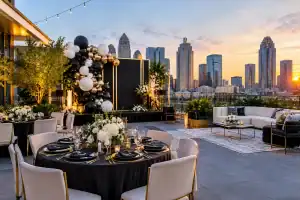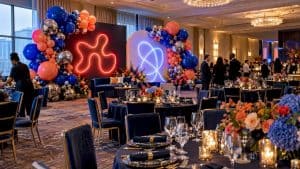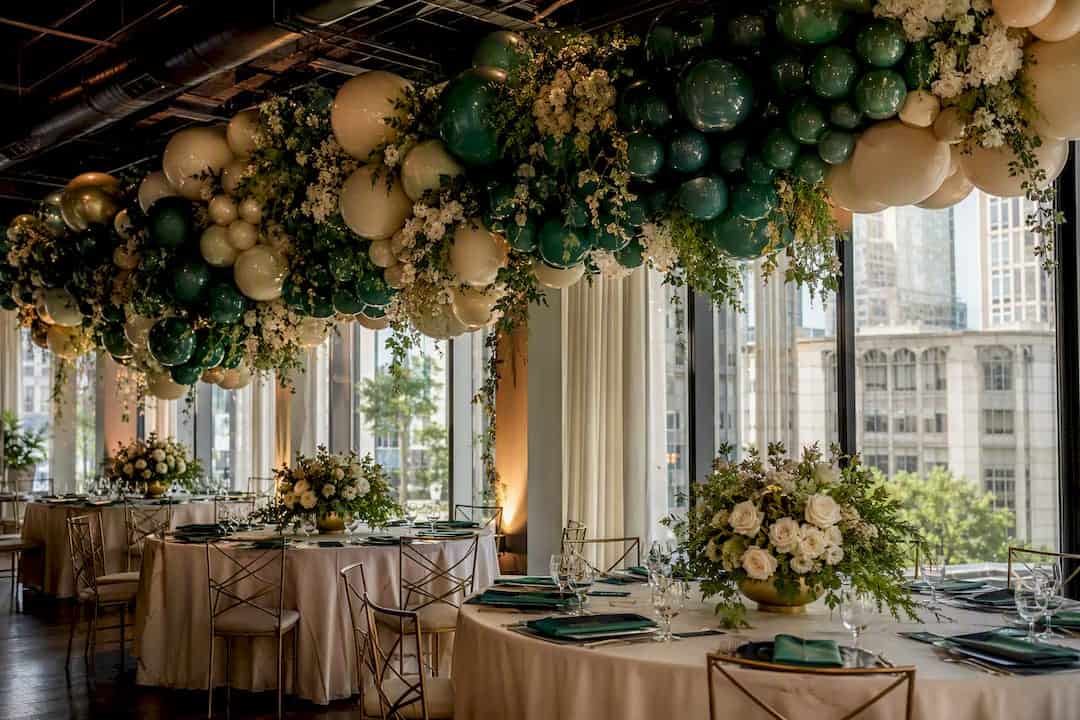
The highest-impact ceiling decor ideas for weddings and corporate events fall into four categories: suspended balloon clouds, drapery canopies, hanging floral chandeliers, and pendant statement pieces like LED marquee letters. Before you fall in love with any of them, though, one action comes first.
Verify the venue’s rated rigging points, per-point weight limits, and load-in access windows. Skip this step and even the most stunning design concept can collapse, literally and financially, once the site visit happens.
- Suspended balloon clouds and canopies for full-ceiling drama
- Drapery canopies for soft, romantic architecture
- Floral chandeliers and pendant marquee pieces serve as memorable photo-ready focal points.
Atlanta Balloon Designer builds every ceiling installation around a written rigging plan first, design second, which is exactly the order most planners get backward.
TL;DR:
- Verifying rated rigging points, weight limits, and ceiling height is essential before starting any ceiling decor design.
- Air-filled balloon canopies are better suited for multi-day events due to their longer-lasting shape, unlike helium balloons that drift and sag.
- Large ceiling installations require booking approvals and planning at least four to six weeks in advance, with prefabrication reducing onsite build time.
- Only vendors that provide written load calculations, rigging plans, and proof of installer insurance ensure a safe and reliable installation.
- A dedicated decor partner like Atlanta Balloon Designer handles all structural math, off-site prefabrication, and coordination with venue and production teams for seamless execution.
Table of Contents
- Ceiling Decor Ideas: When to Use Balloons, Drapery, or Florals
- What Should You Verify Before Finalizing a Ceiling Design?
- How Much Do Ceiling-Hung Installations Cost and Take to Build?
- Materials and Hardware That Actually Change the Outcome
- Coordinating the Walkthrough and Vendor Handoffs
- What Atlanta Balloon Designer Handles for Your Ceiling Installation
- The Overlooked Truth About Ceiling Decor Planning
- Book a Ceiling Decor Consultation With Atlanta Balloon Designer
- Key Takeaways
- Sources
- FAQ
Ceiling Decor Ideas: When to Use Balloons, Drapery, or Florals
The right ceiling treatment depends on the room’s height, the event’s mood, and how long the installation needs to last. Here’s how to match the idea to the occasion.
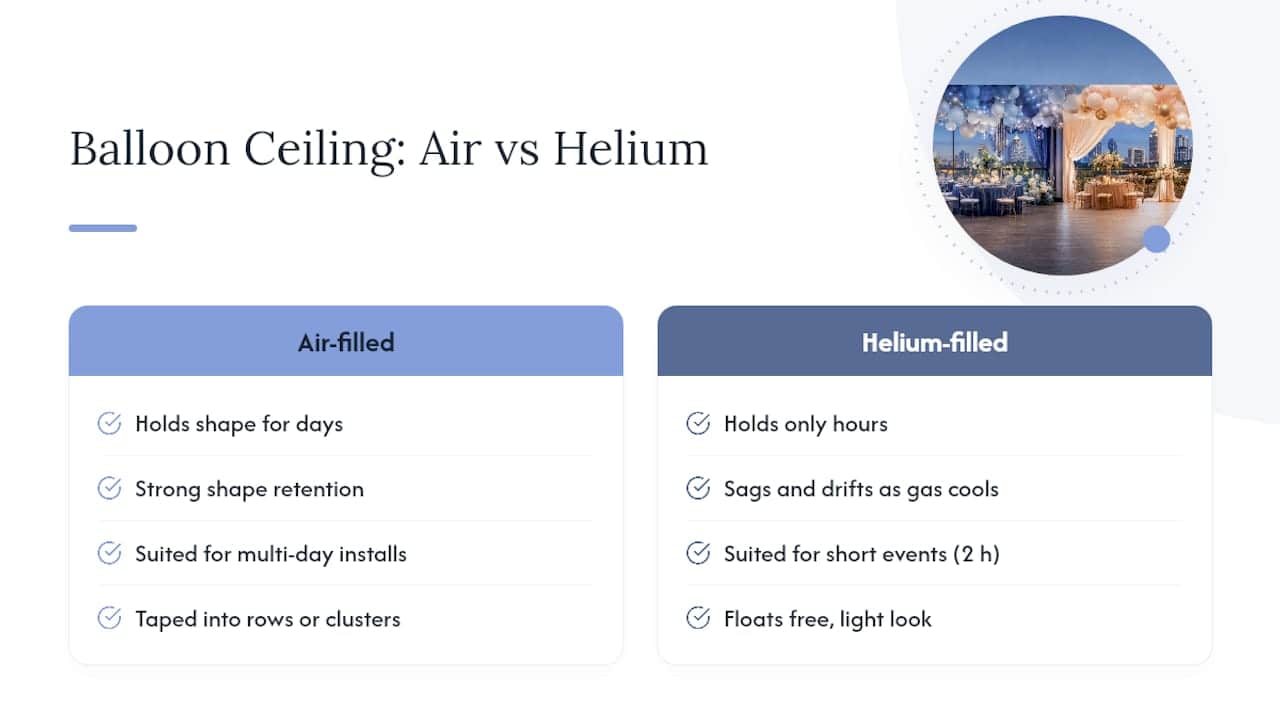
1. Suspended balloon clouds and canopies. Air-filled balloon clusters, taped into rows or organic clusters across the ceiling grid, create a dense, sculptural canopy that holds its shape for days rather than hours. Helium-filled balloons float free and read as light and celebratory, but they sag and drift as the gas cools, so they suit shorter events like a two-hour cocktail reception rather than a full wedding weekend. Air-filled canopies, by contrast, are the longer-lasting choice for multi-day installations, which matters enormously for corporate activations that run Thursday through Saturday.
2. Drapery canopies. Track-mounted fabric systems create clean, repeatable swags across a ballroom ceiling and can be struck and reused, which appeals to venues running back-to-back events. Swagged drape pinned at fixed points delivers a softer, more organic silhouette, ideal for garden-style weddings or tented receptions where the fabric needs to move with airflow rather than sit rigid.
3. Hanging floral chandeliers. A cascading floral chandelier over a sweetheart table or a dining garden installation above a head table reads as pure luxury, but scale matters more than most planners expect. Keep any hanging floral piece at least 7 feet from the floor to protect sightlines and guest movement, and confirm the piece’s finished weight against what the ceiling structure can actually hold.
4. Pendant statement pieces. LED marquee letters suspended over a dance floor, or a sculptural balloon pendant dropped above a step-and-repeat, work as the single photo moment an event is remembered for. These pieces don’t need to cover the whole ceiling. One well-lit, well-placed pendant often outperforms a full canopy for social media impact.
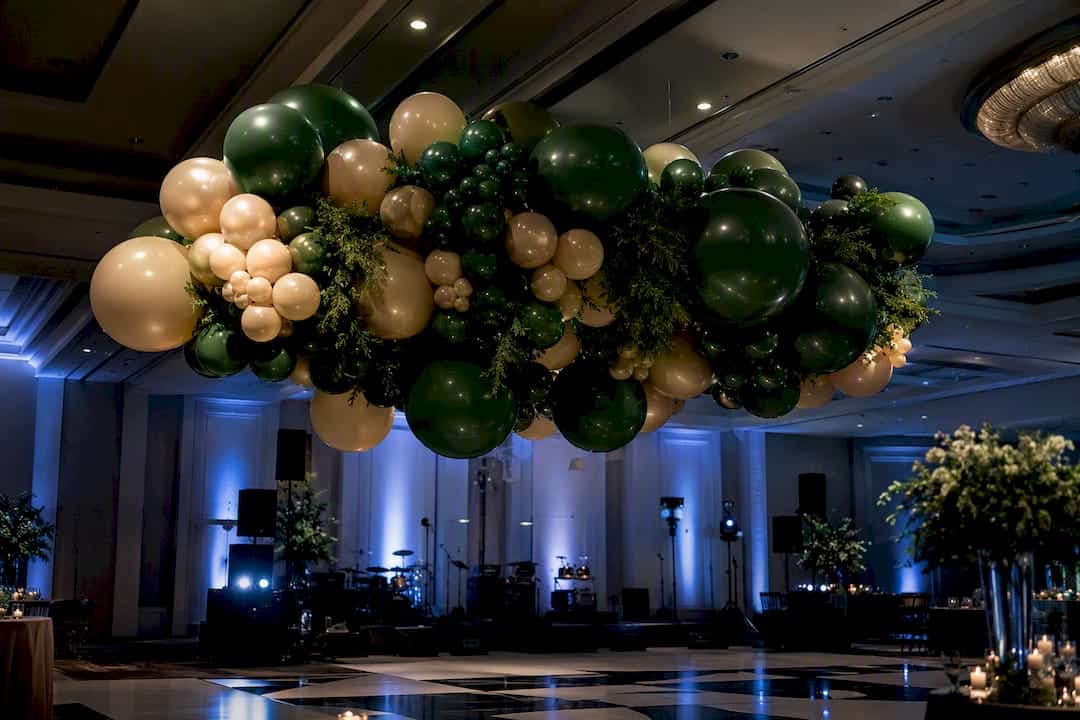
5. Mixed-material combinations. Balloon clusters paired with trailing greenery and warm low lighting soften what could otherwise feel like a plastic wall of color, and this combination works especially well over lounge areas, cocktail zones, and gift tables where guests linger rather than pass through quickly.
Explore more luxury balloon decor ideas for upscale events to see how these formats translate across ballrooms, tented receptions, and corporate galas.
What Should You Verify Before Finalizing a Ceiling Design?
Before any ceiling-hung concept goes on a mood board, run through this checklist with the venue.
- Confirm exact rigging point locations, weight capacity per point, and ceiling height at multiple spots in the room, not just the center
- Request a technical walkthrough with the venue’s operations manager, since the event coordinator often can’t answer structural questions
- Ask specifically about freight-elevator dimensions, dock access, HVAC obstructions, and fixed fixture locations that could block a design
- Require the decor vendor’s written load calculations, a formal rigging plan, and proof of installer insurance before signing off
- Flag known constraints early: no-drilling policies, historic ceiling finishes, and fire marshal restrictions on open flame or blocked sprinklers near hanging decor
Most venue logistics guides now push planners to ask these questions before design work even begins, because retrofitting a design around a hidden structural limit is far more expensive than planning around it from day one. When a venue has no rated rigging points at all, freestanding frames, weighted bases, or temporary truss systems can substitute, though each option needs sign-off from the venue’s operations team and often the fire marshal too.
Pro Tip: Bring a tape measure and a phone flashlight to the site visit. Ceiling height numbers on a floor plan are frequently outdated, and the only way to catch a mismatch is to check it yourself.
For a full walk-through of coordination steps, see this planner’s guide to venue coordination.
How Much Do Ceiling-Hung Installations Cost and Take to Build?
Ceiling decor pricing scales with height, density, and how much of the ceiling gets covered, not just the materials used.
- Small pendant pieces (a single marquee letter set or a compact floral drop) sit at the lower end of the budget spectrum and install in a few hours
- Mid-range balloon clouds covering a dance floor or entry ceiling require more labor and rigging hardware, pushing the price and install time up accordingly
- Large floral canopies or full-room balloon installations carry the highest costs because they demand engineering review, custom armatures, and often multi-day builds
Lead times matter as much as pricing. Book engineering and venue approvals four to six weeks out for anything beyond a small pendant piece, and expect large suspended builds to need multiple stages of planning, prefabrication, and on-site execution rather than a single build day.
On-site install windows run short for small pieces (two to three hours) but stretch to a full day or more for full-ceiling canopies, largely because the crew is assembling structure, not just decor. Off-site prefabrication cuts that on-site time significantly by moving the fragile, time-consuming work into the studio beforehand. Strike planning deserves its own line item, too. Ask about extra fees for extended venue access if your event runs late or the strike window overlaps with another booking.
Materials and Hardware That Actually Change the Outcome
The materials a vendor chooses, and the hardware they use to hang them, determine whether a ceiling installation looks flawless for the full event or starts sagging by hour three.
Balloon systems. Air-filled tape kits create rigid, long-lasting canopies that hold their form for multi-day events, while helium suits shorter timelines where a floating look matters more than staying power. Finish choices, matte latex, chrome, or clear, change the light reflection dramatically under venue lighting, so ask to see a sample under conditions close to the actual event.
Drapery methods. Track-mounted systems allow repeatable, clean folds and easy strike, while pinned swag drape gives a more organic, tent-like feel. Flame-resistant fabric certification isn’t optional. Most venues and fire marshals require it before drape goes anywhere near the ceiling.
Floral mechanics. Studio-built armatures let florists pre-hydrate and secure stems off-site, which reduces on-site build time and risk considerably. Multi-day events need a refresh plan, since cut florals wilt and hydration systems need topping off.
Rigging hardware. Neodymium magnetic mounts work on exposed metal beams, certified eye-bolts and rated cable handle drywall or wood structures, and shackles connect it all safely. Adhesives are never a substitute for rated anchor hardware. They fail under sustained weight, and a failure over a dance floor is a liability nobody wants.
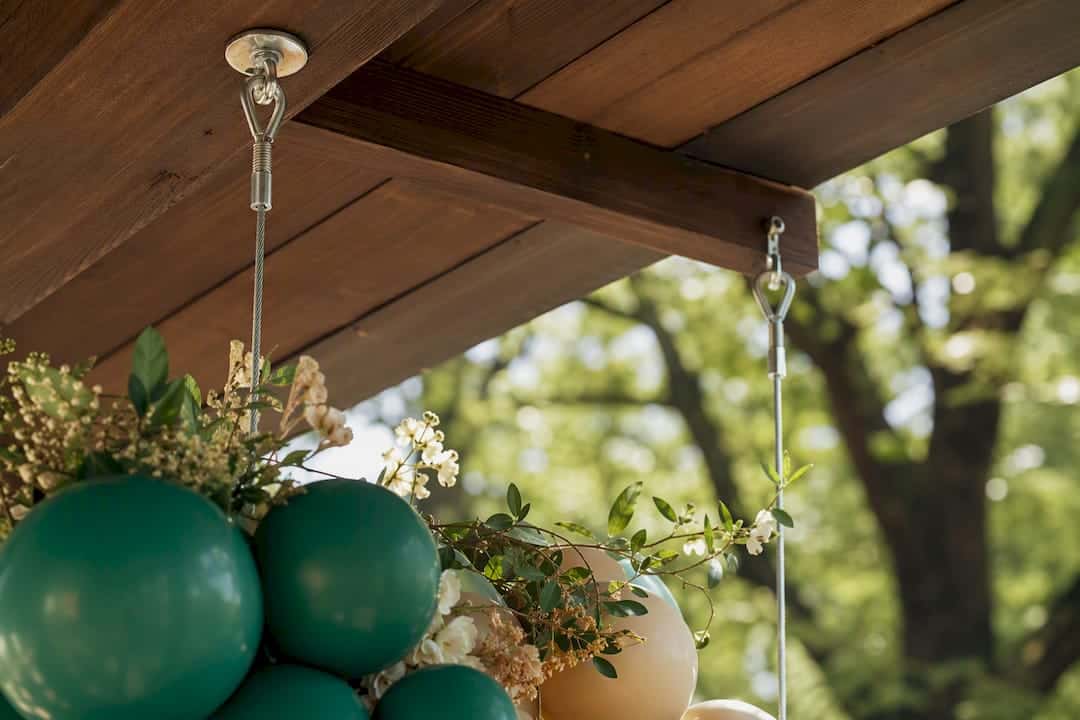
Pro Tip: Ask your decorator for the manufacturer spec sheet on any rigging hardware they plan to use, not just a verbal assurance that it’s “rated.” A real vendor keeps this documentation on hand.
Coordinating the Walkthrough and Vendor Handoffs
A good technical walkthrough answers structural questions before design questions. Run through these in order.
- Ask the venue: Where are the rated rigging points, what’s the weight limit per point, and are there fixed obstructions (HVAC, sprinklers, chandeliers) in the install zone?
- Ask the decor vendor: Can you provide written load calculations and a rigging plan signed off by a qualified installer?
- Ask the production team: What time does lighting and AV need access, and how does that overlap with our install window?
- Confirm who signs off on the final load calculation, and who owns strike responsibility once the event ends.
- Lead installer: owns the rigging plan and final structural check
- Spotter: watches load points during lift and adjustment
- Runner: moves materials and hardware between staging and install zone
- Strike lead: manages teardown and confirms the ceiling returns to its original condition
Large events benefit when the decor team treats itself as one part of a coordinated production rather than a standalone vendor, especially where lighting trusses and balloon rigging compete for the same overhead real estate. The same coordination logic applies to live entertainment setups. Music and staging teams sequence their load-in the same deliberate way, and syncing that timeline with your decor install avoids a scramble an hour before doors open.
What Atlanta Balloon Designer Handles for Your Ceiling Installation
Atlanta Balloon Designer builds ceiling installations the way a structural project deserves to be built: prefabricated off-site, load-calculated in writing, and installed by a team that has done this for Fortune 500 activations, not just backyard parties.
- Studio prefabrication of balloon clusters, floral mechanics, and marquee elements before install day
- On-site installation, mid-event refresh, and full strike included in the scope
- Written load calculations and rigging coordination with your venue’s operations team
- Direct coordination with lighting, AV, and staging vendors to protect sightlines and access windows
As international award-winning event stylists based in Austell, GA, the team serves the greater Atlanta metro area and surrounding communities within a 60-mile radius, from corporate headquarters downtown to estate venues in the suburbs. To get a quote started, share the venue name, a floor plan, current ceiling photos, your preferred dates, and a budget range. Browse creative decoration ideas for inspiration before your first call.
The Overlooked Truth About Ceiling Decor Planning
Most ceiling decor content sells inspiration and stops there. The gap that actually costs planners money isn’t a lack of ideas. It’s the assumption that a beautiful concept survives contact with a real ceiling.
Conventional wisdom treats the rigging conversation as a formality, something to confirm after the design is approved and the client is excited. That order is backward. A rigging point that can’t hold 150 pounds doesn’t care how good the mood board looked. The planners who avoid disaster are the ones who ask structural questions before creative ones, then let the design adapt to what the ceiling can actually support.
The other underrated factor is prefabrication. Off-site build work isn’t just a cost-saver. It’s a risk-reducer, because a studio floor gives installers time to solve problems that a loading dock with a two-hour window never will. If there’s one thing worth prioritizing above color palette or theme, it’s finding a decor partner who treats the rigging plan as the first draft of the design, not an afterthought bolted on before install day.
— Kay
Book a Ceiling Decor Consultation With Atlanta Balloon Designer
Atlanta Balloon Designer is the direct route to a load-calculated, luxury ceiling installation instead of piecing one together through a rental company, a separate florist, and a rigging contractor who’ve never worked together. One team handles the design, the structural math, the install, and the strike, so nothing falls through the gap between vendors.
That matters most for corporate planners juggling AV and staging schedules, and for wedding planners who can’t afford a rigging surprise on the one day there’s no room for a redo. The team’s studio prefabrication means less on-site scrambling and a shorter, calmer install window on event day. Whether the vision is a suspended balloon cloud over a Buckhead ballroom or a floral chandelier for an estate wedding in Marietta, the process starts the same way: a site photo, a floor plan, and a conversation about what the ceiling can hold.
Ready to see it built? Explore luxury balloon decor ideas for upscale events and request a site visit to get your ceiling design and rigging plan started.
Key Takeaways
Successful ceiling decor depends on confirming rated rigging points and weight limits before finalizing any design, then matching materials to the event’s timeline and venue constraints.
| Point | Details |
|---|---|
| Verify rigging first | Confirm rated attachment points, per-point weight limits, and ceiling height before design work begins. |
| Match format to duration | Use air-filled balloon canopies for multi-day events and helium for shorter, single-session installations. |
| Require written documentation | Ask vendors for load calculations, a rigging plan, and proof of installer insurance before signing. |
| Budget for lead time | Book engineering approvals and large suspended builds four to six weeks in advance. |
| Choose a turnkey partner | Atlanta Balloon Designer prefabricates off-site, provides written load calculations, and manages install through strike. |
Sources
- Wedding Venue Logistics Guide: Flower Restrictions, Setup Rules & What to Ask Your Venue | Poppy Flowers
- A clear wedding floral installation timeline, from flower prep and vendor timing to setup windows and strike planning | Fiore Designs
- Ceiling Balloons: The Ultimate Guide to Stunning Event Decor | Purely Celebrations
FAQ
What Are the Best Ceiling Decor Ideas for Weddings?
Suspended balloon clouds, drapery canopies, and hanging floral chandeliers create the biggest visual impact, with the right choice depending on ceiling height, event length, and budget.
How Far in Advance Should I Book Ceiling-Hung Decor?
Book four to six weeks ahead for engineering and venue approvals, and earlier for large suspended builds that need multi-stage prefabrication and coordinated on-site execution.
Do All Venues Allow Ceiling-Hung Installations?
No. Many venues restrict drilling, protect historic finishes, or require fire marshal approval, so confirming rigging points and restrictions with the venue’s operations manager is essential before design work starts.
Is Air-Filled or Helium Balloon Decor Better for Ceilings?
Air-filled balloon canopies last significantly longer and hold their shape better than helium, making them the stronger choice for multi-day events, while helium suits shorter celebrations needing a floating look.
Who Handles the Rigging Plan for a Ceiling Installation?
The decor vendor should provide written load calculations and a rigging plan, and Atlanta Balloon Designer includes this documentation along with venue coordination as standard practice on every ceiling-hung installation.