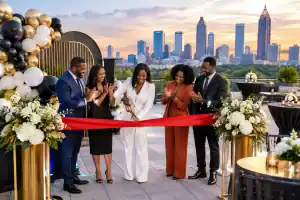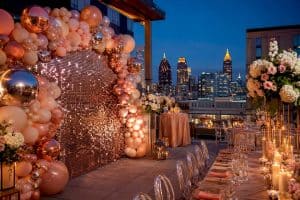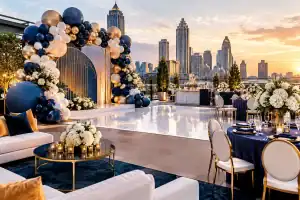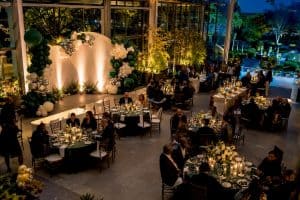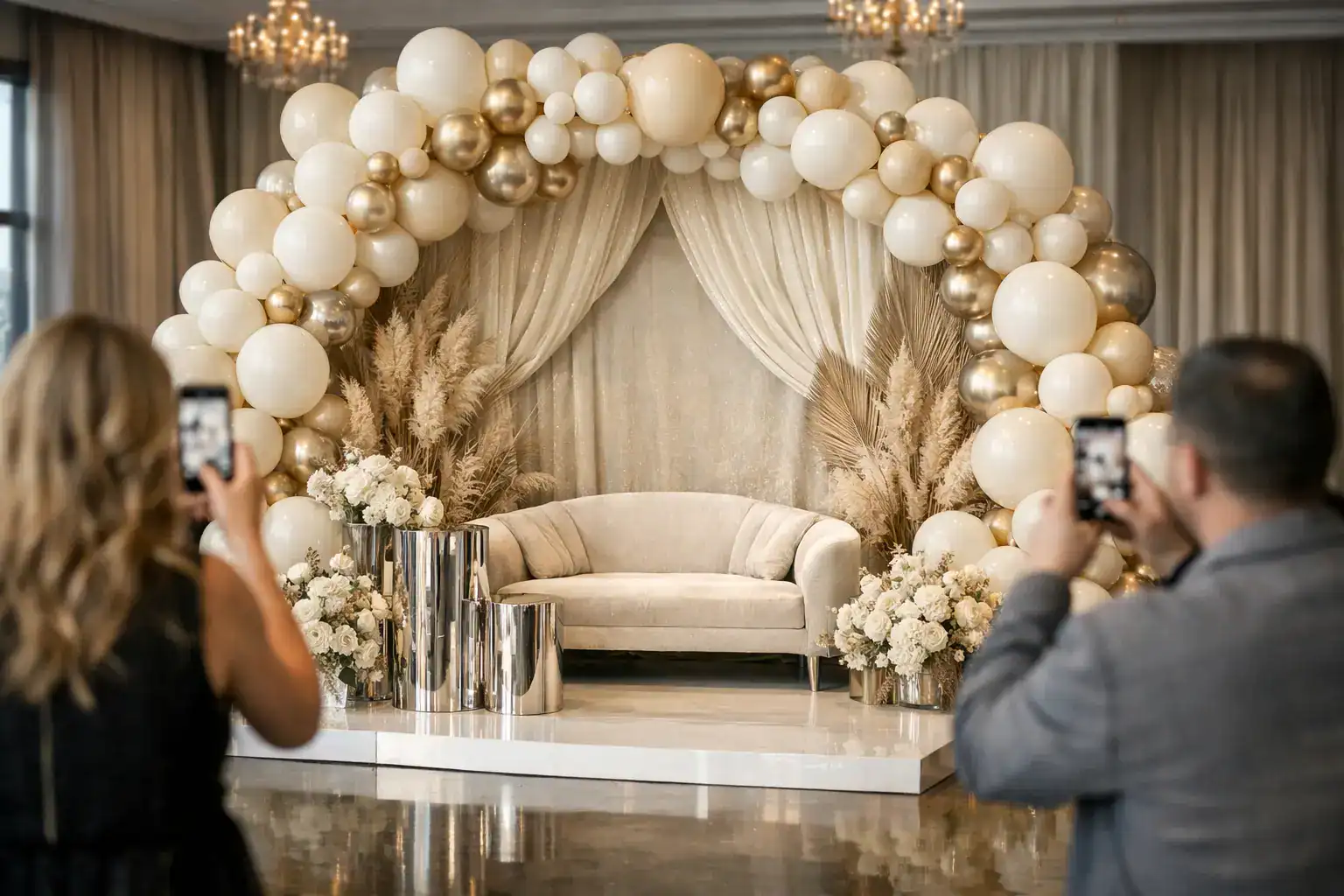
A photo backdrop is not wall decor. It is the place where guests pause, gather, pose, post, and remember who brought the experience to life. Learning how to design photo backdrop moments with that level of intention changes the entire event. For a corporate launch, gala, grand opening, employee celebration, or branded activation, the right backdrop can turn a standard venue corner into the most photographed part of the room.
The goal is bigger than making something pretty. A high-impact photo moment should feel unmistakably connected to the occasion, flattering in photos, easy to access, and polished from every angle. Here is how to build one that commands attention before the first guest arrives.
Start With the Moment You Want Guests to Share
Before choosing balloons, florals, signage, or a wall color, decide what the backdrop needs to communicate. Is the event celebrating a company milestone? Introducing a new product? Welcoming VIPs? Creating social content at a conference? Each answer leads to a different design direction.
A retail grand opening may call for a bold branded entrance moment with oversized balloons, a logo feature, and energetic colors that can be recognized from across the room. A corporate gala may need a more refined look – rich textures, layered metallics, dramatic lighting, and a clean composition that complements formal attire. An employee appreciation event can lean playful and immersive without losing the brand connection.
The strongest concepts begin with one clear visual sentence. Think: polished black-and-gold celebration, garden-inspired spring launch, bold team-color game-day activation, or modern monochrome product reveal. Once the idea is clear, every element has a job. Random decor may fill space, but a designed photo moment creates a story.
Build the Backdrop Around the Brand, Not Just the Logo
A logo alone does not make a branded backdrop. In fact, placing it too large or repeating it everywhere can make the setup feel more like a trade show display than a luxury experience. Brand recognition works best when the visual identity is woven through the full composition.
Use the approved color palette as a starting point, then add supporting shades that give it depth. A bright blue brand color might be paired with navy, powder blue, silver, and clear accents for dimension. A warm terracotta palette can come alive with peach, sand, cream, and soft gold. This is where balloon installations are pure fire: organic clusters, varied sizes, and intentional color transitions create movement that a flat wall cannot deliver.
Typography matters, too. If the brand uses clean, modern lettering, a delicate script sign may feel disconnected. If the event has a premium, editorial look, choose dimensional lettering, acrylic signage, or a custom-built feature that carries the same level of finish. The backdrop should look like an extension of the brand experience, not an add-on assembled at the last minute.
Leave room for the people in the photo
This is one of the most common design misses. A backdrop can look incredible when empty but become visually crowded as soon as guests stand in front of it. Plan the central photo zone first, then build detail around it.
For a group-friendly setup, keep the key logo, event name, or focal detail high enough that it will not be hidden by faces. Frame the center with an asymmetrical balloon garland, sculptural florals, columns, or layered panels rather than filling every inch of the wall. Guests need visual breathing room. The design should frame them, not compete with them.
Choose Scale That Feels Intentional in the Venue
A beautiful small backdrop can disappear in a ballroom. An oversized installation can overwhelm a compact restaurant private room. Scale depends on the room, ceiling height, guest count, expected photo traffic, and camera angle.
Start by identifying where guests will approach from. If the backdrop is visible from an entryway or across a large event floor, it needs enough height, color contrast, and dimension to pull attention from a distance. For a more intimate networking event, a focused photo moment near the bar, registration, or lounge may create stronger engagement because it feels naturally part of the guest flow.
A practical guideline: design for the largest likely group photo, not the single-person selfie. Corporate teams often pose in groups of three to six, and award recipients may gather with leadership or clients. A narrow display creates awkward crowding and cuts off the most important details. A wider composition gives photographers and guests more flexibility.
For large activations, consider building the experience in layers. A branded step-and-repeat or paneled wall provides the foundation, while balloon styling, marquee letters, fresh florals, prop moments, or lighting give it dimension. The result feels bigger, richer, and far more camera-ready than a printed surface alone.
Use Depth, Texture, and Contrast to Make It Photograph Well
Flat backdrops can work for press lines and formal logo photos, but most social-first event moments benefit from depth. Texture catches light. Layers create shadows. Dimension makes a setup look expensive both in person and on camera.
Think beyond a single material. Mix matte and metallic balloons, acrylic signs and soft draping, ribbed panels and fresh floral accents, glossy vinyl and natural greenery. The contrast is what gives the installation personality. A wall of one color and one finish can feel underwhelming, while a tightly edited mix feels custom and elevated.
Color contrast is equally important. If your backdrop is dark, make sure the sign and key details are bright enough to read in photos. If guests are likely to wear dark formal attire, an all-black background may lose their outline. For daytime events with lots of natural light, pale palettes need enough texture and shadow to avoid looking washed out.
Do not forget lighting
Lighting can make a premium backdrop look editorial or make a gorgeous installation fall flat. Avoid placing the photo moment directly under harsh overhead lights when possible. Those fixtures create shadows under the eyes and can dull the color of balloons, florals, and signage.
Soft forward-facing lighting is usually the most flattering choice. For evening events, add uplights behind panels, inside balloon structures, or along the floor to create depth and drama. Neon-style signs and illuminated marquee letters bring energy, but they should support the focal point rather than overpower every photo.
Test the setup with an actual phone camera before guests arrive. Stand where attendees will stand, take photos from several angles, and check whether the logo is visible, the lighting is flattering, and the edges of the installation are clean. This five-minute test can prevent a major visual miss.
Design the Guest Experience Around the Backdrop
A photo backdrop only works when guests can comfortably use it. Keep the area clear of cocktail tables, loose cords, service stations, and traffic bottlenecks. If a line is expected, especially at a brand activation or conference, create enough open space for people to wait without blocking the event.
Placement matters. Near the entrance creates an immediate wow factor and captures guests early. Near the bar or lounge encourages repeat photos throughout the event. Near the stage works well for awards and formal presentations, though it may be less accessible during programming. It depends on whether the backdrop is primarily an arrival moment, an all-night social destination, or an official photo station.
If the event has a photobooth, treat the backdrop and booth as one visual environment. Their colors, props, and lighting should work together. The same applies to interactive entertainment such as DJs, balloon twisters, or caricature artists. When each element feels connected, the entire event looks intentionally produced instead of pieced together.
Know When a Custom Build Is Worth It
Not every event needs a massive custom structure. A well-designed balloon garland with a branded sign can create a strong impact for a smaller office celebration or restaurant opening. But when the event marks a major milestone, hosts media, launches a product, or represents a high-visibility brand, a custom build gives the experience more authority.
Custom panels, sculptural balloon installs, dimensional logos, floral moments, and layered architectural details photograph at a different level. They also allow the design to adapt to unusual spaces, from hotel ballrooms and convention centers to retail storefronts and outdoor plazas.
For Atlanta events where the decor needs to work hard for the brand, Atlanta Balloon Designer approaches photo backdrops as full visual activations, not simply a wall behind the party. That distinction shows in the scale, finish, and guest reaction.
Your best backdrop decision is usually the one that makes guests stop mid-conversation, pull out their phones, and say, “We need a picture here.” Give them a space that feels worth sharing, and the photos will carry the event long after the last balloon comes down.