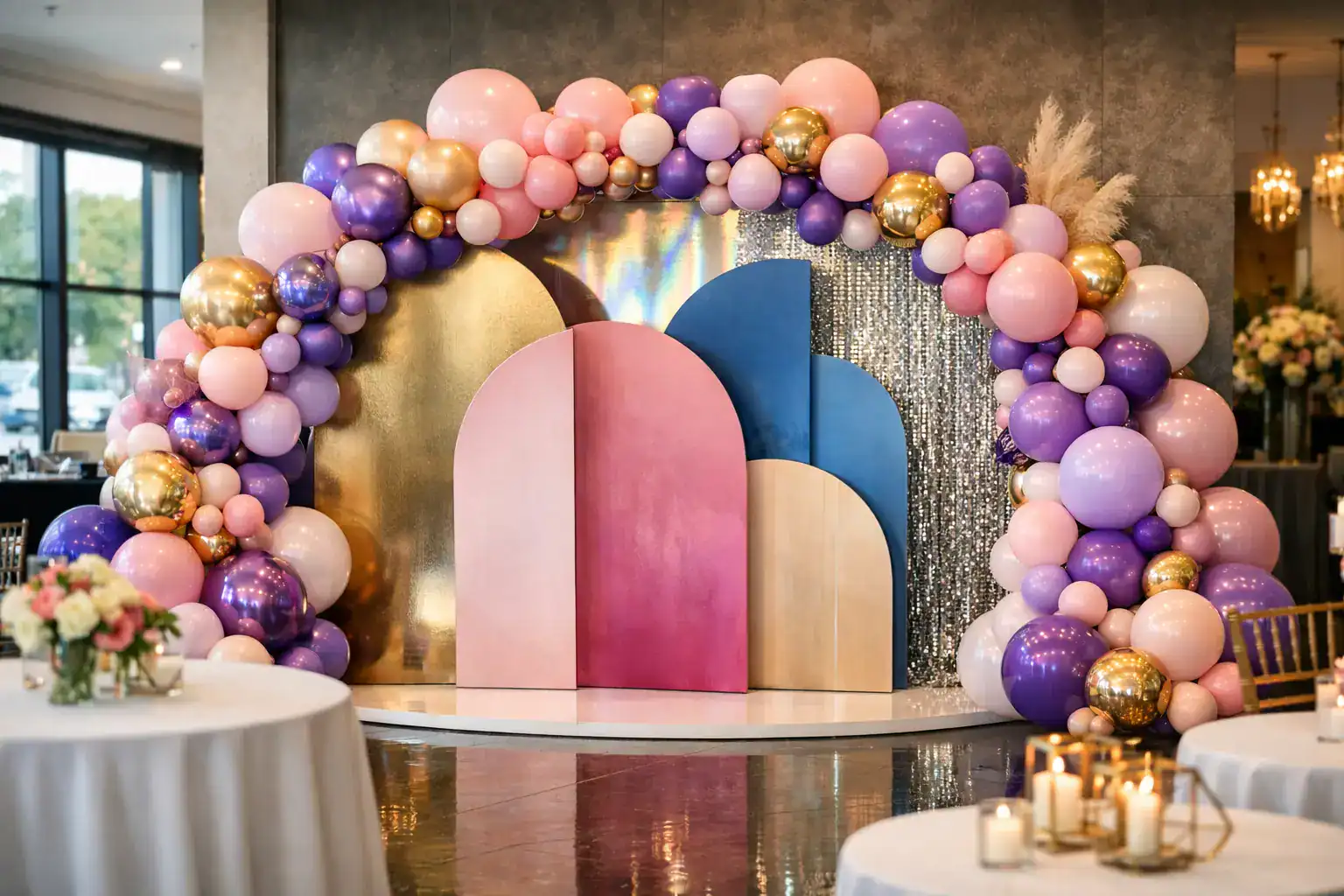
A backdrop is not just what sits behind the speaker, cake table, or photo booth. It is the visual anchor that tells guests where to look, where to gather, and what the event is about before a single word is spoken. This guide to custom event backdrops is built for planners and brand teams who want more than a logo on a wall. The goal is a high-impact installation that looks intentional in person, photographs beautifully, and gives guests a reason to pull out their phones.
Start With the Moment You Want to Create
The best custom event backdrops begin with a clear purpose. A step and repeat at a media-facing grand opening has a different job than a dramatic photo moment at an employee appreciation party. A product launch needs room for the product and the brand story. A gala backdrop may need to feel elevated enough for formal attire, sponsor recognition, and professional photography.
Before choosing colors, materials, or wording, define the primary moment. Are guests checking in beside it? Will executives deliver remarks in front of it? Is it designed for hundreds of social photos? Or does it frame a VIP experience, ribbon cutting, dessert display, or stage?
That answer affects every design choice. A backdrop meant for quick individual portraits should have a clean central area and a camera-friendly finish. A scene intended for group photos needs more width, a forgiving composition, and enough open space that faces do not disappear into dense graphics or décor.
Choose a Backdrop Style That Supports the Brand
A printed backdrop can be the right choice, especially when logo visibility, sponsor placement, or campaign messaging is the priority. But a premium event does not need to stop at a flat printed panel. Dimensional layers create the kind of visual depth that makes a photo op feel like an experience rather than signage.
A few styles consistently deliver for corporate celebrations and branded activations:
- Step and repeat walls work well for press moments, branded arrivals, and sponsor visibility. Keep the logo pattern disciplined, with enough space between marks to remain readable in photos.
- Customized photo backdrops can combine branded panels, vinyl lettering, sculptural shapes, florals, textures, or themed props for a more editorial look.
- Organic balloon installations bring movement, color, and scale. They are especially effective for launches, milestone celebrations, openings, campus events, and high-energy internal gatherings.
- Mixed-material builds pair balloons with draping, shimmer walls, faux greenery, fresh florals, acrylic signage, marquee letters, or custom cutouts for a fully produced finish.
There is a trade-off to consider. A logo-heavy step and repeat is highly functional and easy to recognize, but it can feel expected. A layered installation creates more excitement and stronger social content, though it requires thoughtful placement of logos so the message is still visible. The strongest design often combines both: clear brand presence with a photo-worthy visual moment.
Size the Backdrop for the Room and the Camera
A backdrop can be beautifully designed and still underperform if it is undersized. In a ballroom with high ceilings, a small backdrop can look lost. In a narrow restaurant private room, an oversized build can block traffic and overwhelm the setting. Scale is not simply about making everything bigger. It is about making the installation feel proportional to the venue, the guest count, and the way people will interact with it.
For individual or couple photos, a more compact installation may be enough. For team photos, influencer content, or guest groups, plan for a wider footprint. If the installation is intended to be visible from across a reception space, height and dimensional details matter just as much as width.
Ask the venue for ceiling height, wall measurements, load-in details, elevator dimensions, parking rules, and any restrictions on adhesives or hanging. These logistics are not the glamorous part of event design, but they protect the final look. A custom build should arrive with a clear plan for setup, safety, and removal – not last-minute improvisation.
Design for Photos, Not Just First Impressions
Guests will judge your backdrop in a split second, but the photos will live much longer. That is why contrast, lighting, and placement should be part of the initial concept rather than afterthoughts.
Dark lettering on a dark backdrop may look sophisticated in a mockup and disappear on camera. Highly reflective finishes can create exciting sparkle, but direct flash or strong overhead lighting may produce glare. Pale colors can feel fresh and luxurious, yet they need enough texture or contrast to avoid looking washed out in bright venues.
Use the brand palette as a starting point, not a limitation. A deep corporate blue can be elevated with tonal balloon clusters, chrome accents, crisp white lettering, and a sculptural base. A neutral palette can gain personality through layered textures, soft metallics, or one bold signature color. For a seasonal event, the decor can nod to the season without drifting away from the brand identity.
Placement matters too. Put the backdrop where guests naturally pause, not in a forgotten corner behind tables or near a service door. Consider the lighting already available, the flow from check-in to reception, and whether a photographer can shoot without capturing clutter in the frame. A photo moment placed near the energy of the event gets used. One hidden at the edge gets missed.
Make the Brand Visible Without Making It Feel Like an Ad
Corporate event décor has to accomplish two things at once: it must create an emotional response and communicate the brand. When every surface is covered with logos, the installation may feel more like a trade show booth than a celebration. When branding is too subtle, guests may love the photos without connecting them to the company or campaign.
The balance comes from hierarchy. Choose one primary message, such as a campaign name, event theme, anniversary number, product name, or company logo. Then decide what needs secondary visibility: a hashtag, sponsor logo, tagline, or location marker. Not every message deserves equal size.
For a grand opening, large branded lettering or a custom sign can act as the hero, with balloons and florals framing it. For a conference, a refined logo placement paired with an engaging statement or interactive element may encourage more guest photos. For an employee celebration, the company identity can be present while the real focus stays on the people being recognized.
Build an Experience Around the Backdrop
The backdrop becomes more valuable when it is part of a complete guest experience. Add a photo booth nearby for instant keepsakes, or position a DJ and lighting plan to keep that area energized. Marquee letters can celebrate a milestone number. A balloon twister, caricature artist, or face painter can bring interactive fun to family-focused company events, festivals, and community activations.
For elevated functions, coordinate the backdrop with the welcome display, bar décor, centerpieces, stage design, and lounge areas. Repeating key colors or materials makes the whole event feel curated. You do not need every surface to match exactly. In fact, variation keeps the room interesting. What you need is a consistent visual language.
This is where full-service event styling makes a real difference. One cohesive concept usually photographs better and feels more premium than a collection of separate rentals chosen in isolation. Atlanta Balloon Designer approaches custom backdrops as part of the overall visual story, from bold balloon architecture to polished details that bring the event theme to life.
Plan Early Enough for a Custom Build
A custom event backdrop is not an off-the-shelf decoration. It may involve printing, fabrication, specialty materials, custom signage, color matching, venue coordination, and a detailed installation plan. The earlier the concept is approved, the more creative options are available.
Start with your event date, venue, guest count, brand assets, and budget range. Share inspiration, but also explain what you like about each image. Is it the scale, the color palette, the texture, the signage, or the overall mood? That context helps turn inspiration into a design that belongs to your event rather than a copy of someone else’s photo.
Budget should be tied to impact. If the backdrop is the primary photo moment, appears in media coverage, or carries a major campaign message, it deserves a meaningful share of the décor investment. If it is a supporting element in a room filled with programming and entertainment, a more streamlined design may be the smarter choice. The right investment depends on how central the backdrop is to the guest journey.
A custom backdrop should make people stop, smile, and step into the frame. Give it a clear purpose, the right scale, and a design that feels unmistakably connected to your event. When the final photo is the one guests keep, post, and remember, the backdrop has done its job.