For a keepsake sign, backlit display, or anything staying outdoors long term, choose cast acrylic. For a budget-friendly, lightweight, large-format, or short-term project, foam board or expanded PVC is the smarter pick. Fabrication method and weather exposure can flip that recommendation fast, so read on before you order. Full-service clients can skip the guesswork entirely by having Atlanta Balloon Designer handle material selection and installation.
TL;DR:
- Cast acrylic is best for long-term outdoor displays and keepsake signs due to its durability and optical clarity, but it comes at a higher cost.
- Foam board is suitable for temporary indoor signs, while expanded PVC offers a balance of weather resistance, lightweight handling, and affordability for outdoor or larger projects.
- Acrylic, especially cast, resists yellowing and crazing over time, unlike foam board or thinner PVC, which degrade faster in sun or humidity.
- Fabrication complexity and weight significantly influence installation costs; acrylic requires careful cutting and can be heavy, whereas foam and PVC cut quickly and are much lighter.
- For outdoor signage, opt for cast acrylic if budget allows; otherwise, 10mm or thicker expanded PVC provides better weather stability than standard foam core.
Table of Contents
- Foam Board vs Acrylic: Side-by-Side Comparison
- Acrylic (PMMA): Types, Optical Quality, and Fabrication Notes
- Foam Board and Expanded PVC: What Sign Shops Actually Use
- Cost, Weight, and Gauge Guidance for Budgeting
- Durability and Outdoor Performance: UV, Impact, and Scratch Resistance
- Fabrication, Printing, and Finishing for Event-Ready Signage
- Foam Board or Acrylic? A Decision Guide by Project Type
- Environmental and Recyclability Notes
- Practical Tips From Atlanta Balloon Designer for Event Signage
- Adhesives and Fasteners: What Actually Bonds to Each Material
- Safety Considerations: Dust, Fumes, and Fabrication Hazards
- What the Research Actually Supports
- How Atlanta Balloon Designer Brings Signage and Backdrops to Life
- Sources
- FAQ
Foam Board vs Acrylic: Side-by-Side Comparison
Here’s the trade-off in plain terms: acrylic gives you glass-like clarity and a material that lasts for years, while foam board and expanded PVC give you speed, low cost, and a fraction of the weight.
- Cost: Acrylic runs meaningfully higher per square foot, especially in cast form. Foam board and expanded PVC cost far less, which matters when you’re producing multiples.
- Weight: Acrylic is dense and heavy at larger sizes. Foam board and PVC panels are dramatically lighter, easier for one person to carry and hang.
- Clarity: Acrylic is the only one of the two that offers true glass-like transparency for backlighting or engraving.
- Durability outdoors: Cast acrylic holds up for years in the sun. Standard foam board degrades fast outside; expanded PVC in thicker gauges handles moderate outdoor use.
- Fabrication ease: Foam board and PVC cut, route, and print quickly with basic tools. Acrylic requires more careful cutting, edge finishing, and sometimes specialty equipment.
| Factor | Acrylic (PMMA) | Foam Board / Expanded PVC |
|---|---|---|
| Relative cost per sqft | High | Low to moderate |
| Weight | Heavy | Lightweight |
| Optical clarity | Excellent, glass-like | Opaque, print-only |
| Outdoor/UV suitability | Strong, especially cast | Fair (thicker PVC gauges only) |
| Fabrication notes | Precision cutting, edge polishing needed | Fast cutting, routing, easy mounting |
| Best use | Permanent, backlit, keepsake pieces | Temporary, oversized, budget displays |
For a wedding welcome sign the couple keeps forever, go acrylic. For a one-night directional sign at a rehearsal dinner, foam board wins on cost and weight. For a 6-by-8-foot photo backdrop panel, expanded PVC in a thicker gauge balances rigidity and portability better than acrylic ever will.
Acrylic (PMMA): Types, Optical Quality, and Fabrication Notes
Acrylic comes in two manufacturing types, and the difference matters more than most buyers realize. Cast acrylic is poured and cured in sheet form, which gives it superior resistance to crazing and keeps its optical clarity intact for years. Extruded acrylic, sold under names like Plazcryl, is pushed through rollers during manufacturing. It costs less and thermoforms more easily, but it scratches more readily and reacts more to certain solvents.
Both types transmit roughly 92% of visible light, according to Plaskolite’s OPTIX-L fabrication guide, which is why acrylic is the go-to choice for backlit marquee panels and illuminated signage. That level of light transmission is what makes an acrylic sign glow evenly instead of showing dark blotches around the light source.
Fabrication strengths and cautions to know before you cut:
- Cast acrylic engraves cleanly and holds detail, making it ideal for personalized keepsakes.
- Extruded acrylic thermoforms at lower temperatures, useful for curved or dimensional pieces.
- Both types scratch more easily than glass; keep protective film on until installation.
- Solvent-based cements bond edges cleanly but require ventilation and practice.
Pro Tip: If a piece needs to survive a decade of display and get engraved with names or dates, spend the extra money on cast acrylic. Extruded will save you cash upfront but shows scratches sooner under event lighting.
Foam Board and Expanded PVC: What Sign Shops Actually Use
Not all foam board is created equal, and this is where a lot of DIY decorators get burned. Standard paper-faced foam core, the stuff sold at craft stores, is lightweight and cheap but has almost no tolerance for moisture or outdoor sun. It’s built for a single indoor use, not a season of rentals.
Professional expanded PVC, best known by the brand name SINTRA, is a different animal entirely. It has no paper facing to peel or warp, resists dents and scratches far better, and machines cleanly on a router. According to SINTRA’s product specifications, the material is available in gauges from roughly 1mm up to 25mm for specialized uses, and fabricators generally recommend 10mm or thicker for anything that has to survive outdoor stability, per Cope Plastics’ material notes.
Practical fabrication notes for expanded PVC:
- Thinner gauges (3mm to 6mm) work well for indoor signage and short-term photo props.
- 10mm and thicker gauges resist warping in wind and handle exterior mounting hardware.
- PVC routs and drills cleanly without chipping, unlike paper-faced foam board.
- Heat-forming allows curved or dimensional shapes without cracking.
Cost, Weight, and Gauge Guidance for Budgeting
Acrylic costs noticeably more per square foot than foam board or expanded PVC, and that gap widens with thickness. Cast acrylic sits at the top of the price range; extruded acrylic and expanded PVC land closer together in the middle and lower tiers.
Weight changes everything about installation day. A 4-by-8-foot acrylic panel at half-inch thickness can require two people and hardware-rated mounting. The same size in expanded PVC is light enough for one person to hang with basic clips or Command strips.
- Keep single acrylic panels under roughly 4 by 4 feet if one installer needs to handle it alone.
- Foam board and PVC panels can go larger, up to 4 by 10 feet or more, before weight becomes a shipping issue.
- Beyond those sizes, plan for a multi-panel layout or a custom frame system rather than one oversized sheet.
Durability and Outdoor Performance: UV, Impact, and Scratch Resistance
Sun exposure is where these two materials diverge the most. Cast acrylic maintains its clarity and resists yellowing far longer than most transparent plastics, which is why Plaskolite’s fabrication documentation recommends it specifically for long-term outdoor displays. Extruded acrylic can handle moderate sun but shows UV stress sooner.
Expanded PVC in gauges of 10mm or greater holds up well against dents and daily handling, according to SINTRA’s product notes, though it isn’t built for years of direct sun the way cast acrylic is.
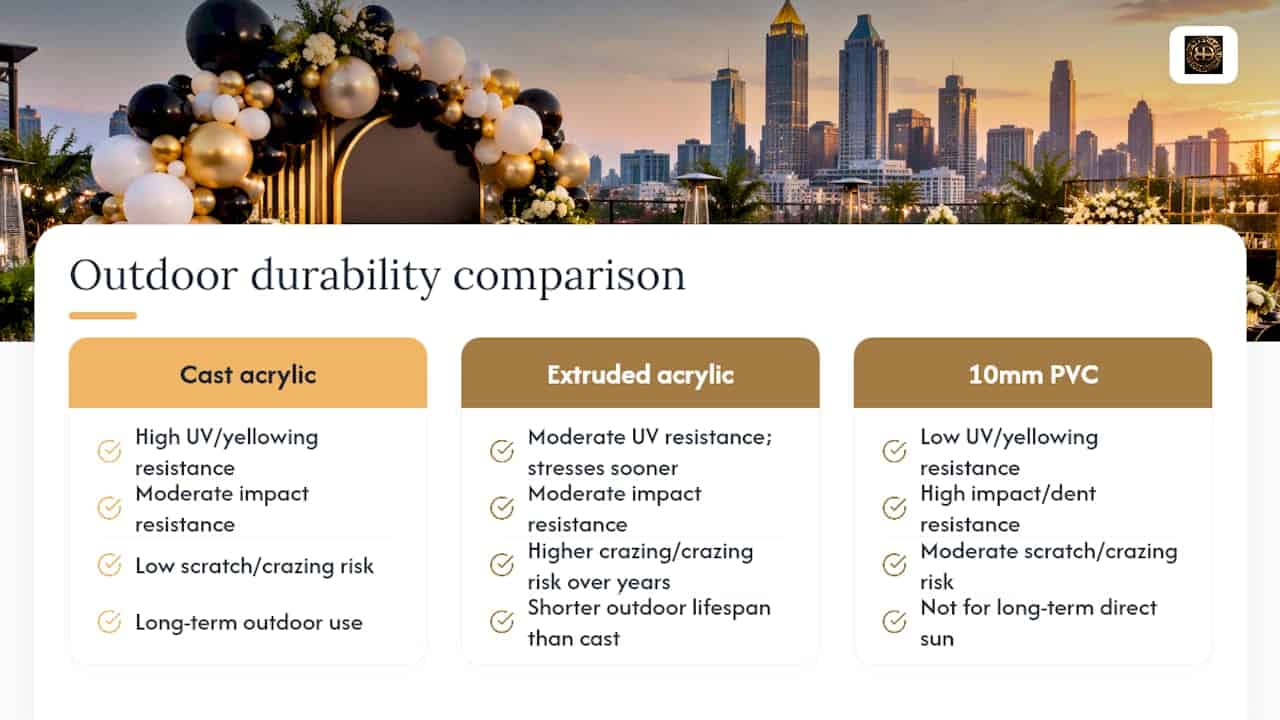
Common failure modes worth watching for: yellowing and surface crazing on lower-grade acrylic left in direct sun for years, and delamination on laminated foam-core assemblies exposed to humidity. A protective UV coating and mounting that allows slight expansion and contraction both extend a panel’s working life considerably.
Fabrication, Printing, and Finishing for Event-Ready Signage
Print quality depends heavily on surface finish. UV flatbed printing works beautifully on both materials, but glossy acrylic produces richer color depth while satin-finished PVC reduces glare under event lighting, which photographers and planners both appreciate.
A typical production workflow looks like this:
- Finalize artwork and confirm exact panel dimensions.
- Select gauge and material based on indoor or outdoor use.
- Print using UV flatbed with appropriate coating for the substrate.
- Cut or route to size, and laser cut acrylic only with proper fume ventilation.
- Polish or laminate edges depending on the material.
- Mount using standoffs, French cleats, or adhesive systems rated for the panel weight.
Pro Tip: Ask your fabricator for polished edges on any acrylic piece guests will touch or photograph up close. It’s a small upgrade that makes a sign look custom instead of cut in a garage.
Foam Board or Acrylic? A Decision Guide by Project Type
Matching the material to the moment saves both money and headaches on install day.
- Wedding welcome sign (keepsake): Cast acrylic, quarter-inch or thicker, for lasting clarity and engraving.
- Sponsor wall at a corporate gala: Expanded PVC at 6mm to 10mm, easy to print, light enough for quick teardown.
- Short-term directional signage: Standard foam board, since it only needs to survive a single event day indoors.
- Outdoor wayfinding: Expanded PVC at 10mm or greater for weather stability.
- Large photo backdrop: Expanded PVC in a multi-panel layout for coverage without excessive weight.
- Retail display: Extruded acrylic for a polished look at a lower cost than cast.
Before ordering, confirm five things: expected lifespan, weight and installation constraints, desired finish, budget per panel, and print method. When still unsure, request a small sample panel or a scaled proof before committing to a full production run.
Environmental and Recyclability Notes
Acrylic (PMMA) scrap is industrially recyclable, and research on PMMA recycling shows reintroducing scrap into production lowers raw material use and emissions. PVC foam board recyclability varies widely by formulation and local facilities, so check with your municipality. Reusable panels, uncoated where possible, are the simplest way to reduce waste from either material.
Practical Tips From Atlanta Balloon Designer for Event Signage
When our team builds photo backdrops versus keepsake signage, gauge selection comes down to shipping distance, install labor, and how the piece needs to look in photos. A backdrop traveling to a Buckhead ballroom gets a lighter panel; a client’s forever keepsake gets the thicker, polished option. For hotel and convention center installs, we plan rigging points and load-in routes before fabrication even starts, not after.
Pro Tip: Always confirm ceiling height and loading dock dimensions before finalizing panel size. It’s the most overlooked detail in large-format event signage.
Adhesives and Fasteners: What Actually Bonds to Each Material
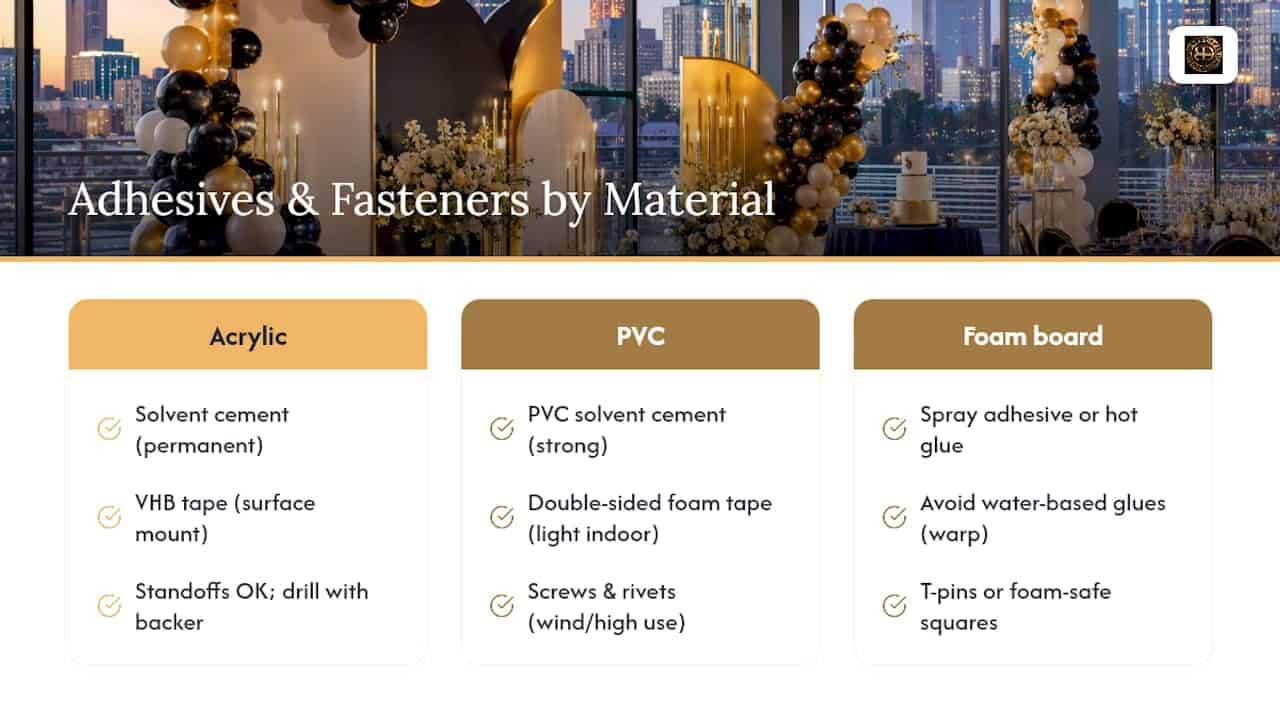
Mounting method matters as much as material choice, and mismatched adhesives cause more sign failures than weather does. Acrylic bonds well with solvent-based acrylic cements for permanent seams, and with VHB (very high bond) tape for surface mounting without visible hardware. Standoffs and standoff hardware work cleanly on acrylic since the material holds drilled holes without cracking, provided you use the correct bit and back the panel during drilling.
Expanded PVC responds differently. Solvent cements formulated for PVC create strong bonds, but general-purpose super glues often fail over time because they don’t penetrate the material’s cellular structure. Double-sided foam mounting tape works well for lightweight indoor applications, while screws and rivets are the better choice for anything facing wind or repeated handling, since PVC holds threaded fasteners better than thin foam-core board does.
Standard paper-faced foam board is the pickiest of the three. Spray adhesives and hot glue both work for temporary indoor assembly, but anything with moisture, including some water-based glues, can warp the paper facing. For semi-permanent mounts, T-pins or foam-safe mounting squares avoid the wrinkling that liquid adhesives sometimes cause.
Pro Tip: Test any adhesive on a scrap corner first. A five-minute test avoids a ruined panel the night before an event.
Safety Considerations: Dust, Fumes, and Fabrication Hazards
Cutting and routing either material generates hazards that deserve real attention, not an afterthought. Routing or sanding acrylic and PVC both produce fine dust that irritates eyes and lungs with prolonged exposure, so a dust collection system or at minimum an N95 mask is worth the few extra dollars.
Laser cutting acrylic releases fumes that require proper exhaust ventilation. Never laser cut PVC or foam board with a vinyl facing, since it can release chlorine-based compounds that are genuinely hazardous to breathe. This isn’t a minor caution; it’s the single most important safety rule in this entire comparison.
Solvent-based acrylic cements and PVC adhesives both need ventilated workspaces, since prolonged exposure to the fumes can cause headaches and respiratory irritation. Keep a fire extinguisher rated for solvents nearby when working with cement-based bonding, and store both dust and offcuts away from open flame or heat sources, since fine plastic dust is more combustible than the solid sheet.
What the Research Actually Supports
Most comparison guides oversimplify this into “acrylic is premium, foam board is cheap,” and that framing misses the real decision point: fabrication method and exposure duration matter more than material prestige. A poorly mounted acrylic sign in direct sun without UV coating can look worse in two years than a well-built expanded PVC panel that was never expected to last past one season.
The conventional advice to “always upgrade to acrylic for a nicer look” ignores weight and installation labor, two costs that hit harder than the material price tag once you’re hauling panels into a hotel ballroom on a tight load-in window. What planners should prioritize first isn’t clarity or prestige. It’s matching gauge and material to the actual lifespan and handling conditions of that specific piece.
Get that match right, and even a modest expanded PVC panel looks intentional and premium in photos. Get it wrong, and even cast acrylic looks like a mistake once it’s cracked from a rushed install.
— Kay
How Atlanta Balloon Designer Brings Signage and Backdrops to Life
Atlanta Balloon Designer is the alternative to piecing together signage and décor yourself. We handle material selection, fabrication coordination, and installation as one seamless service, so you’re not researching gauges at midnight before your event. Our digital mockup services let you see your backdrop or sign before it’s built, and site visits ensure every panel fits its venue perfectly on install day.

From custom event backdrops for Buckhead galas to keepsake wedding signage across the Atlanta metro, our team works within a 60-mile radius covering Austell, Marietta, Sandy Springs, and beyond. We’re full-service by design: premium materials, professional finishing, and installation crews who understand rigging at hotels and convention centers. If your event needs a backdrop, sponsor wall, or marquee display done right the first time, request a quote through our balloon décor pricing page or explore our complete service offerings to schedule a site visit today.
Sources
- OPTIX-L continuous cast acrylic fabrication guide (Plaskolite)
- SINTRA material notes (Cope Plastics)
FAQ
What Are the Downsides of Using Foam Board?
Standard paper-faced foam board warps in humidity, dents easily, and breaks down quickly outdoors, so it’s best reserved for short-term indoor use. Expanded PVC in thicker gauges solves most of these weaknesses but costs more than basic foam core.
Can You Paint Directly on Foam Board?
Yes, acrylic craft paint applies well to paper-faced foam board without warping the surface if applied in thin, light coats. Expanded PVC also accepts paint but usually needs a light sanding first to help it adhere properly.
How Long Will Foam Board Last?
Standard foam board typically lasts a single event or a few weeks indoors before edges soften or the surface warps. Expanded PVC at 10mm or greater, per Cope Plastics’ gauge recommendations, can hold up outdoors for years with reasonable care.
What Do Event Designers Use Foam Board For?
Event designers rely on foam board and expanded PVC for directional signage, sponsor walls, mood boards, and lightweight photo backdrops that need to go up and come down fast. For a piece meant to double as a keepsake, most professionals, including the team at Atlanta Balloon Designer, recommend upgrading to acrylic instead.
Is Acrylic or Foam Board Better for Outdoor Signage?
Cast acrylic outperforms foam board outdoors thanks to its UV resistance and long-term clarity, as noted in Plaskolite’s fabrication documentation. If budget or weight rules out acrylic, expanded PVC at 10mm or thicker is the stronger foam-based alternative for exterior use.