
An event decor vendor is a professional service provider who designs, supplies, and installs decorative elements tailored to your event’s theme, objectives, and guest experience. This event decor vendor guide explained covers everything from vetting portfolios to negotiating quotes and managing day-of execution. Whether you’re coordinating a Fortune 500 corporate gala, a luxury wedding in Atlanta, or a first birthday celebration with a wild safari theme, the vendor you choose shapes every visual moment your guests remember. Get the selection process right, and your event becomes an experience. Get it wrong, and no amount of last-minute fixes will save the aesthetic.
What are the key criteria for selecting event decor vendors?
Vendor selection is the single most consequential decision in the event decor sourcing process. The right vendor brings your vision to life. The wrong one delivers generic results at premium prices.
Start by categorizing the type of vendor you need. The industry recognizes three main types:
- Full-service vendors handle design, sourcing, installation, and teardown under one contract. They suit complex, high-stakes corporate events requiring a single point of contact.
- Design-only vendors provide concepts, mood boards, and direction but leave sourcing and setup to you or other contractors. They work well for budget-conscious hosts with existing vendor relationships.
- Rental vendors supply furniture, linens, lighting, and props without design services. They pair best with a separate stylist or planner.
When vetting candidates, request a portfolio that includes events similar in scale and style to yours. Ask for at least two client references and call them. Confirm the vendor carries general liability insurance. This protects you if a balloon installation damages a venue wall or a floral centerpiece tips over during setup.
Shortlist 2–4 vendors per category to maintain negotiation leverage without overwhelming your decision process. For large events, begin sourcing 4–6 months in advance. For smaller celebrations, 6–8 weeks is the minimum. Starting too late limits your choices and weakens your negotiating position.

Transparency is non-negotiable. Any vendor worth hiring provides an itemized proposal that separates labor, materials, rentals, delivery, and teardown into distinct line items. A formal proposal and change-order protocol signals professionalism and protects both parties when the scope shifts.
Pro Tip: Ask every vendor candidate: “What happens if a key item is unavailable the week of the event?” Their answer reveals how they handle risk, not just how well they pitch.
How to compare and negotiate event decor vendor quotes effectively
Comparing quotes is where most planners make costly mistakes. The most common error is evaluating vendors by total price alone. Comparing quotes by price alone leads directly to scope gaps, surprise invoices, and service confusion on event day.
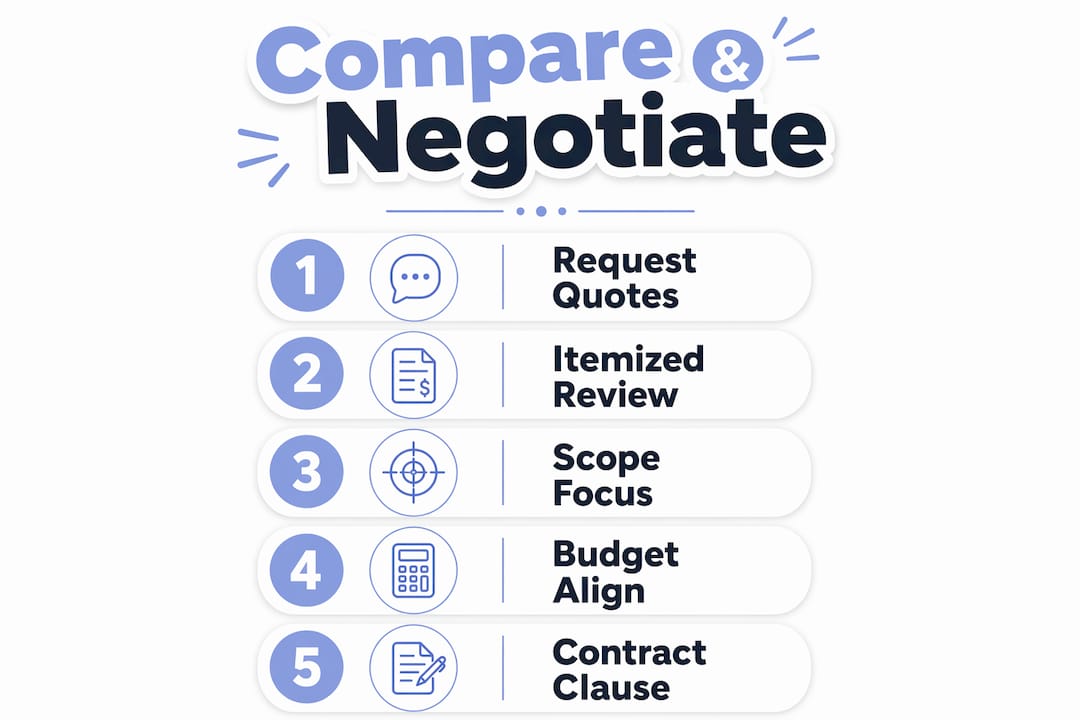
The correct method is a standardized comparison sheet. Build a spreadsheet with the following columns for each vendor:
| Line Item | Vendor A | Vendor B | Vendor C |
|---|---|---|---|
| Design and concept fee | $X | $X | $X |
| Materials and florals | $X | $X | $X |
| Labor and installation | $X | $X | $X |
| Delivery and pickup | $X | $X | $X |
| On-site refresh service | $X | $X | $X |
| Teardown and removal | $X | $X | $X |
| Total cost of engagement | $X | $X | $X |
This format forces an apples-to-apples comparison. A quote that looks $800 cheaper often excludes delivery, on-site coordination, or equipment rental. Cheapest quotes frequently omit these services entirely, making the final bill far higher than expected.
Budget allocation matters here too. Industry standards recommend allocating 10–15% of your total event budget to decorations for meaningful visual impact. That benchmark gives you a realistic ceiling before you request a single quote.
When negotiating, focus on scope before price. Ask vendors to add or remove specific line items rather than requesting a blanket discount. Vendors respond better to scope adjustments, and you end up with a contract that reflects exactly what you need.
Pro Tip: Request a “not-to-exceed” clause in your contract for any line items marked as estimates. This caps your exposure if material costs rise between signing and event day.
What does effective event decor vendor coordination look like?
Coordination is where beautiful concepts either come to life or fall apart. The most visually stunning design fails if setup runs late, teardown responsibilities are unclear, or no one manages the space during the event itself.
Effective coordination follows a structured sequence:
- Confirm venue access windows in writing. Know exactly when your vendor can enter for setup and when they must finish teardown. Venue overtime fees are real and avoidable.
- Build a vendor timeline. List every vendor arriving on event day, their setup start time, their setup end time, and their point of contact. Share this document with your venue manager and all vendors.
- Assign a breakdown responsibility matrix. Write into every vendor contract who removes what, by when, and who signs off on completion. Undefined breakdown responsibilities create venue overtime fees, missing items, and last-minute panic.
- Schedule an on-site decor refresh. Labor-intensive tasks like steaming linens, refreshing floral arrangements, and touching up balloon installations during the event are often overlooked but critical for maintaining the aesthetic from cocktail hour through the final toast.
- Designate a single communication lead. All vendor questions on event day route through one person. This prevents conflicting instructions and keeps your timeline intact.
Beyond logistics, the best vendors understand that event design includes visual storytelling and sensory design, not just pretty objects in a room. A well-executed organic balloon garland at the entrance sets the emotional tone before a single guest reaches the reception area. Lighting, texture, color palette, and spatial flow all communicate your event’s story. Choose vendors who think in those terms, not just in product catalogs.
For balloon decor specifically, understanding delivery and setup logistics before signing a contract saves significant stress on event day.
What are common pitfalls to avoid with decor vendors?
Even experienced planners fall into predictable traps when working with event decor vendors. Knowing these pitfalls in advance puts you ahead of most clients vendors encounter.
- Skipping itemized proposals. A one-line quote like “Full event decor: $3,500” tells you nothing. You cannot manage scope, negotiate changes, or hold a vendor accountable without line-item detail.
- Ignoring the change-order process. Every verbal agreement to add or modify a service must become a written change order with a revised price. Without this, disputes are nearly impossible to resolve.
- Overlooking on-site refresh services. Decor degrades during events. Balloon installations shift, linens wrinkle, and florals wilt. If your contract does not explicitly include on-site maintenance, your 6 p.m. setup will look tired by 9 p.m.
- Failing to compare like-for-like services. One vendor’s “installation fee” may include teardown. Another’s may not. Without a standardized comparison sheet, you are not comparing the same service.
- Missing red flags in vendor communication. No written agreement, no project timeline, no insurance certificate, and no references are all disqualifying signals. A vendor who resists putting terms in writing is a vendor who expects disputes.
The most expensive mistake is choosing a vendor based on a stunning Instagram portfolio without verifying their operational reliability. Beautiful photos do not guarantee on-time delivery, professional communication, or accurate billing.
Key takeaways
Selecting and coordinating event decor vendors requires standardized comparison, transparent contracts, and structured day-of coordination to protect your budget and deliver a stunning guest experience.
| Point | Details |
|---|---|
| Start sourcing early | Begin vendor outreach 4–6 months out for large events; 6–8 weeks for smaller ones. |
| Use a comparison sheet | Break every quote into labor, materials, delivery, refresh, and teardown before comparing. |
| Budget 10–15% for decor | Allocate this share of your total event budget to achieve meaningful visual impact. |
| Write a breakdown matrix | Define who removes what and by when in every vendor contract to avoid venue fees. |
| Demand itemized proposals | Never accept a single-line quote; line-item detail is the foundation of vendor accountability. |
What I’ve learned after years of watching decor partnerships succeed and fail
The planners who get the best results from decor vendors share one habit: they treat vendor relationships as creative partnerships, not transactions. They share mood boards early, invite vendor input on color palettes, and schedule a walkthrough of the venue before the contract is signed. That investment of time pays back tenfold on event day.
The planners who struggle treat vendors as order-takers. They send a brief, expect a quote, and then wonder why the result feels generic. Decor vendors, especially those working at the luxury end of the market, do their best work when they understand the story you are trying to tell. A jewel-tone corporate gala for a tech brand requires a completely different sensory approach than a soft, earthy baby shower. The vendor needs to feel that distinction, not just read it in a brief.
I have also seen too many planners undervalue the labor side of decor. Steaming 40 tablecloths, touching up a balloon arch between cocktail hour and dinner, and removing 200 floral centerpieces at midnight are not glamorous tasks. But they are the difference between an event that looks polished at 10 p.m. and one that looks exhausted by 8 p.m. Build those labor costs into your budget from the start, and you will never be surprised by them.
Finally, the contract is your friendship with the vendor in writing. A vendor who pushes back on detailed contracts is not protecting themselves. They are protecting their ability to underdeliver. Insist on specifics, and you will attract vendors who are confident enough in their work to commit to them.
— Kinyahnah
Bring your event vision to life with Atlantaballoondesigner
Planning a stunning celebration in the Atlanta area? Atlantaballoondesigner brings luxury balloon artistry and full-service event styling to weddings, corporate galas, baby showers, and milestone parties across Cobb County and the greater Atlanta metro. From shimmering metallic organic arches to custom marquee letters and immersive backdrop installations, every design is built to captivate your guests and photograph beautifully.

Atlantaballoondesigner handles vendor coordination, color palette curation, floor plans, and on-site installation so you never have to manage logistics alone. Explore the full range of luxury event styling services and discover what it feels like to work with an international award-winning team that treats every event as a work of art. Contact Atlantaballoondesigner at 678.203.0200 or visit atlantaballoondesigner.com to start planning your unforgettable event today.
FAQ
What is an event decor vendor?
An event decor vendor is a professional who designs, supplies, and installs decorative elements for events, including florals, balloon installations, lighting, linens, and themed props. They range from full-service design firms to rental-only suppliers.
How early should I start sourcing event decor vendors?
Start sourcing 4–6 months before large events and at least 6–8 weeks before smaller celebrations to secure your preferred vendors and maintain negotiation leverage.
How much of my event budget should go to decor?
Allocate 10–15% of your total event budget to decorations. Focus 80% of your design effort on the 20% of guest-interacted spaces, such as entrances and photo backdrops, for maximum impact.
What should an event decor vendor contract include?
A solid contract includes itemized line items for labor, materials, delivery, on-site refresh, and teardown, plus a formal change-order process. Transparent itemized proposals and written change-order protocols reduce surprises and protect both parties.
What is a breakdown responsibility matrix?
A breakdown responsibility matrix is a written document in your vendor contract that specifies who removes each item, by what time, and who confirms completion. It prevents venue overtime fees and missing equipment after the event.