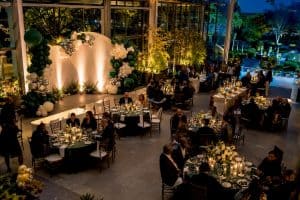
Balloon cluster design is the art of grouping multiple balloons together into a single structured unit to create depth, texture, and visual impact in event decor. These clusters serve as the building blocks for larger installations like organic arches, spiral columns, and lush balloon garlands. Whether you are planning a baby shower, a corporate gala, or a luxury birthday celebration, understanding how clusters work transforms your decor from flat and forgettable to stunning and dimensional. Tools like electric balloon pumps, sizing boards, and 260s balloons make the process accessible even for first-timers.
What is balloon cluster design and why does it matter?
Balloon cluster design is defined as the practice of tying groups of 4–5 balloons together into cohesive decorative units. These units are the foundation of nearly every professional balloon installation. Balloon clusters are foundational for event decor, building arches, columns, and topiaries from repeating grouped units. That means the quality of your clusters directly determines the quality of your finished display.
The industry term most professionals use is balloon cluster, though you may also hear it called a balloon pod or balloon grouping in some design circles. Each cluster is a self-contained decorative element. When you line them up, stack them, or spiral them around a frame, the result is a cohesive, textured display that reads as intentional and polished rather than random.
Clusters are also described as a symphony of aesthetics where color, texture, and size combinations work together to lift a space. That description captures exactly why clusters matter. A single balloon does nothing. A well-built cluster commands attention.
How is a five-balloon cluster constructed?
The five-balloon cluster is the most versatile and widely used format in professional balloon arrangement design. It creates a flower-shaped motif that reads beautifully in spiral columns, organic arches, and freestanding topiaries.
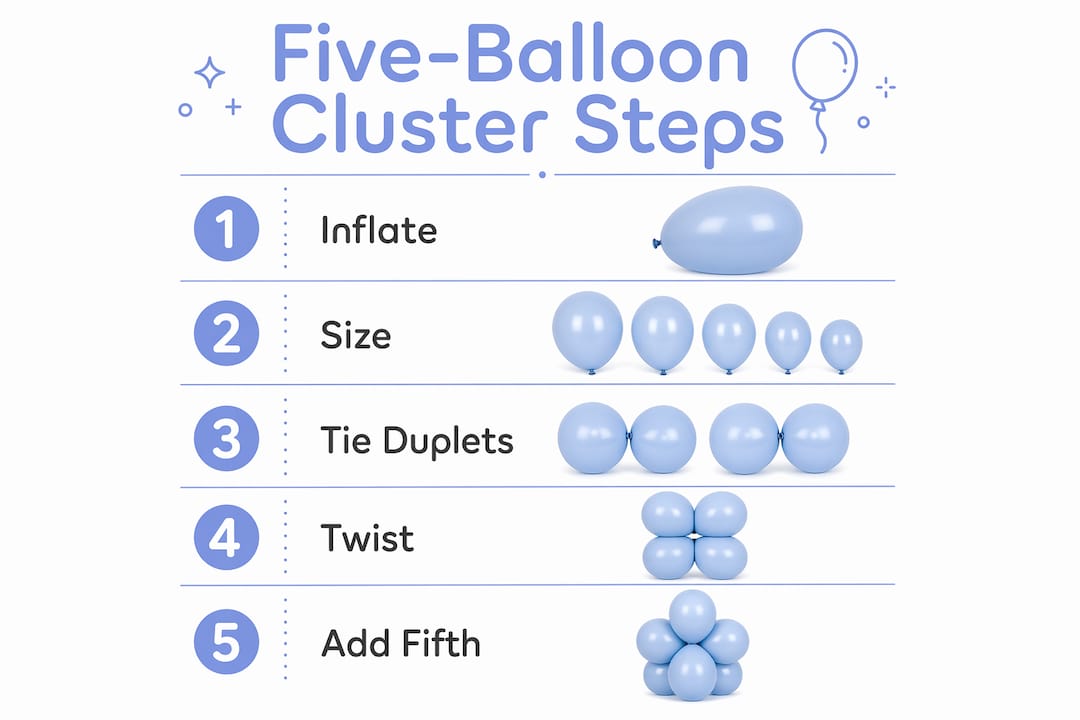
Here is how to build one from scratch:
- Inflate two balloons to the same size using a balloon sizer or sizing board. Consistency here is everything.
- Tie the two balloons together at their necks to form a duplet.
- Repeat with two more balloons to create a second duplet.
- Twist the two duplets together at their centers so all four balloons fan out like a four-leaf clover.
- Inflate a fifth balloon slightly smaller than the others and tuck it into the center, securing it by wrapping its neck around the twist point.
The result is a flower-shaped cluster that holds its shape and integrates cleanly into larger structures. The fifth balloon fills the visual gap at the center and adds a satisfying fullness that four-balloon clusters lack.
Pro Tip: Always size every balloon in a cluster to the same diameter before tying. Uneven inflation is the number one reason amateur clusters look lumpy rather than lush.
Four-balloon vs. five-balloon clusters: which should you use?
| Feature | Four-Balloon Cluster | Five-Balloon Cluster |
|---|---|---|
| Construction time | Faster, fewer steps | Slightly longer, more steps |
| Visual fullness | Moderate, some gaps visible | High, center filled completely |
| Best use case | Garlands, flat backdrops | Columns, arches, topiaries |
| Structural stability | Good | Excellent |
| Skill level needed | Beginner | Beginner to intermediate |
What materials and tools do you need for cluster design?
Choosing the right materials separates a professional-looking display from a DIY disaster. The three most common balloon materials are latex, vinyl, and biodegradable latex blends. Each has a specific role in balloon cluster decoration.
- Latex balloons are the standard choice for most clusters. They come in 5", 11", and 17" sizes. The 11" balloon is the workhorse of most designs, while 5" balloons add texture and fill gaps.
- Vinyl balloons are reusable and weather-resistant. Reusable vinyl cluster kits stand about 7’7" tall and include aluminum poles with weighted bases, making them ideal for outdoor events and repeated use.
- 260s balloons are long, thin balloons used as connecting strings to tie clusters securely to frames and structures.
The tools you need are just as important as the balloons themselves. Professional cluster kits typically include 4–5 small 260s balloons as tying strings alongside the main balloons. An electric balloon pump inflates balloons to consistent sizes far faster than hand pumping. A balloon sizer board keeps every balloon in a cluster uniform, which is the single biggest factor in achieving a polished result.
Pro Tip: Mix pearl, matte, and metallic finishes within a single cluster. The contrast in surface texture creates depth and richness that a single-finish cluster simply cannot replicate.
Regarding cost, DIY balloon clusters take about 10 minutes to assemble per unit using air-filled balloons. Professional freestanding clusters standing 7–9 feet tall with branded messaging cost upward of $425. DIY materials for the same visual footprint cost a fraction of that price, making clusters one of the most cost-effective decor investments available.
Durable UV-resistant finishes on latex and vinyl balloons extend the life of outdoor displays significantly. If your event is outdoors, prioritize UV-treated latex or go straight to vinyl for maximum longevity.
What design principles make balloon clusters look professional?
The difference between amateur and professional balloon arrangement design comes down to three principles: balanced irregularity, size variation, and deliberate negative space.
Balanced irregularity is the concept that design professionals encourage over rigid symmetry. A perfectly symmetrical arch looks mechanical. An arch built with clusters that vary slightly in size and color placement looks organic and custom-tailored. The goal is controlled variation, not randomness.
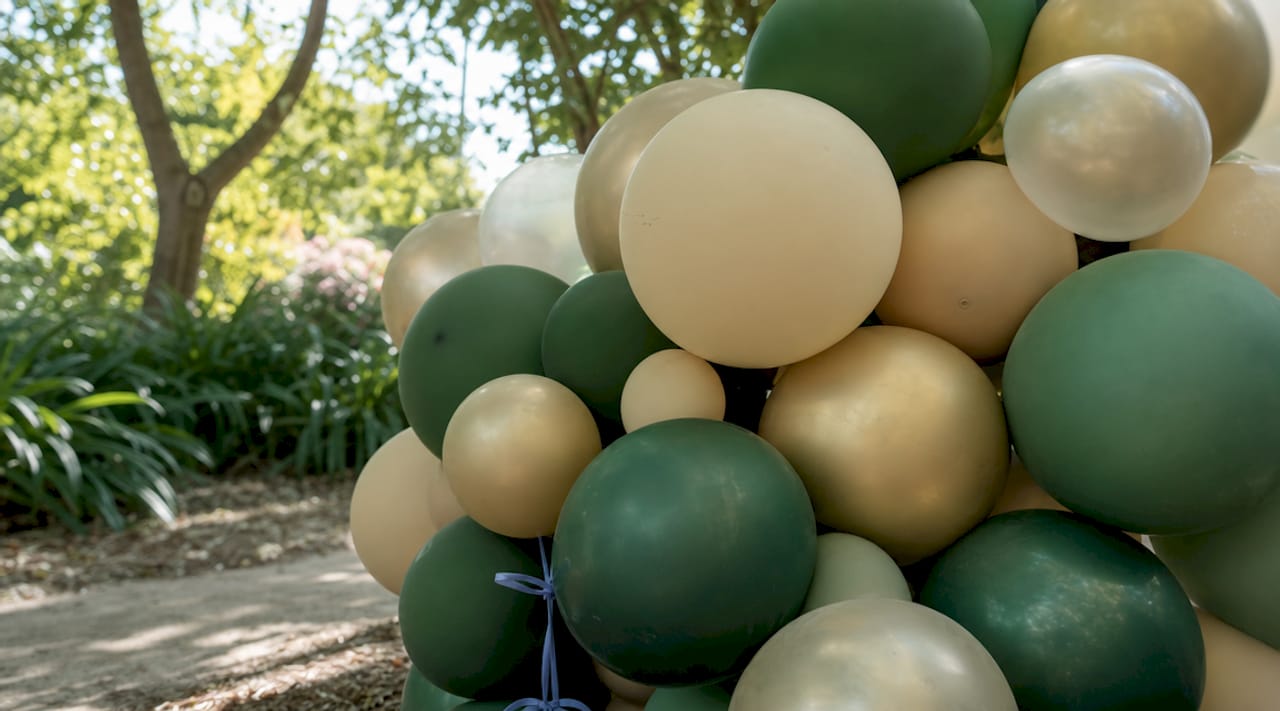
Size variation within a cluster softens edges and adds a high-end textured look. Combining multiple balloon sizes such as 5", 11", and 17" in a single cluster creates the layered, dimensional quality you see in luxury installations. Smaller balloons nestle between larger ones and eliminate the harsh circular outlines that make basic clusters look cheap.
Negative space is the deliberate gap between clusters in a larger structure. The deliberate use of negative space prevents visual overcrowding and lets each cluster’s shape and color read clearly. Beginners almost always pack clusters too tightly. Give each cluster room to breathe and the overall design becomes far more sophisticated.
Color theory also plays a direct role in cluster success. Here are the most common pitfalls to avoid:
- Using more than four colors in a single installation without a clear dominant hue
- Placing the same color in the same position across every cluster, which creates a striped rather than blended effect
- Ignoring the venue’s existing color palette when selecting balloon finishes
- Skipping a test cluster before committing to a full installation
Pro Tip: Build one test cluster in your chosen color combination before inflating your full balloon order. What looks great on a color swatch often reads differently at scale.
How do you use balloon clusters for real events?
Balloon clusters translate directly into the most popular balloon decor techniques used at celebrations today. Here is how to apply them across common event setups:
- Arches: Attach clusters to a flexible PVC or metal frame in a repeating pattern. Alternate color arrangements every two to three clusters to create a spiral or gradient effect.
- Columns: Stack clusters vertically around a central pole, rotating each cluster 45 degrees from the one below it. This creates the classic spiral column look.
- Topiaries: Attach clusters to a round foam or wire ball form, working from the bottom up and filling gaps with smaller balloons.
- Garlands: String clusters along a fishing line or balloon strip tape, varying sizes to create an organic, flowing shape.
For outdoor setups, weight distribution and structural support are critical. Weighted bases or careful balancing prevent freestanding columns and arches from leaning or collapsing during events. Wind is the biggest threat to outdoor balloon displays, so anchor every base and use air-filled rather than helium-filled clusters whenever possible.
Indoor setups offer more flexibility. Helium clusters work beautifully indoors for floating centerpieces and ceiling installations. Air-filled clusters last longer and hold their shape better for ground-level structures.
Pro Tip: For outdoor events, fill clusters with air rather than helium and attach them to weighted structures. Air-filled clusters resist wind far better and last significantly longer in direct sunlight.
A DIY cluster assembly session for a standard arch takes roughly 2–3 hours for a first-timer working with pre-inflated balloons. Having a second person to hold clusters while you attach them cuts that time nearly in half.
Key takeaways
Balloon cluster design is the foundational skill that separates flat, forgettable decor from dimensional, professional-quality event displays built from grouped, sized, and color-coordinated balloon units.
| Point | Details |
|---|---|
| Five-balloon clusters are the standard | Twist two duplets together and add a fifth center balloon for a full, flower-shaped unit. |
| Size variation creates texture | Mix 5", 11", and 17" balloons in one cluster to soften edges and add depth. |
| Balanced irregularity beats symmetry | Vary cluster sizes and color placement slightly for a custom, high-end look. |
| Negative space is a design tool | Leave deliberate gaps between clusters so each unit’s shape and color reads clearly. |
| Outdoor setups need anchored bases | Use air-filled clusters with weighted bases to resist wind and extend display life. |
What i have learned after years of watching clusters come together
The most common mistake I see from people attempting balloon cluster decoration for the first time is treating every balloon as interchangeable. They grab a bag of mixed balloons, inflate them to whatever size feels right, and wonder why the finished arch looks uneven. The answer is almost always inconsistent sizing. A balloon sizer board is a $10 investment that makes a $500 difference in the final result.
The second thing I have noticed is that people underestimate how much a finish choice matters. A cluster built entirely from standard latex looks flat under event lighting. The same cluster built with a mix of pearl, metallic, and matte balloons catches light from multiple angles and creates a shimmer effect that photographs beautifully. This is exactly what separates a grocery store balloon display from a luxury installation.
My honest advice for anyone planning a DIY cluster project: build your test cluster the week before the event, photograph it under similar lighting conditions, and adjust your color mix before you commit to a full order. Sustainable balloon materials, including biodegradable latex options, are also worth exploring if your event has an eco-conscious theme. The quality has improved significantly and the visual results are comparable to standard latex.
Patience and a good electric pump will carry you further than any other investment you make in this process.
— Kinyahnah
Ready to create a stunning balloon display?
Whether you are planning your first DIY cluster arch or dreaming of a full luxury installation, the right expertise makes all the difference. Atlantaballoondesigner specializes in transforming Atlanta-area events into breathtaking, Instagram-worthy experiences using custom balloon clusters, organic arches, spiral columns, and immersive installations.
From intimate birthday celebrations to Fortune 500 corporate events, the team at Atlantaballoondesigner brings precision, artistry, and luxury-level attention to every design. Explore custom balloon decor options, get inspired by real event galleries, and connect with Atlanta’s premier balloon artists at atlantaballoondesigner.com. Your vision deserves more than ordinary decor. Let Atlantaballoondesigner bring it to life.
FAQ
What are balloon clusters in event decor?
Balloon clusters are groups of 4–5 balloons tied together into a single decorative unit. They serve as the building blocks for larger balloon structures like arches, columns, and topiaries.
How long does it take to make a balloon cluster?
A single balloon cluster takes approximately 10 minutes to assemble using air-filled balloons and basic tools. A full arch or column requires multiple clusters, so plan for 2–3 hours of assembly time for a standard installation.
What balloon sizes work best for clusters?
Professional designers commonly use 5", 11", and 17" balloons together in a single cluster. Mixing these sizes adds depth and texture that a single-size cluster cannot achieve.
Can balloon clusters be used outdoors?
Yes. Air-filled clusters attached to weighted bases or anchored frames perform well outdoors. UV-resistant latex and reusable vinyl balloon kits offer the best durability for outdoor events and extended display periods.
What is the difference between a four-balloon and five-balloon cluster?
A four-balloon cluster is faster to build and works well for flat garlands and backdrops. A five-balloon cluster adds a center balloon that fills visual gaps, making it the preferred choice for columns, arches, and freestanding topiaries.