A balloon column is a freestanding vertical structure made by stacking latex balloons around a central support pole to create dramatic height and visual impact at events. In the decor industry, these installations are also called balloon towers. They range from 6 to 12 feet tall indoors and use between 120 and 250 balloons per pair depending on height. Whether you are planning a corporate gala, a luxury birthday celebration, or a wedding reception, balloon columns deliver the kind of vertical presence that transforms an ordinary venue into something unforgettable. This guide covers everything from materials and design styles to placement strategy and the real difference between DIY and professional results.
What is a balloon column made of?
A balloon column is a freestanding vertical installation built around a weighted base, an adjustable pole, and rows of inflated latex balloons attached at anchor points along the column sleeve. The structure is deceptively simple, but the quality of each component determines whether your column looks polished or lopsided by hour two of your event.
Here are the core materials every balloon column requires:
- Weighted base: Polypropylene bases are standard. Stability requires a height-to-base ratio no greater than 6:1 to prevent swaying in high-traffic areas.
- Adjustable interlocking poles: These allow you to customize height from 6 to 12 feet without cutting or rigging.
- Latex balloons: Standard sizes are 11-inch for the main body and 5-inch for accent clusters. Quality latex holds air pressure longer and resists oxidation better than budget alternatives.
- Balloon pump: A dual-action hand pump or electric inflator speeds up production significantly. For large events, an electric pump is non-negotiable.
- Tying tools and garland tape: These reduce hand fatigue and keep balloon necks secure at each anchor point.
- Balloon clips or ties: These lock each balloon cluster in place and maintain uniform spacing along the column.
For outdoor setups, two additional materials make a real difference. Double-stuffing balloons places one balloon inside another before inflation, creating richer color opacity that holds up under bright lighting. Applying a UV protectant spray after inflation reduces premature popping caused by heat and oxidation. Both techniques are standard practice among professional decorators working luxury events.
Pro Tip: Buy balloons from the same production batch when possible. Color variation between batches is subtle but visible once balloons are clustered together on a column.

How do balloon column designs vary?
Organic, non-uniform, and checkerboard designs have seen a 35% rise in demand over the classic spiral pattern. That shift reflects a broader move toward custom, event-specific decor rather than off-the-shelf patterns. Understanding the main design styles helps you match the right look to your event’s tone and color palette.
Classic spiral vs. organic vs. checkerboard
The spiral pattern rotates two or more balloon colors in a consistent helix from base to top. It reads as polished and symmetrical, making it a strong choice for corporate events and formal galas where precision signals professionalism.
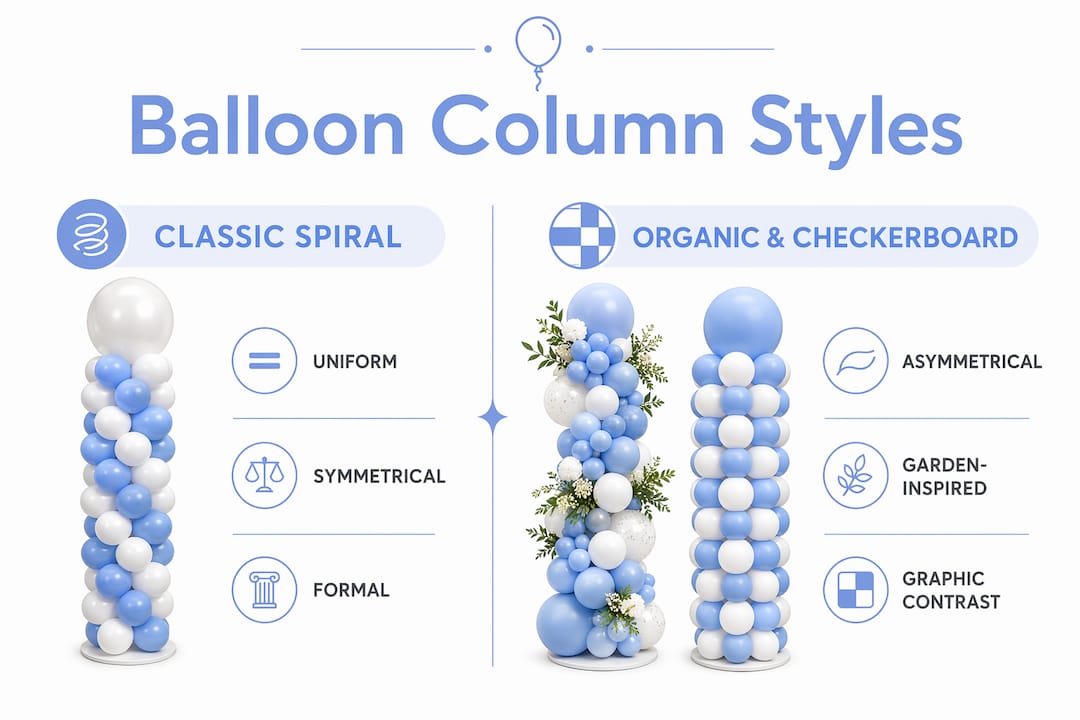
The organic style uses mixed balloon sizes, varied colors, and intentional asymmetry to create a lush, garden-inspired look. This style pairs beautifully with floral accents, greenery, and earthy neutral palettes. It is the dominant trend in luxury birthday parties and upscale weddings right now.
The checkerboard pattern alternates two colors in a grid formation. It delivers bold graphic contrast and works especially well for sports events, brand activations, and themed celebrations where color blocking reinforces a visual identity.
Here is a quick comparison of the three main balloon column design styles:
| Design Style | Visual Effect | Best Event Types |
|---|---|---|
| Classic Spiral | Uniform, symmetrical, formal | Corporate events, galas, graduations |
| Organic | Lush, textured, layered | Weddings, luxury birthdays, baby showers |
| Checkerboard | Bold, graphic, high-contrast | Sports events, brand activations, themed parties |
Alternating 11-inch and 5-inch balloons within any of these patterns adds depth and visual movement that separates professional work from amateur attempts. Color theory matters here too. Warm and cool tones placed in deliberate sequence create a rhythm the eye follows upward, making the column feel taller and more dynamic.
Pro Tip: For metallic or jewel-tone palettes, double-stuff a chrome balloon inside a standard latex balloon of the same color. The result is a deeper, more reflective finish that photographs beautifully under event lighting.
DIY vs. professional balloon column setup: what is the difference?
Professional installation fees range from $350 to $1,200 per pair, while DIY setups cost a fraction of that in materials alone. The gap in price is real, but so is the gap in results. Here is how the two approaches compare across the factors that matter most.
- Cost: DIY materials including a column kit, balloons, and a pump typically run $40–$120 per column. Professional pricing covers design consultation, custom color matching, delivery, installation, and breakdown.
- Stability: Professional decorators engineer columns to venue-specific conditions, accounting for foot traffic, air conditioning drafts, and ceiling height. DIY balloon columns require specific materials and expertise to achieve stability and consistent aesthetics, making them labor-intensive for first-timers.
- Design sophistication: Professionals apply color theory, balloon sizing ratios, and pattern precision that take years to develop. A DIY column can look great with practice, but replicating an organic or double-stuffed spiral on the first attempt is genuinely difficult.
- Time investment: A single 6-foot column takes a beginner 60–90 minutes. An experienced decorator builds the same column in 20–30 minutes. For events requiring four or more columns, that time difference is significant.
- Equipment: Professionals bring electric pumps, commercial-grade bases, and proprietary column systems. Most DIY kits use lighter bases that can shift on smooth floors under heavy foot traffic.
DIY is a smart choice for casual backyard parties, small gatherings, or decorators building their skills. For high-visibility events like weddings, corporate launches, or luxury celebrations, professional installation protects your investment and your event’s visual standard.
Where and how to place balloon columns for maximum impact
Balloon columns differ from arches in one key way: they are freestanding and vertical, while arches span overhead between two anchor points. That distinction makes columns far more flexible for placement. You can position them anywhere without rigging or ceiling attachments.
The most effective placement locations include:
- Venue entrances: Two columns flanking a doorway frame the arrival moment and signal that something special is happening inside.
- Stage fronts and podiums: Columns placed at stage corners add vertical scale that cameras and audiences both read as impressive.
- Photo backdrops: A pair of columns on either side of a backdrop creates a defined photo zone that guests naturally gravitate toward.
- Buffet and bar ends: Columns mark the start and end of service areas, guiding foot traffic without signage.
- Registration and check-in tables: Columns here set the tone the moment guests arrive and reduce confusion about where to go.
Sizing your columns to the venue is critical. A 6-foot column in a 20-foot atrium reads as small and out of scale. A 10-foot column in a low-ceiling banquet room feels oppressive. The general rule: column height should be roughly 50–60% of the ceiling height for balanced proportion.
Balloon columns are also the most heat-tolerant balloon format because they are air-filled on weighted bases rather than helium-filled and floating. For outdoor events, set up in the early morning, choose shaded positions, and select lighter balloon colors to reduce heat absorption. These three steps extend the life of your installation significantly.
Combining columns with balloon cluster designs or organic arches creates a cohesive decor story. A column at the entrance, an arch over the dance floor, and clusters on tables all pull from the same color palette to make the entire venue feel intentional and designed.
Key takeaways
Balloon columns are the most versatile freestanding decor format available, and their impact depends entirely on design style, material quality, and strategic placement.
| Point | Details |
|---|---|
| Core structure | A column needs a weighted base, adjustable pole, and quality latex balloons for stability and appearance. |
| Design style matters | Spiral, organic, and checkerboard patterns each suit different event types and visual tones. |
| DIY vs. professional | Professional installation ($350–$1,200 per pair) delivers superior stability and design sophistication for high-stakes events. |
| Placement drives impact | Entrances, stages, photo zones, and service areas are the highest-value positions for balloon columns. |
| Timing is everything | Install columns as close to event start as possible to preserve balloon shine and prevent oxidation. |
What i have learned after years of designing balloon columns
The question I get most often is not about price or style. It is about timing. Clients want to know how early they can set up. My honest answer: as late as logistics allow. Professional balloonists time column inflation within a narrow window before event start to maintain balloon integrity and shine. I have seen gorgeous columns installed the night before look dull and oxidized by the time guests arrived the next afternoon. That is not a risk worth taking on a luxury event.
The second thing most people underestimate is balloon sizing. Swapping all 11-inch balloons for 16-inch balloons does not just make the column bigger. It changes the proportion, the spacing, and the visual rhythm of the entire design. I always tell clients: the size of the balloon is as important as the color. Get that wrong and even a beautiful palette looks off.
The trend I am most excited about right now is the move toward custom color palettes tied to event-specific themes. Clients are moving away from generic red-and-white or pink-and-gold combinations. They want earthy neutrals with shimmering metallic accents, or deep jewel tones with chrome finishes. That specificity is what makes a column feel like it belongs to the event rather than just sitting next to it.
One insider tip on sourcing: buy from professional balloon suppliers like Qualatex or Betallic rather than party supply chains. The latex quality is measurably better, the colors are truer, and the balloons hold air pressure longer. That difference shows up in photos and in person.
— Kinyahnah
Let Atlantaballoondesigner design your next balloon column
Planning an event in the Atlanta area and want balloon columns that genuinely stop guests in their tracks? Atlantaballoondesigner creates custom balloon column installations for weddings, corporate events, luxury birthday celebrations, baby showers, and more. Every design is built around your color palette, venue dimensions, and event vision.

From organic jewel-tone towers to sleek metallic spirals, the team at Atlantaballoondesigner handles design, delivery, installation, and breakdown so you can focus on your guests. Whether you need a single statement pair at the entrance or a full venue transformation, explore luxury balloon decor and request a personalized quote today. Your event deserves decor that is as unforgettable as the moment itself.
FAQ
What is a balloon column used for at events?
A balloon column is used to add vertical height, anchor spaces, and guide guest flow at events. Common placements include venue entrances, stage fronts, photo backdrops, and buffet areas.
How tall do balloon columns typically get?
Balloon columns typically range from 6 to 12 feet tall for indoor events. Column height should be proportional to ceiling height, generally 50–60% of the ceiling height for balanced visual impact.
How long do balloon columns last at an event?
Air-filled balloon columns last 24–48 hours indoors under normal conditions. Outdoor setups last shorter due to heat and UV exposure, so early morning installation and shade placement extend their life.
What is the difference between a balloon column and a balloon arch?
A balloon column is freestanding and vertical, while a balloon arch spans overhead between two anchor points. Columns and arches can be combined for a more complete and cohesive event decor design.
How much does a professional balloon column cost?
Professional balloon column installation typically costs between $350 and $1,200 per pair, depending on height, design complexity, and the decorator’s experience level.